Bill · H.R. 7434· House(119-HR-7434)
AI Grand Challenges Act of 2026
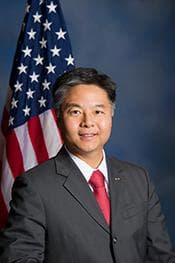
- Introduced
- 2/9/2026
- Last activity
- 2/9/2026 — Referred to the House Committee on Science, Space, and Technology.
- Sponsored by
- Ted Lieu
- Cosponsors
- - 0 - 1
- Introduced
- In Committee
What this bill would do
The AI Grand Challenges Act of 2026 authorizes the Director of the National Science Foundation to create a program that awards competitive prizes for artificial intelligence research and development. This program aims to solve specific, well-defined grand challenges across various sectors including national security, health, and energy. The Director must establish the program within 12 months of the act's enactment. A specific requirement is included to establish at least one grand challenge focused on medical breakthroughs for lethal forms of cancer. Prize awards for these challenges will include cash prizes, with specific minimum amounts set for different categories.
Yes· 3 of 12
Does this put more money into scientific research?+7
The act authorizes the NSF to award significant cash prizes to stimulate advanced scientific research through AI.
Would business owners be better off under this?+6
The prize competitions offer substantial financial incentives for private entities to innovate and commercialize new technologies.
Is this likely to create jobs?+5
The program aims to stimulate research, development, and commercialization across sectors like manufacturing and agriculture.
The opposite
No question was scored the opposite.
Who it would affect, and how
Potential Positive Impacts for People
-
Medical Breakthroughs: The bill requires the establishment of at least one grand challenge focused on solving or advancing solutions for the most lethal forms of cancer and related comorbidities, which could increase the quality-이라 adjusted life years for those affected (Section 2(c)(3)(A)).
-
Economic Stimulation through Research: The program is designed to stimulate artificial intelligence research, development, and commercialization across numerous fields such as manufacturing, agriculture, and transportation (Section 2(b)(1)).
-
Targeted Problem Solving: By establishing specific, well-defined problem statements and success metrics, the program aims to use science and technology to solve problems that benefit the United States (Section 2(c)(2) and Section 2(c)(4)).
-
Data Accessibility: The Director of the Office of Science and Technology Policy will coordinate the identification and publication of data sets to help address foundational scientific problems through artificial intelligence (Section 3).
Potential Negative Impacts for People
- Eligibility Restrictions: Access to these prizes is limited; private entities must be incorporated and maintain their primary place of business in the United States, while individuals must be citizens or permanent residents of the United States (Section 2(e)(2)(A)).
Groups and Interests Ranking
Every group the model scored this bill for, from -10 to +10. Hover a score for the reason it gave.
- Demographic And Interest Groups
- Good For Business Owners+6Good For Students+3
- Economy And Finance
- Increases Job Creation+5Improves Small Business Support+3
- Education And Technology
- Increases Scientific Research Funding+7Improves Student Loan Relief+1
- Environment Energy And Infrastructure
- Improves Environmental Protections+3Improves Rural Development+3
- Healthcare
- Improves Healthcare Access+5
- National Security And Foreign Policy
- Improves Cybersecurity Defense+5
- Governance And Ideology
- Improves Government Transparency+4
- Social Issues And Justice
- Improves Poverty Reduction+2
- 2/9/2026
- Referred to the House Committee on Science, Space, and Technology.
- 1 Cosponsor added.
- Introduced in House
2 bills Congress.gov lists as related to this one — companions in the other chamber, earlier versions, and bills this one absorbed or was folded into.
 Jay Obernolte
Republican · California