Bill · H.R. 8443· House(119-HR-8443)
End H–1B Visa Abuse Act of 2026
- Introduced
- 4/22/2026
- Last activity
- 4/22/2026 — Referred to the House Committee on the Judiciary.
- Sponsored by
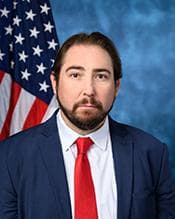
- Elijah Crane
- Cosponsors
- - 14 - 0
- Introduced
- In Committee
What this bill would do
This bill pauses the issuance of H-1B visas for three years starting from its enactment date. It caps the annual number of H-1B visas at 25,000 and shortens the maximum visa duration from six years to three years. The legislation imposes a $100,000 fee on employers for each H-1B petition or employer change. It establishes a wage floor of $200,000 per year for H-1B workers and sets strict recruitment and layoff restrictions for employers. Additionally, the bill eliminates the H-1B lottery system, replaces it with a wage-ranking system, and bans third-party staffing agencies from filing these petitions.
Yes
Does this raise the lowest wage an employer may pay?+8
The bill establishes a new $200,000 annual wage floor for H-1B workers.
Would high-income households be better off under this?+3
The high wage floor prioritizes high-earning individuals for the limited number of visa slots.
The opposite· 3 of 7
Would immigrants be better off under this?-9
The bill imposes a three-year pause on H-1B visas and restricts status adjustments and family accompaniment.
Does this make it easier for immigrants already here to become citizens?-8
The bill restricts the ability of nonimmigrants to adjust their status to permanent residence.
Would students be better off under this?-7
The bill prohibits employment authorization for many foreign students.
Who it would affect, and how
Potential Positive Impacts for People
-
Section 2 pauses the issuance of H-1B visas for three years, which gives the government time to implement new limitations and safeguards.
-
Section 3(d) requires employers to attest that there are no sufficient U.S. workers available and that employing an H-1B worker will not adversely affect the wages and working conditions of American workers, which helps protect local employment.
-
Section 3(d) also prevents employers from hiring H-1B workers if they have laid off workers in the previous 12 months or plan to do so in the following 12 months, protecting domestic workers from displacement.
-
Section 3(e) replaces the H-1B lottery with a system that issues visas in order of the highest wage levels being offered, ensuring that higher-paid professionals are prioritized.
-
Section 5 prohibits any agency, department, or instrumentality of the Federal Government from employing nonimmigrants directly or through a contract, keeping federal jobs focused on domestic workers.
Potential Negative Impacts for People
-
Section 3(b) lowers the annual cap on H-1B visas to 25,000 and reduces the maximum visa duration to three years, which may severely limit the ability of businesses to retain necessary global talent.
-
Section 3(c) imposes a $100,000 fee on employers for each H-1B petition or employer change, which could place a heavy financial burden on businesses and organizations trying to hire specialized workers.
-
Section 3(f) prohibits third-party employment and staffing agencies from filing petitions or facilitating recruitment for H-1B workers, which could negatively impact consulting firms and businesses that rely on staffing agencies.
-
Section 4 removes the ability of alien spouses and minor children to accompany or follow to join an H-1B worker, separating families.
-
Section 6 eliminates employment authorization for foreign students under F, M, and J nonimmigrant statuses, stopping programs like Optional Practical Training and preventing these students from working in the United States.
Groups and Interests Ranking
Every group the model scored this bill for, from -10 to +10. Hover a score for the reason it gave.
- Demographic And Interest Groups
- Good For High Income Households+3Good For Immigrants-9Good For Students-7
- Social Issues And Justice
- Improves Pathway To Citizenship-8Improves Poverty Reduction-2
- Economy And Finance
- Increases Minimum Wage+8Improves Small Business Support-7Improves Economic Growth-5
- Education And Technology
- Improves Student Loan Relief-4
- 9/24/2026
- 2 Cosponsors added.
- 7/14/2026
- 1 Cosponsor added.
- 5/11/2026
- 1 Cosponsor added.
- 4/29/2026
- 2 Cosponsors added.
- 4/27/2026
- 1 Cosponsor added.
- 4/22/2026
- Referred to the House Committee on the Judiciary.
- 7 Cosponsors added.
- Introduced in House
 Brian Babin
Republican · Texas
 Sheri Biggs
Republican · South Carolina
 Paul Gosar
Republican · Arizona
 Brandon Gill
Republican · Texas
 Diana Harshbarger
Republican · Tennessee
 Wesley Hunt
Republican · Texas
 Mark Harris
Republican · North Carolina
 Tom McClintock
Republican · California
 Mary Miller
Republican · Illinois
 Barry Moore
Republican · Alabama
 Riley Moore
Republican · West Virginia
 Andrew Ogles
Republican · Tennessee
 Chip Roy
Republican · Texas
 Keith Self
Republican · Texas