
Chip Roy (R-TX)
Measures Against Marxism’s Dangerous Adherents and Noxious Islamists Act of 2026
A Republican bill with 9 Republican cosponsors · See all 9 cosponsors
Last activity — Referred to the House Committee on the Judiciary.
In committee
Introduced and handed to a committee in the chamber it started in.
The committee holds it, and most bills are never heard from again. A hearing or a committee vote would be news; silence is the usual outcome, and it kills the bill without anyone voting against it.
Its path through Congress
- Introduced
- In Committee
What this bill would do
This bill, titled the "Measures Against Marxism's Dangerous Adherents and Noxious Islamists Act of 2026," aims to amend the Immigration and Nationality Act. It seeks to limit the ability of certain aliens to be admitted to or become naturalized in the United States based on their political or religious affiliations. Specifically, it targets advocacy or membership in socialist, communist, Chinese communist, Marxist, or Islamic fundamentalist doctrines. The legislation also enables the deportation or denaturalization of individuals associated with these groups. Additionally, it establishes various definitions for these specific doctrines and organizations.
Yes
- Scored +4
Does this tighten control of the border?
The bill increases border and immigration security by creating stricter grounds for inadmissibility and deportation.
The opposite· 3 of 9
- Scored -10
Would immigrants be better off under this?
The bill creates significant new barriers to entry, naturalization, and permanent residency while making current residents subject to deportation.
- Scored -9
Does this protect the right to fair treatment by the courts?
The bill explicitly removes judicial review for determinations regarding inadmissibility, deportability, and naturalization.
- Scored -8
Does this make it easier for immigrants already here to become citizens?
The bill significantly restricts the path to citizenship by creating new grounds for inadmissibility and denaturalization based on political or religious affiliation.
Who it would affect, and how
Potential Positive Impacts for People
-
Limited Eligibility for Specific Doctrines: The bill changes the law so that aliens who advocate for or are affiliated with organizations promoting socialism, communism, Chinese communism, Marxism, or Islamic fundamentalism are inadmissible (Section 2, subsection a).
-
New Grounds for Deportation: The bill adds new categories that make certain aliens deportable, specifically those engaged in advocacy or membership in the targeted organizations (Section 2, subsection b).
-
Naturalization Restrictions: The bill amends rules regarding nationality through naturalization to include restrictions based on past or present affiliation with the specified doctrines or organizations (Section 2, subsection c).
Potential Negative Impacts for People
-
Removal of Judicial Review: The bill includes provisions stating that certain determinations regarding inadmissibility or deportability are final and cannot be reviewed by any court (Section 2, subsection a; Section 2, subsection b; Section 2, subsection c).
-
Strict Age Limits for Advocacy Exceptions: An exception for advocacy is only applicable if an alien can prove to a consular officer or the Attorney General that the advocacy occurred while they were under 14 years of age (Section 2, subsection a).
-
Broad Definitions of Doctrine: The bill provides expansive definitions for terms like "socialism," "communism," "Chinese communism," "Marxism," and "Islamic fundamentalism," which cover a wide range of political, economic, and social activities (Section 2, subsection e).
-
Expanded Grounds for Denaturalization: The act modifies the process for revoking naturalization (Section 2, subsection d).
Groups and Interests Ranking
Every group the model scored this bill for, from -10 to +10. Tap or hover a score for the reason it gave.
- Demographic And Interest Groups
- Would immigrants be better off under this? — The bill creates significant new barriers to entry, naturalization, and permanent residency while making current residents subject to deportation. Would Asian Americans be better off under this? — The bill specifically targets 'Chinese communism' and associated organizations, which could disproportionately impact Asian immigrant communities. Would Hispanic Americans be better off under this? — The broad definitions of political and religious doctrines could impact various immigrant groups including those from Hispanic backgrounds. Would children be better off under this? — The bill reduces the age exception for advocacy from 16 to 14, potentially impacting young people's legal status.
- Governance And Ideology
- Does this protect the right to fair treatment by the courts? — The bill explicitly removes judicial review for determinations regarding inadmissibility, deportability, and naturalization. Does this protect people from being watched or searched? — The bill targets the possession and distribution of written or electronic matter related to specific doctrines.
- Social Issues And Justice
- Does this tighten control of the border? — The bill increases border and immigration security by creating stricter grounds for inadmissibility and deportation. Does this make it easier for immigrants already here to become citizens? — The bill significantly restricts the path to citizenship by creating new grounds for inadmissibility and denaturalization based on political or religious affiliation. Does this narrow racial gaps in how people are treated? — The bill targets specific political and religious ideologies that may disproportionately affect certain immigrant communities. Does this protect the right to vote? — The expansion of denaturalization and deportation grounds could impact the long-term stability of resident communities.
- 4/27/2026
- 1 Cosponsor added.
- 4/21/2026
- 1 Cosponsor added.
- 4/20/2026
- Referred to the House Committee on the Judiciary.
- 7 Cosponsors added.
- Introduced in House
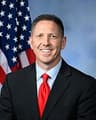 Josh Brecheen
Republican · Oklahoma
 Randy Fine
Republican · Florida
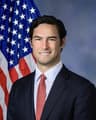 Brandon Gill
Republican · Texas
 Diana Harshbarger
Republican · Tennessee
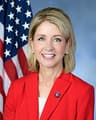 Mary Miller
Republican · Illinois
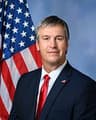 Barry Moore
Republican · Alabama
 Ralph Norman
Republican · South Carolina
 Andrew Ogles
Republican · Tennessee
 Keith Self
Republican · Texas