Bill · H.R. 8317· House(119-HR-8317)
Tech to Save Moms Act
- Introduced
- 4/15/2026
- Last activity
- 4/15/2026 — Referred to the House Committee on Energy and Commerce.
- Sponsored by
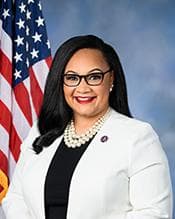
- Nikema Williams
- Cosponsors
- - 22 - 3
- Introduced
- In Committee
What this bill would do
The Tech to Save Moms Act aims to improve maternal health outcomes by amending the Public Health Service Act. It authorizes grants to develop and expand technology-enabled learning and capacity building models for pregnant and postpartum individuals. The bill also provides for grants to increase access to digital tools, such as early warning systems, to reduce health disparities. Additionally, it directs a study through the National Academies on the use of innovative technology and patient monitoring devices in maternity care. These efforts focus on helping underserved populations, including rural areas and American Indians and Alaska Natives.
Yes· 3 of 12
Would women be better off under this?+8
The bill focuses on improving maternal health outcomes and increasing access to digital health tools for pregnant and postpartum individuals.
Would Native Americans be better off under this?+7
The bill explicitly prioritizes American Indians and Alaska Natives for maternal health technology and capacity building grants.
Does this make health care easier to get in general?+7
The bill authorizes grants to expand maternal health services through technology-enabled models and digital tools.
The opposite
No question was scored the opposite.
Who it would affect, and how
Potential Positive Impacts for People
-
Improved Health Monitoring: The bill allows for the use of telehealth tools for screening, monitoring, and managing common health complications during pregnancy and for up to one year postpartum (Section 2).
-
Enhanced Provider Training: Grants will be used to train maternal health care providers and students in areas such as increasing safety, addressing implicit bias, racism, and discrimination, and managing mental health or substance use disorders (Section 3).
-
Increased Access in Underserved Areas: Funding is directed toward health professional shortage areas, rural areas, and medically underserved populations, including American Indians and Alaska Natives (Section 3).
-
Access to Digital Health Tools: Grants are authorized to provide digital tools like early warning systems and clinical decision support mechanisms to reduce maternal health disparities (Section 4).
-
Support for Internet Access: The Secretary may coordinate with other agencies to help grantees access reliable, high-speed internet (Section 3).
Potential Negative Impacts for People
- Grant Limitations: The Secretary is restricted to awarding no more than one grant for the capacity building models and no more than one grant for digital tools (Sections 3 and 4).
Groups and Interests Ranking
Every group the model scored this bill for, from -10 to +10. Hover a score for the reason it gave.
- Demographic And Interest Groups
- Good For Women+8Good For Native Americans+7Good For African Americans+6Good For Rural Residents+6Good For Low Income Households+5
- Healthcare
- Improves Healthcare Access+7Improves Mental Health Access+6Increases Medicaid Funding+5Increases Research Funding+5
- Education And Technology
- Improves Internet Access+4Increases Scientific Research Funding+4
- Social Issues And Justice
- Improves Racial Equity+7
- 7/2/2026
- 1 Cosponsor added.
- 4/27/2026
- 9 Cosponsors added.
- 4/23/2026
- 2 Cosponsors added.
- 4/15/2026
- Referred to the House Committee on Energy and Commerce.
- 13 Cosponsors added.
- Introduced in House
3 bills Congress.gov lists as related to this one — companions in the other chamber, earlier versions, and bills this one absorbed or was folded into.
 Alma Adams
Democrat · North Carolina
 Yvette Clarke
Democrat · New York
 Steve Cohen
Democrat · Tennessee
 Angie Craig
Democrat · Minnesota
 Brian Fitzpatrick
Republican · Pennsylvania
 Shomari Figures
Democrat · Alabama
 Jesús García
Democrat · Illinois
 Jahana Hayes
Democrat · Connecticut
 Ashley Hinson
Republican · Iowa
 David Joyce
Republican · Ohio
 Julie Johnson
Democrat · Texas
 Raja Krishnamoorthi
Democrat · Illinois
 Sydney Kamlager-Dove
Democrat · California
 George Latimer
Democrat · New York
 Gwen Moore
Democrat · Wisconsin
 Seth Moulton
Democrat · Massachusetts
 Morgan McGarvey
Democrat · Kentucky
 LaMonica McIver
Democrat · New Jersey
 Eleanor Norton
Democrat · District of Columbia
 Deborah Ross
Democrat · North Carolina
 Terri Sewell
Democrat · Alabama
 Rashida Tlaib
Democrat · Michigan
 Lauren Underwood
Democrat · Illinois
 Marc Veasey
Democrat · Texas
 Frederica Wilson
Democrat · Florida