Bill · H.R. 8210· House(119-HR-8210)
A Stronger Workforce for America Act of 2026
- Introduced
- 4/6/2026
- Last activity
- 4/21/2026 — Ordered to be Reported (Amended) by the Yeas and Nays: 19 - 14.
- Sponsored by
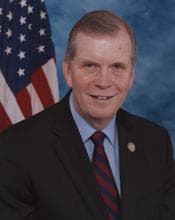
- Tim Walberg
- Cosponsors
- - 1 - 0
- Introduced
What this bill would do
The H.R. 8210 bill, titled the "A Stronger Workforce for America Act of 2026," seeks to reauthorize the Workforce Innovation and Opportunity Act while updating several labor laws. The legislation updates definitions for terms such as "foundational skill needs," "dislocated worker," and "employer-directed skills development." It introduces new requirements for state and local workforce development boards, performance accountability systems, and various workforce investment activities including Job Corps and national programs. The bill establishes new grant programs targeting youth apprenticeships, community college training, and reentry opportunities for those involved with the justice system. Additionally, it transfers several adult education and literacy functions from the Department of Education to the Department of Labor.
Yes· 3 of 29
Would people in their twenties and thirties be better off under this?+7
The bill focuses on youth apprenticeships and skill development tailored to emerging technology sectors.
Would households on low incomes be better off under this?+6
The bill provides priority services to low-income individuals and expands access to supportive services like food and housing assistance.
Would people with disabilities be better off under this?+6
The bill establishes a Center for Technical Assistance to help transition individuals with disabilities into competitive integrated employment.
The opposite
No question was scored the opposite.
Who it would affect, and how
Potential Positive Impacts for People
-
Enhanced Career Pathways: The bill aims to prepare a globally competitive workforce by developing robust education and skills development programs to lead youth into in-demand industry sectors and occupations (Section 101). It also supports the development of pre-apprenticeship and apprenticeship programs for youth (Section (d)(1)(A) and (B)) and encourages industry or sector partnerships for high-growth and high-wage industries (Section 134(a)(5)(B)).
-
Support for Individuals with Foundational Skill Needs: The updated definition of "foundational skill needs" addresses individuals struggling with English reading, writing, computing, or digital literacy (Section 102). The bill also provides priority for services to those with barriers to employment and low-income individuals (Section 174(4)(A)).
-
Increased Employer Involvement in Training: Through "employer-directed skills development," programs can be designed to meet specific employer demands, including a commitment to employ individuals upon successful completion (Section 102).
-
Expanded Support Services: The definition of supportive services is expanded to include assistive technology and food assistance (Section 102). Grant funds can also be used for essential help such as transportation, childcare, dependent care, and housing to help youth complete training (Section (d)(2)(E)).
-
Workforce Innovation Leadership: The bill creates a "Workforce Innovation Leader" designation for high-performing programs to signal quality to participants (Section 122).
-
Improved Performance Tracking and Transparency: The establishment of a more detailed performance accountability system aims to maximize value for workers and jobseekers (Section 116 and 119). Additionally, Governors must maintain a list of eligible providers that includes recognized postsecondary credentials to assist people in choosing training services (Section 122(d)(1)).
-
Incentives for Quality Training: A system of performance incentive payments may be awarded to providers that achieve high performance levels or serve a higher number of individuals with barriers to employment (Section 122(f)(1)).
-
Support for Emerging Technologies and Education: The bill expands work-based learning to include training for youth in emerging technologies like artificial intelligence (Section 129(b)(1)(F)). It also expands the definition of adult education to include digital and AI literacy (Section 221(1)).
-
Expanded Opportunity for Job Corps: The bill increases the age of eligibility for Job Corps and allows the program to lead to the attainment of recognized postsecondary credentials (Section 151 and 153). Graduates may also remain as residents on a campus for up to one month to assist with their transition (Section 158).
-
Improved Reentry and Specialized Support: The Reentry Employment Opportunities Program aims to reduce recidivism and improve earnings for those involved with the justice system (Section 177). National dislocated worker grants can also be used for the prevention and treatment of substance use disorders (Section 175).
-
Support for Individuals with Disabilities: The bill establishes a Center for Technical Assistance to help transition individuals with disabilities into competitive integrated employment (Section 401).
-
Postsecondary and Community College Access: Funds can support courses aligned with high school diploma requirements or early college high schools (Section (d)(2)(D)(i)). The community college grant program aims to expand opportunities for recognized, stackable postsecondary credentials (Section 174(a)(2)).
-
Enhanced Data and Outlying Area Support: Updates to the Wagner-Peyser Act aim to provide real-time labor market information (Section 301). The bill also includes specific fund reservations for grants to outlying areas (Section 233; Section 302).
-
Support for English Learners: The text updates terminology and provisions to better include English learners in adult education and literacy activities (Section 233).
Potential Negative Impacts for People
-
Financial Burden on Employers and Workers: Under "employer-directed skills development," employers must pay a portion of program costs, ranging from 10 percent for small employers up to 50 percent for those with more than 100 employees (Section 102). In certain incumbent worker upskilling programs, workers who are not considered low-income may be required to pay at least 25 percent of the costs (Section 134(d)(4)(E)(iii)).
-
Strict Performance Sanctions and Program Risks: States and local areas face potential funding reductions of up to 10 percent if they fail to meet performance measures (Section 116). Training providers face the risk of losing eligibility if they fail to meet minimum performance levels for two consecutive years (Section 122(c)(4)). If eligibility is revoked, they may be prohibited from enrolling new participants or receiving payments for current ones (Section 122(c)(5)(A)). For Job Corps, failing campuses could face capacity reductions, management changes, or closure (Section 155, Section 159).
-
Potential for Job Loss via Automation: The definition of "dislocated worker" is amended to specifically include closures or layoffs caused by advances in automation technology (Section 102).
-
Stringent Requirements and Administrative Burdens: Providers face strict eligibility and performance criteria (Section 122). There is an increased burden on entities due to requirements for rigorous evaluations, annual assessments, and specific reports (Section 159, Section 166, Section 174). For community college grants, the use of funds for administrative costs is limited to 7 percent (Section (e)(4)).
-
Limitations on Compensation and Funding: There are limits on how much of a participant's wages can be subsidized by funds (Section 129(c)(10)(A)(ii)). For certain youth programs, the use of grant funds for supportive services is capped at 15 percent of the total award (Section (d)(3)). Additionally, local areas may limit the maximum amount available for an individual training account to less than $5,000 for certain workers not considered low-income (Section 302).
-
Restrictions on Youth Labor: There are strict prohibitions on youth under the age of 18 participating in apprenticeship programs for "covered occupations," such as construction and manufacturing (Section (h)(1) and (h)(2)).
-
Financial Reductions and Program Termination: Under the American Competitiveness and Workforce Improvement Act, 12 percent of specified amounts are to be returned permanently to the general fund of the Treasury (Section 302). Furthermore, entities that fail to meet performance levels may be denied grant extensions (Section (e)(4)(C)).
-
Data Privacy Concerns: A required report by the Comptroller General includes a study on how accessing federal and state databases may impact individual privacy (Section 501).
Groups and Interests Ranking
Every group the model scored this bill for, from -10 to +10. Hover a score for the reason it gave.
- Demographic And Interest Groups
- Good For Young Adults+7Good For Low Income Households+6Good For People With Disabilities+6Good For Native Americans+5Good For Rural Residents+5Good For Students+5Good For Veterans+5Good For African Americans+4Good For Business Owners+4Good For Children+4Good For Asian Americans+3Good For Hispanic Americans+3Good For Immigrants+3Good For Middle Class Households+3Good For Seniors+3Good For Union Workers+3Good For Women+3
- Economy And Finance
- Increases Job Creation+6Improves Economic Growth+5Improves Small Business Support+4
- Social Issues And Justice
- Improves Poverty Reduction+5Improves Criminal Sentencing Reform+4Improves Racial Equity+3
- Education And Technology
- Improves College Affordability+4Improves Internet Access+3
- Governance And Ideology
- Improves Government Transparency+5
- Healthcare
- Improves Opioid Crisis Response+5
- National Security And Foreign Policy
- Improves Veterans Benefits+4
- Environment Energy And Infrastructure
- Improves Roads And Bridges+3
- 6/8/2026
- 1 Cosponsor added.
- 4/21/2026
- Committee Consideration and Mark-up Session Held
- Ordered to be Reported (Amended) by the Yeas and Nays: 19 - 14.
- 4/6/2026
- Referred to the Committee on Education and Workforce, and in addition to the Committee on Ways and Means, for a period to be subsequently determined by the Speaker, in each case for consideration of such provisions as fall within the jurisdiction of the committee concerned.
- Introduced in House
7 bills Congress.gov lists as related to this one — companions in the other chamber, earlier versions, and bills this one absorbed or was folded into.
- 119-HR-1132: To amend the Workforce Innovation and Opportunity Act to direct the Secretary of Labor to award grants to community colleges for high-quality workforce development programs.
- 119-HR-8102: Workforce Investments Accountability Act
- 119-HR-8181: Critical Industry Skills Act
- 119-HR-8183: MATCH Act of 2026
- 119-HR-8203: Workforce Recovery and Resilience Act
- 119-S-3401: Pathways to Prosperity Act
- 119-S-5263: Workforce Recovery and Resilience Act
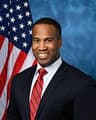 John James
Republican · Michigan