Bill · H.R. 1132· House(119-HR-1132)
To amend the Workforce Innovation and Opportunity Act to direct the Secretary of Labor to award grants to community colleges for high-quality workforce development programs.
- Introduced
- 2/7/2025
- Last activity
- 2/7/2025 — Referred to the House Committee on Education and Workforce.
- Sponsored by
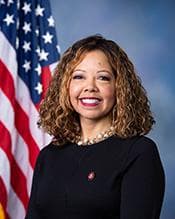
- Lucy McBath
- Cosponsors
- - 30 - 0
- Introduced
- In Committee
What this bill would do
This bill proposes to amend the Workforce Innovation and Opportunity Act to create a new grant program for community colleges. The Secretary of Labor would award competitive grants to eligible institutions to establish or expand high-quality workforce development programs. These programs are intended to help individuals earn recognized credentials for high-skill, high-wage, or in-demand industries. The bill authorizes up to $65,000,000 for each fiscal year from 2026 through 2031. It requires institutions to form partnerships with employers to ensure training meets industry needs.
Yes· 3 of 14
Would households on low incomes be better off under this?+6
The bill prioritizes serving low-income individuals and can reduce unmet financial needs.
Would students be better off under this?+6
The bill expands career services, financial support, and work-based learning for students.
Would people in their twenties and thirties be better off under this?+5
The bill creates pathways for new entrants to the workforce via credentialing programs.
The opposite
No question was scored the opposite.
Who it would affect, and how
Potential Positive Impacts for People
-
Expanded Educational Opportunities: The bill aims to establish, improve, or expand high-quality workforce development programs at community colleges (Section 1(a)(1)).
-
Increased Career Mobility: Individuals can obtain recognized postsecondary credentials that are stackable and portable across different regions or industries (Section 1(a)(2)).
-
Support for Vulnerable Populations: The Secretary may provide technical assistance and outreach to institutions serving low-income individuals, individuals with barriers to employment, and rural areas (Section 1(b)(2)(A)).
-
Priority for High-Need Individuals: Priority in awarding grants is given to institutions serving individuals with barriers to employment or incumbent workers needing to improve foundational skills (Section 1(d)(4)(A)).
-
Enhanced Career Services: Grant recipients are required to provide career services, which can include coaching, mentorship, and access to necessary course materials or technological devices (Section 1(e)(2)(B)).
-
Financial Assistance: Funds may be used to reduce or eliminate unmet financial needs related to the cost of attendance for program participants (Section 1(e)(3)(D)).
Potential Negative Impacts for People
-
Administrative Overhead: The Secretary may reserve up to two percent of the appropriated amounts for the administration of these grants (Section 1(b)(2)).
-
Institutional Restrictions: Eligible institutions are limited to using no more than 7 percent of their awarded funds for administrative costs (Section 1(e)(4)).
-
Equipment Spending Limits: While institutions can use funds to purchase or refurbish specialized equipment, this is capped at 15 percent of the total award (Section 1(e)(3)(C)).
Groups and Interests Ranking
Every group the model scored this bill for, from -10 to +10. Hover a score for the reason it gave.
- Demographic And Interest Groups
- Good For Low Income Households+6Good For Students+6Good For Native Americans+5Good For Young Adults+5Good For Business Owners+4Good For Rural Residents+4Good For Middle Aged+3Good For Middle Class Households+3
- Economy And Finance
- Increases Job Creation+5Improves Economic Growth+4
- Education And Technology
- Improves College Affordability+5
- Social Issues And Justice
- Improves Poverty Reduction+5
- Environment Energy And Infrastructure
- Improves Rural Development+4
- Governance And Ideology
- Improves Government Transparency+3
- 8/17/2026
- 1 Cosponsor added.
- 6/29/2026
- 1 Cosponsor added.
- 6/18/2026
- 1 Cosponsor added.
- 6/2/2026
- 2 Cosponsors added.
- 4/20/2026
- 2 Cosponsors added.
- 4/15/2026
- 1 Cosponsor added.
- 4/6/2026
- 1 Cosponsor added.
- 2/10/2026
- 2 Cosponsors added.
- 1/21/2026
- 1 Cosponsor added.
- 11/20/2025
- 1 Cosponsor added.
- 9/3/2025
- 2 Cosponsors added.
- 5/13/2025
- 5 Cosponsors added.
- 4/1/2025
- 6 Cosponsors added.
- 2/7/2025
- Referred to the House Committee on Education and Workforce.
- 4 Cosponsors added.
- Introduced in House
2 bills Congress.gov lists as related to this one — companions in the other chamber, earlier versions, and bills this one absorbed or was folded into.
 Alma Adams
Democrat · North Carolina
 Suzanne Bonamici
Democrat · Oregon
 Ami Bera
Democrat · California
 Yvette Clarke
Democrat · New York
 Angie Craig
Democrat · Minnesota
 Danny Davis
Democrat · Illinois
 Dwight Evans
Democrat · Pennsylvania
 Sarah Elfreth
Democrat · Maryland
 Shomari Figures
Democrat · Alabama
 John Garamendi
Democrat · California
 Jesús García
Democrat · Illinois
 Robert Garcia
Democrat · California
 Jahana Hayes
Democrat · Connecticut
 Henry Johnson
Democrat · Georgia
 Raja Krishnamoorthi
Democrat · Illinois
 Ted Lieu
Democrat · California
 John Mannion
Democrat · New York
 Sarah McBride
Democrat · Delaware
 Eleanor Norton
Democrat · District of Columbia
 Mike Quigley
Democrat · Illinois
 Linda Sánchez
Democrat · California
 Thomas Suozzi
Democrat · New York
 Melanie Stansbury
Democrat · New Mexico
 Andrea Salinas
Democrat · Oregon
 Bennie Thompson
Democrat · Mississippi
 Mike Thompson
Democrat · California
 Mark Takano
Democrat · California
 Shri Thanedar
Democrat · Michigan
 Frederica Wilson
Democrat · Florida
 George Whitesides
Democrat · California