Bill · H.R. 8170· House(119-HR-8170)
MATCH Act
- Introduced
- 4/2/2026
- Last activity
- 4/22/2026 — Ordered to be Reported in the Nature of a Substitute (Amended) by the Yeas and Nays: 36 - 8.
- Sponsored by
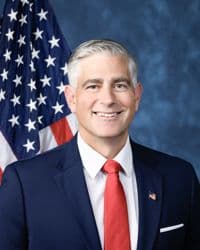
- Michael Baumgartner
- Cosponsors
- - 21 - 10
- Introduced
What this bill would do
The MATCH Act aims to restrict the export of certain semiconductor manufacturing equipment and components to protect national security. It directs agency heads to identify equipment chokepoints and engage diplomatically with allied supplier countries to align export controls. If allies do not adopt these controls, the U.S. will implement its own countrywide restrictions and jurisdiction over specific equipment and facilities. The bill targets entities in countries of concern, specifically mentioning several companies in the People's Republic of China. These measures include a policy of denial for licensing requests to prevent adversaries from accessing essential technology. The Act is set to expire five years after its enactment.
Yes· 3 of 5
Does this strengthen ties with allied countries?+6
The bill emphasizes diplomatic engagement with allied supplier countries to align export controls and secure technological advantages.
Does this better protect the country from computer attacks?+5
By controlling semiconductor technology, the bill aims to protect critical infrastructure and advanced computing capabilities from adversary exploitation.
Does this favour talking over confrontation abroad?+5
The Act mandates prioritized diplomatic efforts to coordinate semiconductor export restrictions with international partners.
The opposite
Does this make trade with other countries easier?-3
The imposition of strict export controls and a policy of denial may create friction in international trade relationships for semiconductor equipment.
Would business owners be better off under this?-2
Strict export controls may impact businesses involved in the semiconductor supply chain or those relying on international technology exchange.
Who it would affect, and how
Potential Positive Impacts for People
-
Protection of National Security: The bill seeks to protect the United States' semiconductor advantage, which is described as essential to national security (Section 2).
-
Maintaining Technological Advantage: By implementing controls, the bill aims to protect the U.S. advantage in foundational technologies, such as advanced-node integrated circuits and the equipment required to produce them (Section 2).
-
Global Playing Field: The bill encourages the U.S. to work with allies to align export controls, which is intended to reduce the risk of circumvention and ensure a level global playing field (Section 2).
Potential Negative Impacts for People
-
Restriction of Trade with Adversaries: The bill mandates comprehensive export controls and a "policy of denial" for many items, which restricts the ability of certain entities and countries to access specific technologies (Section 2 and Section 3).
-
Impact on Allied Supplier Countries: The bill requires diplomatic engagement to pressure allied supplier countries to adopt countrywide controls and licensing policies of denial, which could affect their trade and economic relations (Section 3(b)(1)).
-
Risk of Stockpiling: There is a recognized risk that countries of concern might take advantage of any delays in implementing these controls to further stockpile semiconductor manufacturing equipment (Section 3(d)(1)(A)).
Groups and Interests Ranking
Every group the model scored this bill for, from -10 to +10. Hover a score for the reason it gave.
- National Security And Foreign Policy
- Improves International Alliances+6Improves Cybersecurity Defense+5Improves Diplomatic Engagement+5Improves International Trade-3
- Governance And Ideology
- Increases Federal Power+4Improves Government Transparency+3
- Demographic And Interest Groups
- Good For Business Owners-2
- 10/1/2026
- 2 Cosponsors added.
- 6/10/2026
- 1 Cosponsor added.
- 6/4/2026
- 1 Cosponsor added.
- 5/19/2026
- 1 Cosponsor added.
- 5/12/2026
- 2 Cosponsors added.
- 4/30/2026
- 1 Cosponsor added.
- 4/27/2026
- 2 Cosponsors added.
- 4/22/2026
- Committee Consideration and Mark-up Session Held
- Ordered to be Reported in the Nature of a Substitute (Amended) by the Yeas and Nays: 36 - 8.
- 2 Cosponsors added.
- 4/21/2026
- 4 Cosponsors added.
- 4/20/2026
- 1 Cosponsor added.
- 4/15/2026
- 1 Cosponsor added.
- 4/14/2026
- 1 Cosponsor added.
- 4/9/2026
- 2 Cosponsors added.
- 4/2/2026
- Referred to the House Committee on Foreign Affairs.
- 10 Cosponsors added.
- Introduced in House
 Eric Crawford
Republican · Arkansas
 Joaquin Castro
Democrat · Texas
 Neal Dunn
Republican · Florida
 Russ Fulcher
Republican · Idaho
 Brad Finstad
Republican · Minnesota
 Randy Fine
Republican · Florida
 Jared Golden
Democrat · Maine
 Maggie Goodlander
Democrat · New Hampshire
 Bill Huizenga
Republican · Michigan
 Mike Haridopolos
Republican · Florida
 Pat Harrigan
Republican · North Carolina
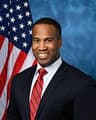 John James
Republican · Michigan
 Jonathan Jackson
Democrat · Illinois
 Ro Khanna
Democrat · California
 Michael Lawler
Republican · New York
 Nicholas Langworthy
Republican · New York
 John Moolenaar
Republican · Michigan
 Richard McCormick
Republican · Georgia
 Nathaniel Moran
Republican · Texas
 John Mannion
Democrat · New York
 Josh Riley
Democrat · New York
 Brad Sherman
Democrat · California
 Christopher Smith
Republican · New Jersey
 Marlin Stutzman
Republican · Indiana
 Elise Stefanik
Republican · New York
 Keith Self
Republican · Texas
 Jefferson Shreve
Republican · Indiana
 Suhas Subramanyam
Democrat · Virginia
 Matt Van Epps
Republican · Tennessee
 George Whitesides
Democrat · California
 Ryan Zinke
Republican · Montana