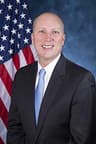
A Republican bill with 12 Republican cosponsors · See all 12 cosponsors
Last activity — Referred to the House Committee on Ways and Means.
In committee
Introduced and handed to a committee in the chamber it started in.
The committee holds it, and most bills are never heard from again. A hearing or a committee vote would be news; silence is the usual outcome, and it kills the bill without anyone voting against it.
Its path through Congress
- Introduced
- In Committee
What this bill would do
The Personalized Care Act of 2025 aims to amend the Internal Revenue Code of 1986 to expand and improve health savings accounts. It broadens the definition of an eligible individual to include those covered by various plans, such as government plans, the Indian Health Service, and health care sharing ministries. The bill also significantly increases HSA contribution limits and allows for the payment of various health insurance premiums from these accounts. Additionally, it includes new definitions for medical care service arrangements and health care sharing ministry payments. Finally, the act reduces the penalty for nonqualified distributions from 20 percent to 10 percent.
Yes· 3 of 13
- Scored +6
Would middle-income households be better off under this?
The significant increase in HSA contribution limits provides a major benefit to middle-income families.
- Scored +5
Would high-income households be better off under this?
Higher contribution limits allow high earners to shield more income from taxes through HSAs.
- Scored +5
Does this make health care easier to get in general?
The bill expands HSA eligibility to include various government plans, the Indian Health Service, and health care sharing ministries.
The opposite
No question was scored the opposite.
Who it would affect, and how
Potential Positive Impacts for People
-
Expanded Eligibility: The bill expands the definition of an "eligible individual" to include those covered by government plans like Medicare, Medicaid, and CHIP, as well as the Indian Health Service and health care sharing ministries (Section 2).
-
Higher Savings Limits: HSA contribution limits are increased, raising the individual limit from $2,250 to $10,800 and the family limit from $4,500 to $29,500 (Section 3).
-
Flexible Premium Payments: The bill allows for the payment of various health plans, insurance, or ministries from an HSA (Section 4).
-
Broader Definition of Medical Expenses: "Qualified medical expenses" are expanded to include periodic fees for medical services and amounts prepaid for services designed to prevent or treat disease (Section 5).
-
Treatment of Provider Fees: Periodic fees paid for a defined set of medical services on an as-needed basis are treated as amounts paid for medical care (Section 6).
-
Reduced Penalties: The penalty for nonqualified distributions is lowered from 20 percent to 10 percent (Section 7).
-
Support for Sharing Ministries: Payments made by members of a health care sharing ministry for medical expense sharing or administrative fees are included as qualified medical expenses (Section 8).
-
Membership Inclusion: Amounts paid for membership in a health care sharing ministry are treated as amounts paid for medical care (Section 9).
Potential Negative Impacts for People
- No negative impacts or burdens are explicitly mentioned in the provided text.
Groups and Interests Ranking
Every group the model scored this bill for, from -10 to +10. Tap or hover a score for the reason it gave.
- Demographic And Interest Groups
- Would middle-income households be better off under this? — The significant increase in HSA contribution limits provides a major benefit to middle-income families. Would high-income households be better off under this? — Higher contribution limits allow high earners to shield more income from taxes through HSAs. Would Native Americans be better off under this? — The bill expands HSA eligibility to include the Indian Health Service. Would people over 65 be better off under this? — The bill expands HSA eligibility to include individuals covered under Medicare. Would veterans be better off under this, taking everything together? — The bill expands HSA eligibility to include coverage under specific military and veterans healthcare chapters. Would households on low incomes be better off under this? — Expanding eligibility to Medicaid and CHIP participants provides more ways to save for medical expenses.
- Healthcare
- Does this make health care easier to get in general? — The bill expands HSA eligibility to include various government plans, the Indian Health Service, and health care sharing ministries. Does this put more money into Medicaid, the health coverage for people on low incomes? — The bill expands HSA eligibility to include individuals covered under the Medicaid program. Does this put more money into Medicare, the health coverage for people over 65? — The bill allows individuals covered by Medicare to be eligible for HSA contributions.
- Economy And Finance
- Does this cut taxes for middle-income families? — The bill increases HSA contribution limits significantly, allowing for greater tax-advantaged savings. Is this likely to grow the economy? — The expansion of health savings opportunities may increase disposable income for many households.
- Social Issues And Justice
- Does this expand the rights of people with disabilities? — Expanding HSA eligibility to broader groups can assist those with various coverage types. Is this likely to lift people out of poverty? — Increased HSA limits and broader eligibility can help lower-income individuals manage health costs more effectively.
- 11/12/2025
- 1 Cosponsor added.
- 5/8/2025
- 1 Cosponsor added.
- 3/3/2025
- 1 Cosponsor added.
- 1/31/2025
- 1 Cosponsor added.
- 1/28/2025
- Referred to the House Committee on Ways and Means.
- 8 Cosponsors added.
- Introduced in House
One bill Congress.gov lists as related to this one — companions in the other chamber, earlier versions, and bills this one absorbed or was folded into.
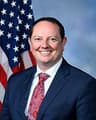 Eric Burlison
Republican · Missouri
 Elijah Crane
Republican · Arizona
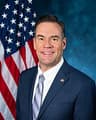 Russ Fulcher
Republican · Idaho
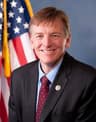 Paul Gosar
Republican · Arizona
 Andy Harris
Republican · Maryland
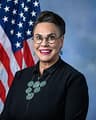 Harriet Hageman
Republican · Wyoming
 Mark Harris
Republican · North Carolina
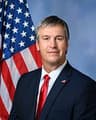 Barry Moore
Republican · Alabama
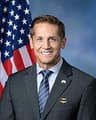 Richard McCormick
Republican · Georgia
 Andrew Ogles
Republican · Tennessee
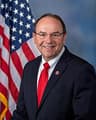 Thomas Tiffany
Republican · Wisconsin
 Randy Weber
Republican · Texas