
A Republican bill with 24 Republican cosponsors · See all 24 cosponsors
Last activity — Referred to the House Committee on Ways and Means.
In committee
Introduced and handed to a committee in the chamber it started in.
The committee holds it, and most bills are never heard from again. A hearing or a committee vote would be news; silence is the usual outcome, and it kills the bill without anyone voting against it.
Its path through Congress
- Introduced
- In Committee
What this bill would do
This bill, titled the "Safeguarding American Workers' Benefits Act," seeks to amend the Internal Revenue Code of 1986. It specifically aims to modify the social security number requirements for taxpayers claiming the child tax credit and the earned income tax credit. The bill changes the definition of a social security number for these purposes. The new definition requires the number to be issued to a United States citizen or pursuant to specific sections of the Social Security Act. These changes would apply to taxable years beginning after December 31, 2025.
Yes
No question was scored yes.
The opposite· 3 of 5
- Scored -5
Would immigrants be better off under this?
The new definition of a social security number narrows the ability of non-citizens to claim child and earned income tax credits.
- Scored -4
Would households on low incomes be better off under this?
The bill restricts access to the Earned Income Tax Credit and Child Tax Credit for certain households, which often includes low-income families.
- Scored -3
Would Hispanic Americans be better off under this?
By tightening social security number requirements for tax credits, the bill may disproportionately affect Hispanic households that may rely on different identification types.
Who it would affect, and how
Potential Positive Impacts for People
- Refining Credit Eligibility Requirements: The bill modifies the definition of a social security number used for claiming the child tax credit and the earned income tax credit (Section 2, subsection a and b). This ensures that the social security number must be issued to a citizen of the United States or pursuant to specific subclauses of the Social Security Act (Section 2, subsection a, clause 2, subclause A).
Potential Negative Impacts for People
- Modified Eligibility for Tax Credits: The bill changes the requirements for claiming the child tax credit and the earned income tax credit by requiring a social security number as defined in the new, more specific criteria (Section 2, subsection a and b). This may impact those who previously used social security numbers that do not meet the updated definition of being issued to a citizen or specific individuals under the Social Security Act (Section 2, subsection a, clause 2, subclause A).
Groups and Interests Ranking
Every group the model scored this bill for, from -10 to +10. Tap or hover a score for the reason it gave.
- Demographic And Interest Groups
- Would immigrants be better off under this? — The new definition of a social security number narrows the ability of non-citizens to claim child and earned income tax credits. Would households on low incomes be better off under this? — The bill restricts access to the Earned Income Tax Credit and Child Tax Credit for certain households, which often includes low-income families. Would Hispanic Americans be better off under this? — By tightening social security number requirements for tax credits, the bill may disproportionately affect Hispanic households that may rely on different identification types. Would children be better off under this? — The bill may reduce the availability of tax credits for children whose caregivers do not meet the new social security number requirements.
- Social Issues And Justice
- Is this likely to lift people out of poverty? — The bill restricts eligibility for the Child Tax Credit and Earned Income Tax Credit, which are key tools for poverty reduction.
- 3/18/2025
- 1 Cosponsor added.
- 2/14/2025
- 1 Cosponsor added.
- 2/11/2025
- 1 Cosponsor added.
- 2/6/2025
- 1 Cosponsor added.
- 1/31/2025
- 1 Cosponsor added.
- 1/28/2025
- Referred to the House Committee on Ways and Means.
- 19 Cosponsors added.
- Introduced in House
 Andy Biggs
Republican · Arizona
 Eric Burlison
Republican · Missouri
 Josh Brecheen
Republican · Oklahoma
 Sheri Biggs
Republican · South Carolina
 Michael Cloud
Republican · Texas
 Andrew Clyde
Republican · Georgia
 Ben Cline
Republican · Virginia
 Byron Donalds
Republican · Florida
 Warren Davidson
Republican · Ohio
 Brandon Gill
Republican · Texas
 Andy Harris
Republican · Maryland
 Mark Harris
Republican · North Carolina
 Anna Paulina Luna
Republican · Florida
 Nancy Mace
Republican · South Carolina
 Mary Miller
Republican · Illinois
 Riley Moore
Republican · West Virginia
 John McGuire
Republican · Virginia
 Ralph Norman
Republican · South Carolina
 Scott Perry
Republican · Pennsylvania
 David Rouzer
Republican · North Carolina
 Chip Roy
Republican · Texas
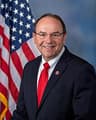 Thomas Tiffany
Republican · Wisconsin
 Jefferson Van Drew
Republican · New Jersey
 Randy Weber
Republican · Texas