Bill · H.R. 7223· House(119-HR-7223)
Language Access for All Act of 2026
- Introduced
- 1/22/2026
- Last activity
- 1/22/2026 — Referred to the House Committee on Oversight and Government Reform.
- Sponsored by
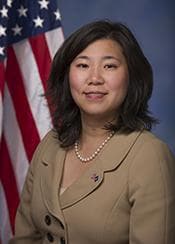
- Grace Meng
- Cosponsors
- - 33 - 0
- Introduced
- In Committee
What this bill would do
The Language Access for All Act of 2026 aims to improve how people with limited English proficiency access Federal services. It requires Federal agencies to translate vital documents and provide oral or remote interpretation services. Agencies must also create specific language access plans and establish technical standards to ensure quality and accuracy. The bill introduces a public complaint system managed by the Attorney General to track barriers to access. Additionally, it establishes the position of Language Access Coordinator within each agency to oversee these efforts. Finally, the Act sets rules for using artificial intelligence in language assistance to ensure it does not replace qualified human services.
Yes· 3 of 6
Would immigrants be better off under this?+8
The bill significantly enhances the ability of immigrants with limited English proficiency to interact with federal agencies.
Would Hispanic Americans be better off under this?+7
The bill provides mandated translation and interpretation services that directly benefit large Hispanic-speaking populations.
Does this make what the government does easier for the public to see?+7
The bill creates a public complaint system and a central repository for language access plans to ensure accountability.
The opposite
No question was scored the opposite.
Who it would affect, and how
Potential Positive Impacts for People
-
Improved Access to Vital Information: Agencies must translate vital documents into languages frequently encountered or dominant in the U.S., ensuring people can understand essential information (Section 2(a)(1)(A)).
-
Enhanced Communication through Digital Tools: The bill requires adding multilingual functionality to agency digital and information technology systems to better track and provide content in various languages (Section 2(a)(1)(A)(ii)).
-
Flexible Service Options: Agencies can use qualified, bilingual staff as an alternative to outside interpreters, which may lead to faster and more cost-efficient service (Section 2(a)(1)(C)-(D)).
-
Increased Transparency and Accountability: The Attorney General will maintain a public system for submitting complaints regarding language barriers and will publish annual reports on these complaints (Section 2(a)(2)).
-
Standardized Quality Assurance: The establishment of Language Access Technical Standards is intended to ensure that services are accurate, timely, and effective (Section 2(c)(1)).
-
Protection Against Automation Errors: The bill prevents agencies from fully replacing human services with AI and requires human verification of machine translations to ensure accuracy and cultural relevance (Section 2(d)(1)-(2)).
Potential Negative Impacts for People
-
Potential for Implementation Delays: While agencies must act within one year, the complexity of creating language access plans and technical standards may impact how quickly benefits are realized (Section 2(a)-(c)).
-
Risk of Incorrect Automated Services: While the bill attempts to mitigate this, the use of artificial intelligence and machine translation carries risks that must be monitored for errors and accuracy (Section 2(d)(2)).
-
Possible Denial of Access via Waivers: An agency may request a waiver from certain technical standards if they claim it imposes an "undue burden," which could potentially limit the level of access provided (Section 2(c)(3)).
Groups and Interests Ranking
Every group the model scored this bill for, from -10 to +10. Hover a score for the reason it gave.
- Demographic And Interest Groups
- Good For Immigrants+8Good For Hispanic Americans+7Good For Low Income Households+5
- Governance And Ideology
- Improves Government Transparency+7
- Social Issues And Justice
- Improves Racial Equity+6
- Education And Technology
- Improves Data Privacy+4
- 10/5/2026
- 1 Cosponsor added.
- 7/14/2026
- 1 Cosponsor added.
- 6/8/2026
- 1 Cosponsor added.
- 5/13/2026
- 1 Cosponsor added.
- 3/4/2026
- 4 Cosponsors added.
- 2/12/2026
- 2 Cosponsors added.
- 2/10/2026
- 4 Cosponsors added.
- 2/4/2026
- 2 Cosponsors added.
- 2/3/2026
- 14 Cosponsors added.
- 1/22/2026
- Referred to the House Committee on Oversight and Government Reform.
- 3 Cosponsors added.
- Introduced in House
2 bills Congress.gov lists as related to this one — companions in the other chamber, earlier versions, and bills this one absorbed or was folded into.
 Ami Bera
Democrat · California
 Nanette Barragán
Democrat · California
 Ed Case
Democrat · Hawaii
 Yvette Clarke
Democrat · New York
 André Carson
Democrat · Indiana
 Judy Chu
Democrat · California
 J. Correa
Democrat · California
 Danny Davis
Democrat · Illinois
 Lloyd Doggett
Democrat · Texas
 Adriano Espaillat
Democrat · New York
 Lois Frankel
Democrat · Florida
 Lizzie Fletcher
Democrat · Texas
 Al Green
Democrat · Texas
 Jimmy Gomez
Democrat · California
 Daniel Goldman
Democrat · New York
 Jahana Hayes
Democrat · Connecticut
 Ro Khanna
Democrat · California
 Raja Krishnamoorthi
Democrat · Illinois
 Sydney Kamlager-Dove
Democrat · California
 Timothy Kennedy
Democrat · New York
 Zoe Lofgren
Democrat · California
 Ted Lieu
Democrat · California
 Kevin Mullin
Democrat · California
 Dave Min
Democrat · California
 Eleanor Norton
Democrat · District of Columbia
 Adam Smith
Democrat · Washington
 Marilyn Strickland
Democrat · Washington
 Lateefah Simon
Democrat · California
 Rashida Tlaib
Democrat · Michigan
 Jill Tokuda
Democrat · Hawaii
 Shri Thanedar
Democrat · Michigan
 Juan Vargas
Democrat · California
 Eugene Vindman
Democrat · Virginia