A Republican bill with 32 Republican cosponsors · See all 32 cosponsors
Last activity — Referred to the House Committee on Education and Workforce.
In committee
Introduced and handed to a committee in the chamber it started in.
The committee holds it, and most bills are never heard from again. A hearing or a committee vote would be news; silence is the usual outcome, and it kills the bill without anyone voting against it.
Its path through Congress
- Introduced
- In Committee
What this bill would do
The "Protecting Life on College Campus Act of 2025" aims to stop Federal funds from going to higher education institutions that have a connection to certain service sites. This applies if an institution hosts or is affiliated with a school-based service site that provides abortions or abortion drugs to its students or employees. To keep receiving Federal funds, these institutions must submit an annual report to the Secretaries of Education and Health and Human Services. This report must certify that their school-based sites do not provide these services. The bill defines specific terms regarding what constitutes an abortion drug and what counts as a school-based service site.
Yes
- Scored +4
Does this give the federal government more power?
The bill leverages Federal funding to dictate the types of services universities can provide.
The opposite· 3 of 9
- Scored -8
Does this make abortion easier to get?
The bill restricts the availability of abortion services and drugs at school-based service sites by threatening Federal funding.
- Scored -7
Would women be better off under this?
The bill restricts access to abortion and abortion medications for female students and employees.
- Scored -6
Does this make college cost less?
Institutions risk losing all Federal funds if they provide specified abortion services, potentially harming their financial stability.
Who it would affect, and how
Potential Positive Impacts for People
- Ensures Compliance through Reporting: Institutions must submit an annual report to the Secretary of Education and the Secretary of Health and Human Services to certify that no site provides abortion drugs or abortions to students or employees (Section 2(b)).
Potential Negative Impacts for People
-
Loss of Federal Funding: No Federal funds may be awarded, either directly or indirectly through contracts or subcontracts, to any institution of higher education that hosts or is affiliated with a school-based service site providing abortion drugs or abortions to students or employees (Section 2(a)).
-
New Administrative Requirements: To remain eligible for Federal funds, institutions that host or are affiliated with one or more school-based service sites are required to submit an annual report to the Secretary of Education and the Secretary of Health and Human Services (Section 2(b)).
Groups and Interests Ranking
Every group the model scored this bill for, from -10 to +10. Tap or hover a score for the reason it gave.
- Demographic And Interest Groups
- Would women be better off under this? — The bill restricts access to abortion and abortion medications for female students and employees. Would students be better off under this? — Students lose access to specific health services and their institutions risk funding losses. Would people in their twenties and thirties be better off under this? — College-aged young adults may lose access to abortion services on campus. Would households on low incomes be better off under this? — Low-income students may lose access to affordable, campus-based reproductive health services.
- Healthcare
- Does this make abortion easier to get? — The bill restricts the availability of abortion services and drugs at school-based service sites by threatening Federal funding. Does this make health care easier to get in general? — It limits the scope of healthcare services available to students and employees at campus-affiliated sites.
- Education And Technology
- Does this make college cost less? — Institutions risk losing all Federal funds if they provide specified abortion services, potentially harming their financial stability.
- Social Issues And Justice
- Does this narrow the gap between how men and women are treated? — The bill restricts access to reproductive healthcare services for students and employees.
- Governance And Ideology
- Does this give the federal government more power? — The bill leverages Federal funding to dictate the types of services universities can provide. Does this leave more decisions to the states? — It imposes Federal mandates on health services within higher education institutions across states.
- 11/17/2026
- 1 Cosponsor added.
- 9/14/2026
- 1 Cosponsor added.
- 9/1/2026
- 1 Cosponsor added.
- 4/29/2026
- 1 Cosponsor added.
- 12/9/2025
- 1 Cosponsor added.
- 2/26/2025
- 1 Cosponsor added.
- 2/6/2025
- 1 Cosponsor added.
- 1/31/2025
- 1 Cosponsor added.
- 1/23/2025
- 2 Cosponsors added.
- 1/22/2025
- Referred to the House Committee on Education and Workforce.
- 22 Cosponsors added.
- Introduced in House
One bill Congress.gov lists as related to this one — companions in the other chamber, earlier versions, and bills this one absorbed or was folded into.
 Robert Aderholt
Republican · Alabama
 Cliff Bentz
Republican · Oregon
 Gus Bilirakis
Republican · Florida
 Mike Bost
Republican · Illinois
 Andy Biggs
Republican · Arizona
 Sheri Biggs
Republican · South Carolina
 Andrew Clyde
Republican · Georgia
 Ben Cline
Republican · Virginia
 Dan Crenshaw
Republican · Texas
 Elijah Crane
Republican · Arizona
 Warren Davidson
Republican · Ohio
 Troy Downing
Republican · Montana
 Randy Feenstra
Republican · Iowa
 Charles Fleischmann
Republican · Tennessee
 Mike Flood
Republican · Nebraska
 Paul Gosar
Republican · Arizona
 H. Griffith
Republican · Virginia
 Glenn Grothman
Republican · Wisconsin
 Michael Guest
Republican · Mississippi
 Brandon Gill
Republican · Texas
 Andy Harris
Republican · Maryland
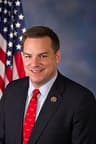 Richard Hudson
Republican · North Carolina
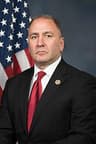 Clay Higgins
Republican · Louisiana
 Mark Harris
Republican · North Carolina
 Tracey Mann
Republican · Kansas
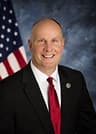 John Moolenaar
Republican · Michigan
 Mary Miller
Republican · Illinois
 Barry Moore
Republican · Alabama
 Riley Moore
Republican · West Virginia
 Andrew Ogles
Republican · Tennessee
 Daniel Webster
Republican · Florida
 Randy Weber
Republican · Texas