Bill · H.R. 6225· House(119-HR-6225)
PAUSE Act of 2025
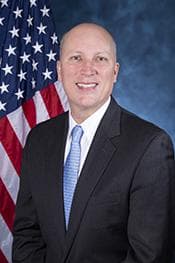
- Introduced
- 11/20/2025
- Last activity
- 11/20/2025 — Referred to the House Committee on the Judiciary.
- Sponsored by
- Chip Roy
- Cosponsors
- - 14 - 0
- Introduced
- In Committee
What this bill would do
The PAUSE Act of 2025 seeks to limit the issuance of visas and the provision of legal status under immigration laws until specific conditions are met. These conditions include changes to citizenship at birth, limitations on certain statuses, and restrictions on various public benefits. The bill also imposes a $100,000 fee on H-1B employer petitions. Additionally, it eliminates the Optional Practical Training Program and repeals the Diversity Immigrant Visa Program.
Yes
Does this leave more decisions to the states?+4
The bill allows states and localities more authority to deny access to public schools to certain aliens.
Does this reduce what the federal government spends?+3
The bill reduces federal spending by restricting access to various social benefits and loans for non-citizens.
Does this tighten control of the border?+2
The bill implements stricter controls on visa issuance and status adjustments.
The opposite· 3 of 13
Would immigrants be better off under this?-10
The bill restricts visas, limits status adjustments, repeals the Diversity Visa program, and revokes existing applications.
Does this make it easier for immigrants already here to become citizens?-8
The bill restricts birthright citizenship and narrows the categories of people eligible for status.
Would households on low incomes be better off under this?-7
The bill removes access to critical social safety nets like SNAP, SSI, and WIC.
Who it would affect, and how
Potential Positive Impacts for People
-
Restrictions on benefits for specific groups: The bill limits several benefits for certain aliens, which could impact various social programs. These include Medicare (Section 2, subsection a, 6, A), medical assistance for emergency conditions (Section 2, subsection a, 6, B), Supplemental Security Income (Section 2, subsection a, 6, C), and the Supplemental Nutrition Assistance Program (Section 2, subsection a, 6, D) (Section 2).
-
Changes to financial assistance: The bill restricts access to specific financial aid, such as credits under the Internal Revenue Code (Section 2, subsection a, 6, E and F), loans under the Higher Education Act (Section 2, subsection a, 6, H), and loans or guarantees under the Small Business Act (Section 2, subsection a, 6, J) (Section 2).
-
Denial of access to public schools: The bill includes a provision where states and localities are not prohibited from denying access to public schools to aliens present in the United States without lawful status (Section 2, subsection a, 1) (Section 2).
Potential Negative Impacts for People
-
Revocation of existing applications: For some aliens, the enactment of this bill would result in the revocation of their current applications for status and the refund of their paid fees (Section 2, subsection a, 2; Section 4, subsection a, 2; Section 5, subsection c, 2) (Section 2, Section 4, and Section 5).
-
Impact on employment and education: The bill eliminates the Optional Practical Training Program, which prevents aliens present under certain nonimmigrant statuses from receiving employment authorization (Section 4) (Section 4).
-
Increased costs for employers: Employers filing petitions for H-1B status would face a new fee of $100,000 (Section 3) (Section 3).
-
Restrictions on citizenship and status: The bill limits citizenship at birth to children who have at least one parent who is a U.S. citizen or a lawful permanent resident (Section 2, subsection a, 3) (Section 2). It also limits the ability of certain aliens to be accorded status, including those categorized as Islamists, observers of Sharia law, or members/associates of the Chinese Communist Party or terrorist organizations (Section 2, subsection a, 5) (Section 2).
-
Repeal of visa programs: The bill repeals the Diversity Immigrant Visa Program (Section 5) (Section 5).
Groups and Interests Ranking
Every group the model scored this bill for, from -10 to +10. Hover a score for the reason it gave.
- Demographic And Interest Groups
- Good For Immigrants-10Good For Low Income Households-7Good For Students-7Good For Hispanic Americans-6Good For Children-5
- Social Issues And Justice
- Improves Border Security+2Improves Pathway To Citizenship-8Improves Racial Equity-7Improves Poverty Reduction-6
- Healthcare
- Increases Medicaid Funding-5Increases Medicare Funding-5
- Economy And Finance
- Reduces Government Spending+3Improves Small Business Support-5Increases Job Creation-5
- Education And Technology
- Improves College Affordability-6
- Governance And Ideology
- Increase States Rights+4
- 5/7/2026
- 1 Cosponsor added.
- 3/25/2026
- 1 Cosponsor added.
- 3/5/2026
- 1 Cosponsor added.
- 1/30/2026
- 1 Cosponsor added.
- 1/7/2026
- 1 Cosponsor added.
- 12/12/2025
- 1 Cosponsor added.
- 12/1/2025
- 1 Cosponsor added.
- 11/20/2025
- Referred to the House Committee on the Judiciary.
- 7 Cosponsors added.
- Introduced in House
 Lauren Boebert
Republican · Colorado
 Andy Biggs
Republican · Arizona
 Josh Brecheen
Republican · Oklahoma
 Sheri Biggs
Republican · South Carolina
 Elijah Crane
Republican · Arizona
 Byron Donalds
Republican · Florida
 Randy Fine
Republican · Florida
 Paul Gosar
Republican · Arizona
 Brandon Gill
Republican · Texas
 Diana Harshbarger
Republican · Tennessee
 Barry Moore
Republican · Alabama
 Troy Nehls
Republican · Texas
 Andrew Ogles
Republican · Tennessee
 Keith Self
Republican · Texas