Bill · H.R. 5674· House(119-HR-5674)
Emergency Relief for Federal Workers Act of 2025
- Introduced
- 10/3/2025
- Last activity
- 10/3/2025 — Referred to the Committee on Ways and Means, and in addition to the Committee on Oversight and Government Reform, for a period to be subsequently determined by the Speaker, in each case for consideration of such provisions as fall within the jurisdiction of the committee concerned.
- Sponsored by
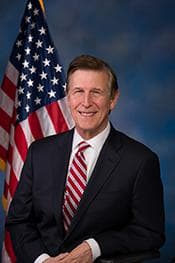
- Donald Beyer
- Cosponsors
- - 38 - 0
- Introduced
- In Committee
What this bill would do
The ``Emergency Relief for Federal Workers Act of 2025'' aims to amend the Internal Revenue Code of 1986 and other laws to assist federal employees during government shutdowns. It focuses on waiving certain penalties for those receiving distributions from the Thrift Savings Plan during a qualified lapse in appropriations. The bill provides provisions for hardship withdrawals and age-based withdrawals for employees who are furloughed or working without pay. It also addresses loan rules to ensure missed payments during a shutdown are not treated as taxable distributions. Additionally, the act allows for certain contributions back into the Thrift Savings Fund following these withdrawals.
Yes· 3 of 5
Would households on low incomes be better off under this?+5
The bill provides emergency access to retirement funds through hardship withdrawals to assist during pay lapses.
Would middle-income households be better off under this?+5
Federal employees can access up to $30,000 from their retirement accounts without penalty to manage financial hardships during a shutdown.
Does this cut taxes for middle-income families?+5
The bill waives the 10-percent additional tax on certain hardship distributions from the Thrift Savings Plan for federal employees during a shutdown.
The opposite
No question was scored the opposite.
Who it would affect, and how
Potential Positive Impacts for People
-
Penalty Waivers for Hardship Distributions: Federal employees who are furloughed or working without pay due to a qualified lapse in appropriations can receive distributions from the Thrift Savings Plan without the 10-percent additional tax (Section 2).
-
Financial Relief via Withdrawals: The Board will permit employees to make withdrawals based on financial hardship during a qualified lapse in appropriations, up to an aggregate of $30,000 (Section 3).
-
Ability to Replenish Savings: Employees who take a covered hardship or age-based withdrawal may make contributions back to the Thrift Savings Fund to recoup their funds, up to the aggregate amount of the withdrawals or $30,000 (Section 3).
-
Loan Access and Protection: The Board will prescribe rules allowing loans to be made to employees who are furloughed or working without pay due to a lapse in appropriations (Section 3).
-
Tax Protection on Missed Loan Payments: Missed loan payments caused by a shutdown will not be treated as a taxable distribution (Section 4).
Potential Negative Impacts for People
-
Withdrawal Limits: The waiver of the 10-percent tax and the ability to make hardship withdrawals are limited to an aggregate amount of $30,000 per qualified lapse in appropriations (Section 2 and Section 3).
-
Loan Repayment Obligations: For employees who miss payments on a loan due to a shutdown, the full amount due shall be deducted and withheld from the pay provided to the employee once pay resumes (Section 3).
Groups and Interests Ranking
Every group the model scored this bill for, from -10 to +10. Hover a score for the reason it gave.
- Demographic And Interest Groups
- Good For Low Income Households+5Good For Middle Class Households+5Good For Seniors+4Good For People With Disabilities+1
- Economy And Finance
- Reduces Middle Class Taxes+5
- 11/4/2025
- 1 Cosponsor added.
- 10/28/2025
- 1 Cosponsor added.
- 10/24/2025
- 1 Cosponsor added.
- 10/17/2025
- 1 Cosponsor added.
- 10/14/2025
- 3 Cosponsors added.
- 10/10/2025
- 1 Cosponsor added.
- 10/8/2025
- 6 Cosponsors added.
- 10/6/2025
- 2 Cosponsors added.
- 10/3/2025
- Referred to the Committee on Ways and Means, and in addition to the Committee on Oversight and Government Reform, for a period to be subsequently determined by the Speaker, in each case for consideration of such provisions as fall within the jurisdiction of the committee concerned.
- 22 Cosponsors added.
- Introduced in House
One bill Congress.gov lists as related to this one — companions in the other chamber, earlier versions, and bills this one absorbed or was folded into.
 Joyce Beatty
Democrat · Ohio
 Wesley Bell
Democrat · Missouri
 Jim Costa
Democrat · California
 Judy Chu
Democrat · California
 Troy Carter
Democrat · Louisiana
 Diana DeGette
Democrat · Colorado
 Sharice Davids
Democrat · Kansas
 Sarah Elfreth
Democrat · Maryland
 Lois Frankel
Democrat · Florida
 Daniel Goldman
Democrat · New York
 Jared Huffman
Democrat · California
 Henry Johnson
Democrat · Georgia
 Jonathan Jackson
Democrat · Illinois
 Robin Kelly
Democrat · Illinois
 Ted Lieu
Democrat · California
 Gwen Moore
Democrat · Wisconsin
 Seth Moulton
Democrat · Massachusetts
 Jennifer McClellan
Democrat · Virginia
 LaMonica McIver
Democrat · New Jersey
 April McClain Delaney
Democrat · Maryland
 Jerrold Nadler
Democrat · New York
 Eleanor Norton
Democrat · District of Columbia
 Nellie Pou
Democrat · New Jersey
 Emily Randall
Democrat · Washington
 Linda Sánchez
Democrat · California
 Terri Sewell
Democrat · Alabama
 Bradley Schneider
Democrat · Illinois
 Eric Swalwell
Democrat · California
 Darren Soto
Democrat · Florida
 Suhas Subramanyam
Democrat · Virginia
 Rashida Tlaib
Democrat · Michigan
 Shri Thanedar
Democrat · Michigan
 Nydia Velázquez
Democrat · New York
 Eugene Vindman
Democrat · Virginia
 Nikema Williams
Democrat · Georgia
 Bonnie Watson Coleman
Democrat · New Jersey
 George Whitesides
Democrat · California
 James Walkinshaw
Democrat · Virginia