Bill · H.R. 5658· House(119-HR-5658)
Child Care for Every Community Act
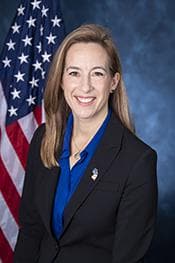
- Introduced
- 9/30/2025
- Last activity
- 2/4/2026 — ASSUMING FIRST SPONSORSHIP - Ms. Ocasio-Cortez asked unanimous consent that she may hereafter be considered as the first sponsor of H.R. 5658, a bill originally introduced by Representative Sherrill, for the purpose of adding cosponsors and requesting reprintings pursuant to clause 7 of rule XII. Agreed to without objection.
- Sponsored by
- Mikie Sherrill
- Cosponsors
- - 73 - 0
- Introduced
What this bill would do
The Child Care for Every Community Act aims to establish universal, comprehensive child care and early learning programs. It seeks to ensure all young children have opportunities to reach their full potential through affordable, high-quality programs. The bill establishes a framework for services including health, nutritional, and educational support, while promoting school readiness. It provides various funding streams, including supplemental assistance for high-need areas and grants to States for workforce development. Additionally, the act establishes a Child Development Research Council and mandates annual reports to Congress.
Yes· 3 of 48
Would children be better off under this?+10
Provides universal access to high-quality early learning, health, and nutrition services.
Would households on low incomes be better off under this?+10
Eliminates child care fees and provides comprehensive support services for underserved populations.
Would Native Americans be better off under this?+10
Provides 100 percent federal funding for Native American and Native Hawaiian children and prioritizes Tribal Colleges.
The opposite· 3 of 4
Does this reduce what the federal government spends?-8
Increases federal spending through universal grants and an uncapped entitlement for child care.
Does this reduce what the federal government owes?-5
Appropriates significant federal funds for an uncapped entitlement and new grant programs.
Does this make the government pay for what it commits to?-4
Creates an uncapped entitlement, which may challenge long-term budget predictability.
Who it would affect, and how
Potential Positive Impacts for People
-
Universal Access and Affordability: The bill aims to provide all young children with access to comprehensive child care and early learning programs, ensuring families can access these services regardless of their circumstances (Section 101).
-
Support for Low-Income Families: Low-income children, defined as those in families with incomes not more than 200 percent of the poverty line, are not charged fees for services (Section 112, Section 114).
-
Full Funding for Specific Groups: The Secretary is required to pay 100 percent of the costs for providing programs to children of migrant and seasonal farmworkers, as well as Native American children in Indian Tribes and Native Hawaiian children (Section 112).
-
Comprehensive Development: Programs are designed to promote school readiness by enhancing cognitive, social, emotional, and physical development through specific learning environments (Section 101).
-
Support for Families with Specific Needs: The act includes provisions for health, mental health, and nutritional services, as well as assistance for families of dual language learners (Section 114).
-
Workforce Stability and Pay: The bill seeks to provide a qualified and stable workforce by ensuring employees are paid competitive rates comparable to local educational agencies and no less than a living wage (Section 136).
-
Improved Child Development Services: The bill authorizes research into alternative methods and innovative approaches to achieve maximum development of children (Section (b)(B)).
-
Support for Children with Disabilities: The Secretary may collaborate with organizations that have expertise in inclusive educational strategies for preschoolers with disabilities (Section (c)(6)).
-
Enhanced Workforce Stability: States can use grants to support compensation for the workforce that is comparable to primary education workforce compensation, including bonuses (Section 152(b)(3)).
-
Financial Relief for High-Need Areas: The Secretary may provide supplemental assistance to prime sponsors who serve areas with a high concentration of families earning near the poverty line (Section 151(c)).
-
Increased Program Stability: Grants to States can be used to cover fixed operating expenses to support increased wages and continuity of services (Section 152(b)(16)).
-
Protection of Parental Rights: The bill requires the establishment of parental consent for nonemergency intrusive physical examinations (Section 141).
Potential Negative Impacts for People
-
Potential Fees for Non-Low-Income Families: While low-income children are exempt from fees, other families may be charged based on a sliding fee scale (Section 114).
-
Administrative Burden on Providers: Prime sponsors must comply with various national program standards, monitoring procedures, and mandatory annual reports (Section 121, Section 114).
-
Requirements for Staff Training: Employment is conditioned upon the satisfactory completion of specific training programs covering topics like child abuse prevention and emergency medical procedures (Section 135).
-
Mandatory Financial Contributions: Non-Federal shares of costs may be provided through various sources, including fees from families (Section 112).
-
Ownership of Personal Data: All studies, reports, proposals, and data produced with Federal funds under this title will become the property of the United States (Section (g)).
-
Restrictions on State Spending: States are prohibited from reducing their own expenditures for child care and early learning programs due to the financial assistance provided under this section (Section 152(c)).
-
Limitations on Benefits: An eligible child can only receive child care services under this subchapter that they are ineligible for under the Child Care and Development Block Grant Act (Section 201(b)).
Groups and Interests Ranking
Every group the model scored this bill for, from -10 to +10. Hover a score for the reason it gave.
- Demographic And Interest Groups
- Good For Children+10Good For Low Income Households+10Good For Native Americans+10Good For Farmers+9Good For People With Disabilities+9Good For Union Workers+9Good For Women+9Good For African Americans+8Good For Asian Americans+8Good For Hispanic Americans+8Good For Immigrants+8Good For Middle Aged+7Good For Middle Class Households+7Good For Rural Residents+7Good For Students+7Good For Urban Residents+7Good For Men+6Good For White Americans+6Good For Young Adults+6Good For Business Owners+5Good For High Income Households+4Good For Veterans+3
- Social Issues And Justice
- Improves Childcare Affordability+10Improves Disability Rights+9Improves Racial Equity+8Improves Gender Equality+7Improves Poverty Reduction+7Reduces Homelessness+5
- Education And Technology
- Improves College Affordability+6Improves Data Privacy+6Increases Scientific Research Funding+6Improves Student Loan Relief+4Increases Public School Funding+4
- Economy And Finance
- Improves Union Protections+9Increases Job Creation+8Improves Consumer Protection+7Increases Minimum Wage+7Improves Small Business Support+6Improves Economic Growth+5Reduces Government Spending-8Reduces National Debt-5Improves Fiscal Responsibility-4
- Healthcare
- Improves Mental Health Access+8Improves Healthcare Access+7Increases Research Funding+6Improves Opioid Crisis Response+4
- Governance And Ideology
- Increases Federal Power+7Improves Privacy Rights+6Improves Due Process+5Improves Government Transparency+5Increase States Rights-1
- Environment Energy And Infrastructure
- Improves Rural Development+6
- 9/14/2026
- 2 Cosponsors added.
- 9/2/2026
- 2 Cosponsors added.
- 8/10/2026
- 2 Cosponsors added.
- 7/27/2026
- 4 Cosponsors added.
- 7/16/2026
- 2 Cosponsors added.
- 7/13/2026
- 1 Cosponsor added.
- 6/8/2026
- 1 Cosponsor added.
- 5/14/2026
- 1 Cosponsor added.
- 5/12/2026
- 3 Cosponsors added.
- 4/30/2026
- 1 Cosponsor added.
- 4/29/2026
- 1 Cosponsor added.
- 4/20/2026
- 1 Cosponsor added.
- 2/25/2026
- 1 Cosponsor added.
- 2/4/2026
- ASSUMING FIRST SPONSORSHIP - Ms. Ocasio-Cortez asked unanimous consent that she may hereafter be considered as the first sponsor of H.R. 5658, a bill originally introduced by Representative Sherrill, for the purpose of adding cosponsors and requesting reprintings pursuant to clause 7 of rule XII. Agreed to without objection.
- 11/19/2025
- 1 Cosponsor added.
- 11/7/2025
- 1 Cosponsor added.
- 10/31/2025
- 2 Cosponsors added.
- 10/8/2025
- 2 Cosponsors added.
- 10/3/2025
- 3 Cosponsors added.
- 9/30/2025
- Referred to the House Committee on Education and Workforce.
- 42 Cosponsors added.
- Introduced in House
One bill Congress.gov lists as related to this one — companions in the other chamber, earlier versions, and bills this one absorbed or was folded into.
 Gabe Amo
Democrat · Rhode Island
 Yassamin Ansari
Democrat · Arizona
 Suzanne Bonamici
Democrat · Oregon
 Donald Beyer
Democrat · Virginia
 Nanette Barragán
Democrat · California
 Shontel Brown
Democrat · Ohio
 Becca Balint
Democrat · Vermont
 Everton Blair
Democrat · Georgia
 Yvette Clarke
Democrat · New York
 Judy Chu
Democrat · California
 Katherine Clark
Democrat · Massachusetts
 Troy Carter
Democrat · Louisiana
 Greg Casar
Democrat · Texas
 Danny Davis
Democrat · Illinois
 Diana DeGette
Democrat · Colorado
 Christopher Deluzio
Democrat · Pennsylvania
 Mark DeSaulnier
Democrat · California
 Debbie Dingell
Democrat · Michigan
 Madeleine Dean
Democrat · Pennsylvania
 Dwight Evans
Democrat · Pennsylvania
 Adriano Espaillat
Democrat · New York
 Veronica Escobar
Democrat · Texas
 Maxwell Frost
Democrat · Florida
 Laura Friedman
Democrat · California
 Al Green
Democrat · Texas
 John Garamendi
Democrat · California
 Jesús García
Democrat · Illinois
 Robert Garcia
Democrat · California
 Daniel Goldman
Democrat · New York
 Adelita Grijalva
Democrat · Arizona
 Steven Horsford
Democrat · Nevada
 Jahana Hayes
Democrat · Connecticut
 Val Hoyle
Democrat · Oregon
 Pramila Jayapal
Democrat · Washington
 Sara Jacobs
Democrat · California
 Jonathan Jackson
Democrat · Illinois
 Stephen Lynch
Democrat · Massachusetts
 Ted Lieu
Democrat · California
 Mike Levin
Democrat · California
 Summer Lee
Democrat · Pennsylvania
 Grace Meng
Democrat · New York
 Joseph Morelle
Democrat · New York
 Morgan McGarvey
Democrat · Kentucky
 Seth Magaziner
Democrat · Rhode Island
 Kevin Mullin
Democrat · California
 Robert Menendez
Democrat · New Jersey
 Sarah McBride
Democrat · Delaware
 Analilia Mejia
Democrat · New Jersey
 Jerrold Nadler
Democrat · New York
 Eleanor Norton
Democrat · District of Columbia
 Donald Norcross
Democrat · New Jersey
 Ayanna Pressley
Democrat · Massachusetts
 Jamie Raskin
Democrat · Maryland
 Delia Ramirez
Democrat · Illinois
 Luz Rivas
Democrat · California
 Emily Randall
Democrat · Washington
 Adam Smith
Democrat · Washington
 Linda Sánchez
Democrat · California
 Mary Gay Scanlon
Democrat · Pennsylvania
 Melanie Stansbury
Democrat · New Mexico
 Andrea Salinas
Democrat · Oregon
 Lateefah Simon
Democrat · California
 Bennie Thompson
Democrat · Mississippi
 Paul Tonko
Democrat · New York
 Rashida Tlaib
Democrat · Michigan
 Lori Trahan
Democrat · Massachusetts
 Ritchie Torres
Democrat · New York
 Jill Tokuda
Democrat · Hawaii
 Shri Thanedar
Democrat · Michigan
 Nydia Velázquez
Democrat · New York
 Juan Vargas
Democrat · California
 Maxine Waters
Democrat · California
 Frederica Wilson
Democrat · Florida