Bill · H.R. 5528· House(119-HR-5528)
America’s CHILDREN Act of 2025
- Introduced
- 9/19/2025
- Last activity
- 9/19/2025 — Referred to the House Committee on the Judiciary.
- Sponsored by
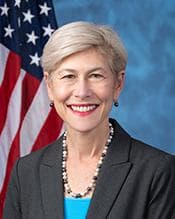
- Deborah Ross
- Cosponsors
- - 17 - 14
- Introduced
- In Committee
What this bill would do
This bill, known as the "America's CHILDREN Act of 2025," allows certain college graduates who entered the U.S. as children to apply for lawful permanent resident status. To qualify, individuals must have been lawfully present as dependent children of nonimmigrant employees for at least 8 years and have a total lawful presence of at least 10 years. The bill also creates protections to prevent children from "aging out" of their status based on when their parent's petition was filed. Additionally, it allows certain long-term dependents to extend their status regardless of marital status and provides them with employment authorization. Finally, it establishes rules for retaining priority dates for principal and derivative beneficiaries.
Yes· 3 of 12
Would people in their twenties and thirties be better off under this?+9
Allows college graduates who entered as children a path to permanent residency and work authorization.
Would immigrants be better off under this?+9
Directly creates new legal pathways and protections for a specific class of nonimmigrants.
Does this make it easier for immigrants already here to become citizens?+8
Creates a specific pathway to permanent residency for qualifying college graduates who entered as children.
The opposite
No question was scored the opposite.
Who it would affect, and how
Potential Positive Impacts for People
-
Path to Permanent Residency: College graduates who entered the U.S. as children and meet specific residency and legal requirements can now apply for lawful permanent resident status (Section 2(a) and 2(b)).
-
Age-Out Protections: The bill changes how a person's age is determined for visa petitions, potentially protecting children of nonimmigrants from losing eligibility based on their age (Section 3(a)(1)).
-
Employment Authorization: Individuals admitted as dependent children under this section are authorized to work in the United States (Section 3(b)(3)).
-
Status Flexibility: Eligible long-term dependents may change or extend their status as a dependent child regardless of whether they are married (Section 3(b)(2)).
-
Priority Date Retention: Principal and derivative beneficiaries can keep the priority date from their earliest approved petition or labor certification for use in future approved petitions (Section 3(c)).
-
Opportunity to Reopen Cases: People whose petitions were previously denied may be able to reopen their cases if they would have been approved under these new rules (Section 3(a)(2)(B)).
Potential Negative Impacts for People
-
Strict Eligibility Requirements: Not all college graduates can benefit, as they must meet specific aggregate time requirements of 8 and 10 years of lawful presence as a dependent of specific nonimmigrant employment types (Section 2(a)).
-
Time Limits on Relief: Individuals seeking to reopen a denied petition must file their motion within 2 years after the Act is enacted (Section 3(a)(2)(B)(i)(III)).
-
Loss of Protection for Inaction: If an individual fails to seek permanent resident status within 2 years of a visa becoming available, they will be judged by their biological age instead of the protected age, unless there were extraordinary circumstances (Section 3(a)(1)(A)(C)).
Groups and Interests Ranking
Every group the model scored this bill for, from -10 to +10. Hover a score for the reason it gave.
- Demographic And Interest Groups
- Good For Immigrants+9Good For Young Adults+9Good For Children+7Good For Students+7Good For Low Income Households+4Good For Middle Class Households+3Good For Business Owners+2
- Social Issues And Justice
- Improves Pathway To Citizenship+8Improves Poverty Reduction+3
- Economy And Finance
- Increases Job Creation+2Improves Economic Growth+1
- Governance And Ideology
- Improves Due Process+2
- 8/31/2026
- 3 Cosponsors added.
- 7/22/2026
- 1 Cosponsor added.
- 7/14/2026
- 1 Cosponsor added.
- 6/29/2026
- 1 Cosponsor added.
- 6/24/2026
- 2 Cosponsors added.
- 2/23/2026
- 1 Cosponsor added.
- 2/9/2026
- 1 Cosponsor added.
- 11/17/2025
- 1 Cosponsor added.
- 10/3/2025
- 1 Cosponsor added.
- 9/19/2025
- Referred to the House Committee on the Judiciary.
- 19 Cosponsors added.
- Introduced in House
2 bills Congress.gov lists as related to this one — companions in the other chamber, earlier versions, and bills this one absorbed or was folded into.
 Ami Bera
Democrat · California
 Don Bacon
Republican · Nebraska
 Angie Craig
Democrat · Minnesota
 Juan Ciscomani
Republican · Arizona
 Suzan DelBene
Democrat · Washington
 Randy Feenstra
Republican · Iowa
 Brian Fitzpatrick
Republican · Pennsylvania
 Adelita Grijalva
Democrat · Arizona
 Chrissy Houlahan
Democrat · Pennsylvania
 Henry Johnson
Democrat · Georgia
 Pramila Jayapal
Democrat · Washington
 Raja Krishnamoorthi
Democrat · Illinois
 Thomas Kean
Republican · New Jersey
 Jennifer Kiggans
Republican · Virginia
 Ted Lieu
Democrat · California
 Michael Lawler
Republican · New York
 Daniel Meuser
Republican · Pennsylvania
 Mariannette Miller-Meeks
Republican · Iowa
 James Moylan
Republican · Guam
 Seth Magaziner
Democrat · Rhode Island
 Dave Min
Democrat · California
 Zachary Nunn
Republican · Iowa
 Jay Obernolte
Republican · California
 Scott Peters
Democrat · California
 John Rutherford
Republican · Florida
 Maria Salazar
Republican · Florida
 Mary Gay Scanlon
Democrat · Pennsylvania
 Greg Stanton
Democrat · Arizona
 Shri Thanedar
Democrat · Michigan
 Marc Veasey
Democrat · Texas
 Nikema Williams
Democrat · Georgia