Bill · H.R. 4393· House(119-HR-4393)
DIGNIDAD (Dignity) Act of 2025
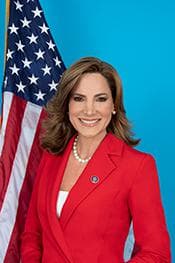
- Introduced
- 7/15/2025
- Last activity
- 7/16/2025 — Referred to the Subcommittee on Border Security and Enforcement.
- Sponsored by
- Maria Salazar
- Cosponsors
- - 19 - 20
- Introduced
- In Committee
What this bill would do
This legislation, titled the "Dignity for Immigrants while Guarding our Nation to Ignite and Deliver the American Dream Act of 2025" and the "American Prosperity and Competitiveness Act," aims to secure the U.S. border while reforming immigration laws. It focuses on strengthening physical barriers, increasing air and marine operations, and implementing a mandatory employment eligibility verification system. The bill establishes programs to manage asylum seekers through humanitarian campuses and provides paths to status via the "Dream Act" and a "Dignity Program." It also addresses immigration backlogs by raising per-country caps and modernizing naturalization processes for certain groups. Additionally, the bill promotes economic growth through industry partnerships, apprenticeships, and work-based learning programs.
Yes· 3 of 18
Would immigrants be better off under this?+9
Significantly expands legal pathways, deferred action, and status opportunities.
Does this make it easier for immigrants already here to become citizens?+7
The bill provides several pathways for legal status, including the Dream Act and the Dignity Program.
Would Hispanic Americans be better off under this?+6
The bill provides pathways to legal status and protections that benefit many Hispanic residents.
The opposite
Does this leave more decisions to the states?-2
The bill preempts certain state and local laws regarding employment eligibility.
Who it would affect, and how
Potential Positive Impacts for People
-
Enhanced Border Security: The bill mandates the construction and operation of physical barriers, tactical infrastructure, and technology to achieve situational awareness and operational advantage (Sec. 1111).
-
Increased Safety for Agents: The Secretary of Homeland Security is required to incorporate safety features into the design and deployment of border barriers and technology to maximize the safety of officers and agents (Sec. 1111).
-
Improved Air and Marine Support: The bill ensures at least 95,000 annual flight hours for Air and Marine Operations to support U.S. Border Patrol activities (Sec. 1112).
-
Community and Landowner Input: A National Border Security Advisory Committee will be established to provide advice and recommendations to the Secretary on border security matters (Sec. 1113).
-
Protection of Sensitive Locations: The bill restricts immigration enforcement actions in or near protected areas, such as schools, hospitals, and places of worship, unless there are exigent circumstances (Sec. 1122).
-
Economic and Infrastructure Improvements: The bill authorizes the construction of new ports of entry and the modernization of high-priority southern border ports to reduce wait times (Sec. 1201).
-
Enhanced Penalties for Serious Crimes: The bill increases the mandatory minimum penalty for child sex trafficking (Sec. 1305).
-
Support for Workforce Verification: The "Legal Workforce Act" establishes a verification system to assist employers in confirming identity and employment eligibility (Sec. 1402).
-
Protection Against Identity Fraud: The bill requires the establishment of a program to block Social Security numbers that are subject to unusual multiple use or identity fraud, protecting legitimate holders (Section 1411(a)).
-
Support for Victims of Identity Theft: It provides a secure method for individuals to suspend or limit the use of their Social_Security numbers to prevent identity fraud (Section 1411(b)).
-
Protection for Minors: Parents or legal guardians are given a method to prevent the theft of their child's identity for employment verification purposes (Section 1411(c)).
-
Enhanced Processing at the Border: The creation of humanitarian campuses aims to provide asylum seekers with essential services, including medical screenings, legal orientation, and access to legal counsel (Section 1501(b) and (c)).
-
Legal Certainty for Long-Term Residents: The "Dream Act" allows certain individuals who entered as children and have been continuously present to adjust to conditional permanent resident status (Section 2102(b)).
-
Pathways for Participation in the Dignity Program: Eligible individuals can participate in a program that provides deferred action, employment authorization, and eventual "Dignity status" (Section 2301 and 2305).
-
Support for Legal Professionals: The bill offers loan forgiveness to lawyers who provide full-time legal services at humanitarian campuses (Section 1516).
-
Economic Opportunity for American Workers: Restitution payments from the Dignity Program are used to fund apprenticeships and work-based learning programs for American workers in in-demand industries (Section s 2401 and 2402).
-
Support for Work-Based Learning: The bill provides grants to help establish or expand local industry partnerships and support apprenticeships or other work-based learning programs (Section 2406, 2407).
-
Assistance for Small Businesses: Grant funds can be used to assist small- or medium-sized businesses with navigating registration, developing curriculum, and connecting with education providers (Section 2407(b)).
-
Worker Support Services: Eligible partnerships can provide essential services to workers, such as connection to adult education, mentorship, and the provision of tools, work attire, transportation, or childcare (Section 2407(c)).
-
Discretion for Family Unity: The Attorney General and Secretary of Homeland Security are granted discretion to allow certain family members (spouses or children) of U.S. citizens to remain in the country if removal would cause hardship, including a presumption of hardship in cases of family separation (Section s 3112, 3112(b)).
-
Simplified Naturalization for Military Members: The bill modernizes naturalization through service for members of the Selected Reserve or active-duty status (Section 3115).
-
Reduced Immigration Backlogs: The bill increases per-country caps from 7 percent to 15 percent and provides a path for certain aliens with priority dates older than 10 years to reduce backlogs (Section 3201, 3202).
-
Protection for Children: New rules provide "age-out" protections for dependent children, ensuring their status is determined based on earlier dates to prevent losing eligibility due to aging (Section 3203(c)).
-
New Family Visas: The bill establishes a new nonimmigrant visa category for relatives to visit the United States for family purposes (Section 3114).
Potential Negative Impacts for People
-
Impact on Local Communities: The construction of physical barriers requires consultation with local governments and private property owners to minimize impacts on the environment, culture, commerce, and quality of life (Sec. 1111).
-
Increased Criminal Penalties for Reentry: Individuals who have been removed and subsequently re-enter the United States face fines and potential imprisonment of up to 10 years (Sec. 1304).
-
Stricter Penalties for Criminal Offenders: For individuals previously convicted of certain crimes, the penalties for illegal reentry can increase significantly, with potential prison terms up to 30 years (Sec. 1304).
-
Restrictions on Immigration Enforcement: While protecting sensitive locations, the bill prohibits enforcement actions in these areas unless prior approval is obtained or exigent circumstances exist (Sec. 1122).
-
Employer Penalties and Burdens: The "Legal Workforce Act" imposes significant civil penalties on employers who fail to comply with employment eligibility verification requirements (Sec. 1408).
-
Restrictions on Visa Eligibility: The bill establishes visa ineligibility for the spouses and children of drug traffickers (Sec. 1306).
-
Restrictions on Asylum Status: An alien who is granted asylum may have their status terminated if they return to their country of nationality or residence within 5 years, unless a waiver is granted (Section 1505(a)).
-
Strict Requirements for Dream Act Applicants: To qualify for status, individuals must meet specific educational, presence, or employment requirements, and they are subject to criminal and national security background checks (Section 2102(b)).
-
Financial Burdens for Dignity Program Participants: Participants must pay an initial restitution of $1,000 and subsequent payments of $1,000 every two years until a total of $7,000 is paid (Section 2302(c)(2) and 2304(b)(2)).
-
Tax and Benefit Restrictions: Dignity Program participants are prohibited from availing themselves of any Federal means-tested benefits or entitlement programs (Section 2304(b)(8)) and are subject to a 1 percent tax on their earned income (Section 2304(b)(9)).
-
Strict Conditions for Status Retention: Failure to comply with the various conditions of the Dignity Program can result in the initiation of removal proceedings (Section 2304(d)).
-
Administrative Costs: Under the grant program for high-demand careers, partnerships are limited in how much they can spend on administration (Section 2409(b)(3)(B)), and states may reserve up to 5 percent of allotments for administration (Section 2406(d)).
-
Visa Limitations: The new "family purpose" visas are limited to a stay of no more than 90 days (Section 3114(c)(3)).
-
Requirement for Financial Support: Relatives seeking admission via a family purpose visa must have a sponsor who provides a declaration of support and the relative must obtain a health insurance policy (Section s 3114(c)(2)).
-
Restrictions on Change of Status: Individuals classified under the new family purpose visa are restricted from changing their status (Section 3114(d)).
-
Exclusions from Discretionary Relief: The discretion granted to officials regarding family members does not apply to those determined to be inadmissible under certain specific legal grounds (Section 3112(a)(iii), 3112(b)(3)).
Groups and Interests Ranking
Every group the model scored this bill for, from -10 to +10. Hover a score for the reason it gave.
- Demographic And Interest Groups
- Good For Immigrants+9Good For Hispanic Americans+6Good For Students+5Good For Young Adults+5Good For Business Owners+4Good For Children+4Good For Low Income Households+4Good For Asian Americans+3Good For Veterans+3
- Economy And Finance
- Improves Small Business Support+5Increases Job Creation+5Improves Economic Growth+3Reduces National Debt+1
- Social Issues And Justice
- Improves Pathway To Citizenship+7Improves Border Security+6
- Education And Technology
- Improves Student Loan Relief+5
- Governance And Ideology
- Increases Federal Power+3Improves Due Process+2Increase States Rights-2
- 2/11/2026
- 2 Cosponsors added.
- 2/3/2026
- 2 Cosponsors added.
- 1/21/2026
- 4 Cosponsors added.
- 12/15/2025
- 2 Cosponsors added.
- 12/3/2025
- 2 Cosponsors added.
- 11/25/2025
- 4 Cosponsors added.
- 10/10/2025
- 2 Cosponsors added.
- 7/16/2025
- Referred to the Subcommittee on Border Security and Enforcement.
- 7/15/2025
- Referred to the Committee on the Judiciary, and in addition to the Committees on Homeland Security, Ways and Means, Transportation and Infrastructure, Education and Workforce, Oversight and Government Reform, and Armed Services, for a period to be subsequently determined by the Speaker, in each case for consideration of such provisions as fall within the jurisdiction of the committee concerned.
- 21 Cosponsors added.
- Introduced in House
5 bills Congress.gov lists as related to this one — companions in the other chamber, earlier versions, and bills this one absorbed or was folded into.
 Jake Auchincloss
Democrat · Massachusetts
 Yassamin Ansari
Democrat · Arizona
 Don Bacon
Republican · Nebraska
 James Baird
Republican · Indiana
 Nikki Budzinski
Democrat · Illinois
 Jim Costa
Democrat · California
 Henry Cuellar
Democrat · Texas
 Salud Carbajal
Democrat · California
 Monica De La Cruz
Republican · Texas
 Mario Diaz-Balart
Republican · Florida
 Neal Dunn
Republican · Florida
 Adriano Espaillat
Democrat · New York
 Veronica Escobar
Democrat · Texas
 Gabe Evans
Republican · Colorado
 Brian Fitzpatrick
Republican · Pennsylvania
 Laura Gillen
Democrat · New York
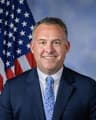 Adam Gray
Democrat · California
 Chrissy Houlahan
Democrat · Pennsylvania
 Mike Kelly
Republican · Pennsylvania
 Young Kim
Republican · California
 Jennifer Kiggans
Republican · Virginia
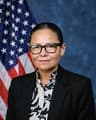 Kimberlyn King-Hinds
Republican · Northern Mariana Islands
 Susie Lee
Democrat · Nevada
 Mike Levin
Democrat · California
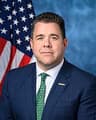 Nick LaLota
Republican · New York
 Michael Lawler
Republican · New York
 Betty McCollum
Democrat · Minnesota
 James Moylan
Republican · Guam
 Dan Newhouse
Republican · Washington
 Zachary Nunn
Republican · Iowa
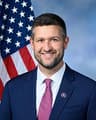 Patrick Ryan
Democrat · New York
 Marlin Stutzman
Republican · Indiana
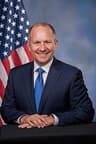 Lloyd Smucker
Republican · Pennsylvania
 Thomas Suozzi
Democrat · New York
 Hillary Scholten
Democrat · Michigan
 Emilia Sykes
Democrat · Ohio
 Dina Titus
Democrat · Nevada
 Lori Trahan
Democrat · Massachusetts
 David Valadao
Republican · California