
A Democratic bill with 22 Democratic cosponsors · See all 22 cosponsors
Last activity — Referred to the Committee on Financial Services, and in addition to the Committee on Oversight and Government Reform, for a period to be subsequently determined by the Speaker, in each case for consideration of such provisions as fall within the jurisdiction of the committee concerned.
In committee
Introduced and handed to a committee in the chamber it started in.
The committee holds it, and most bills are never heard from again. A hearing or a committee vote would be news; silence is the usual outcome, and it kills the bill without anyone voting against it.
Its path through Congress
- Introduced
- In Committee
What this bill would do
The "Limiting ICE's Nationwide Encroachment Act," or "LINE Act," is a bill that prevents certain government agencies from sharing specific information. It prohibits the Centers for Medicare and Medicaid Services and the Department of Health and Human Services from disclosing individually identifiable health information of people enrolled in State Medicaid plans. This restriction applies specifically to data shared for the purpose of enforcing immigration laws, including sharing information with U.S. Immigration and Customs Enforcement.
Yes· 3 of 16
- Scored +10
Would immigrants be better off under this?
Directly protects immigrants using Medicaid from having their data shared with immigration enforcement.
- Scored +9
Does this protect people from being watched or searched?
Specifically protects sensitive health data from being accessed by immigration enforcement.
- Scored +8
Would Hispanic Americans be better off under this?
High potential benefit for Hispanic populations who may be disproportionately affected by ICE enforcement while using public health services.
The opposite
- Scored -5
Does this give the government more power to monitor people inside the country?
Restricts government surveillance and data sharing for immigration enforcement.
- Scored -2
Does this give the federal government more power?
Limits the authority of federal agencies (HHS/CMS) to share data with other federal agencies (ICE).
- Scored -2
Does this tighten control of the border?
Limits the ability of ICE to use Medicaid data for immigration enforcement.
Who it would affect, and how
Potential Positive Impacts for People
- Privacy of Health Information: Individuals enrolled in State Medicaid plans would have their identifiable health information protected from being disclosed for immigration enforcement purposes (Sec. 2).
Potential Negative Impacts for People
- No negative impacts for individuals or groups are explicitly stated in the provided text.
Groups and Interests Ranking
Every group the model scored this bill for, from -10 to +10. Tap or hover a score for the reason it gave.
- Demographic And Interest Groups
- Would immigrants be better off under this? — Directly protects immigrants using Medicaid from having their data shared with immigration enforcement. Would Hispanic Americans be better off under this? — High potential benefit for Hispanic populations who may be disproportionately affected by ICE enforcement while using public health services. Would households on low incomes be better off under this? — Medicaid is primarily used by low-income households, who benefit most from these privacy protections. Would children be better off under this? — Protects children enrolled in Medicaid from having their health data used for immigration enforcement. Would people in middle age be better off under this? — Protects middle-aged adults enrolled in Medicaid from having their health data used for immigration enforcement. Would people with disabilities be better off under this? — Many people with disabilities rely on Medicaid and benefit from increased privacy. Would people over 65 be better off under this? — Protects seniors enrolled in Medicaid from having their health data used for immigration enforcement. Would people in their twenties and thirties be better off under this? — Protects young adults enrolled in Medicaid from having their health data used for immigration enforcement. Would Black Americans be better off under this? — Protects privacy for those in marginalized groups who may rely on Medicaid. Would Asian Americans be better off under this? — Protects privacy for those in marginalized groups who may rely on Medicaid. Would Native Americans be better off under this? — Protects privacy for those in marginalized groups who may rely on Medicaid. Would white Americans be better off under this? — General improvement of health data privacy for any Medicaid recipient.
- Education And Technology
- Does this give people more control over their personal data? — Prohibits the disclosure of individually identifiable health information for immigration enforcement.
- Governance And Ideology
- Does this protect people from being watched or searched? — Specifically protects sensitive health data from being accessed by immigration enforcement. Does this give the federal government more power? — Limits the authority of federal agencies (HHS/CMS) to share data with other federal agencies (ICE).
- Healthcare
- Does this make health care easier to get in general? — Protects Medicaid participants from fear of deportation, encouraging them to seek necessary healthcare.
- National Security And Foreign Policy
- Does this give the government more power to monitor people inside the country? — Restricts government surveillance and data sharing for immigration enforcement.
- Social Issues And Justice
- Does this narrow racial gaps in how people are treated? — Provides privacy protections that disproportionately benefit marginalized communities who may utilize Medicaid. Does this tighten control of the border? — Limits the ability of ICE to use Medicaid data for immigration enforcement.
- 3/30/2026
- 1 Cosponsor added.
- 10/28/2025
- 1 Cosponsor added.
- 10/3/2025
- 3 Cosponsors added.
- 9/11/2025
- Referred to the Committee on Financial Services, and in addition to the Committee on Oversight and Government Reform, for a period to be subsequently determined by the Speaker, in each case for consideration of such provisions as fall within the jurisdiction of the committee concerned.
- 17 Cosponsors added.
- Introduced in House
 Yassamin Ansari
Democrat · Arizona
 Yvette Clarke
Democrat · New York
 Steve Cohen
Democrat · Tennessee
 André Carson
Democrat · Indiana
 Jasmine Crockett
Democrat · Texas
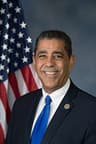 Adriano Espaillat
Democrat · New York
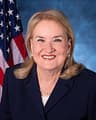 Sylvia Garcia
Democrat · Texas
 Daniel Goldman
Democrat · New York
 Henry Johnson
Democrat · Georgia
 Sara Jacobs
Democrat · California
 Julie Johnson
Democrat · Texas
 Ted Lieu
Democrat · California
 George Latimer
Democrat · New York
 Eleanor Norton
Democrat · District of Columbia
 Brittany Pettersen
Democrat · Colorado
 Delia Ramirez
Democrat · Illinois
 Luz Rivas
Democrat · California
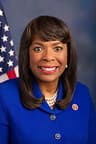 Terri Sewell
Democrat · Alabama
 Lateefah Simon
Democrat · California
 Rashida Tlaib
Democrat · Michigan
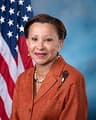 Nydia Velázquez
Democrat · New York
 Juan Vargas
Democrat · California