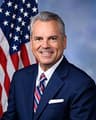
A Republican bill with 2 Democratic cosponsors · See all 7 cosponsors
Last activity — Referred to the Committee on Agriculture, and in addition to the Committee on Oversight and Government Reform, for a period to be subsequently determined by the Speaker, in each case for consideration of such provisions as fall within the jurisdiction of the committee concerned.
In committee
Introduced and handed to a committee in the chamber it started in.
The committee holds it, and most bills are never heard from again. A hearing or a committee vote would be news; silence is the usual outcome, and it kills the bill without anyone voting against it.
Its path through Congress
- Introduced
- In Committee
What this bill would do
The Biomanufacturing and Jobs Act of 2025 aims to amend the Farm Security and Rural Investment Act of 2002 to improve the biobased markets program. This legislation seeks to support domestic manufacturing of biobased products made from agricultural commodities like corn and soybeans. It expands the role of the Department of Agriculture in promoting these products and increasing Federal purchasing. The bill also establishes a Biobased Task Force to coordinate research, development, and promotion. Additionally, it introduces new definitions for various biobased terms and provides stricter guidelines for product labeling.
Yes· 3 of 11
- Scored +7
Would farmers be better off under this?
The bill creates additional markets for agricultural commodities like corn and soybeans produced by farmers.
- Scored +6
Would people in rural areas be better off under this?
The legislation is designed to drive economic growth and development specifically in rural areas.
- Scored +6
Does this invest in rural communities?
The bill explicitly seeks to drive rural economic development and growth through new commodity markets.
The opposite
No question was scored the opposite.
Who it would affect, and how
Potential Positive Impacts for People
-
Economic Growth for Rural Areas: The bill aims to drive rural economic development and growth by creating additional markets for farm commodities (Section 2(a)(1)).
-
Support for Domestic Manufacturing: The act intends to strengthen domestic manufacturing of biobased products, specifically those made from agricultural commodities such as corn and soybeans (Section 2(b)(2)).
-
Increased Federal Purchasing: By updating procurement requirements to increase the number of biobased-only contracts or the volume purchased annually, the bill supports additional markets for agricultural commodities (Section 4(1)(A)(i)(II)(bb)).
-
Enhanced Product Information: The bill directs the update of the Federal Procurement Data System and other online procurement systems to include biobased product designations, helping agencies identify relevant products (Section 4(1)(F)).
-
Public Outreach and Education: The Secretary is authorized to conduct outreach to educate the public and small businesses on biobased products, which can increase awareness and use (Section 4(5)).
Potential Negative Impacts for People
-
Increased Costs for Procuring Agencies: The bill specifies that certain biobased products are available only at a price that exceeds the established price premium, which may impact procurement budgets (Section 4(1)(A)(i)(II)(bb)).
-
Legal Risks for Labeling: It will be considered unlawful to sell or label a product using certain "covered terms" if the product does not meet specific definitions, which could impact businesses using those terms (Section 6(c)).
Groups and Interests Ranking
Every group the model scored this bill for, from -10 to +10. Tap or hover a score for the reason it gave.
- Demographic And Interest Groups
- Would farmers be better off under this? — The bill creates additional markets for agricultural commodities like corn and soybeans produced by farmers. Would people in rural areas be better off under this? — The legislation is designed to drive economic growth and development specifically in rural areas. Would business owners be better off under this? — The bill expands market opportunities and provides outreach for businesses producing biobased products.
- Economy And Finance
- Does this make it easier to run a small business? — The bill authorizes the Secretary to conduct outreach specifically to educate small businesses producing biobased products. Is this likely to create jobs? — The bill aims to drive rural economic development and support the domestic manufacturing of biobased products. Is this likely to grow the economy? — The bill promotes additional markets for agricultural commodities through increased Federal purchasing.
- Environment Energy And Infrastructure
- Does this invest in rural communities? — The bill explicitly seeks to drive rural economic development and growth through new commodity markets. Does this cut the pollution that drives climate change? — The bill encourages a reduction in reliance on petroleum by increasing the use of renewable agricultural resources.
- Education And Technology
- Does this put more money into scientific research? — The establishment of a Biobased Task Force aims to coordinate and maximize research and development within the USDA.
- Governance And Ideology
- Does this make what the government does easier for the public to see? — The bill requires the public availability of various reports and procurement data regarding biobased products.
- Social Issues And Justice
- Does this make housing cost less? — The bill mentions the use of biobased products in construction materials.
- 11/7/2025
- 1 Cosponsor added.
- 10/8/2025
- 1 Cosponsor added.
- 10/3/2025
- 1 Cosponsor added.
- 9/3/2025
- 1 Cosponsor added.
- 8/1/2025
- Referred to the Committee on Agriculture, and in addition to the Committee on Oversight and Government Reform, for a period to be subsequently determined by the Speaker, in each case for consideration of such provisions as fall within the jurisdiction of the committee concerned.
- 3 Cosponsors added.
- Introduced in House
One bill Congress.gov lists as related to this one — companions in the other chamber, earlier versions, and bills this one absorbed or was folded into.
 James Baird
Republican · Indiana
 Angie Craig
Democrat · Minnesota
 Mike Flood
Republican · Nebraska
 Brad Finstad
Republican · Minnesota
 Ashley Hinson
Republican · Iowa
 Mark Messmer
Republican · Indiana
 Kristen McDonald Rivet
Democrat · Michigan