Bill · S. 2654· Senate(119-S-2654)
Biomanufacturing and Jobs Act of 2025
- Introduced
- 8/1/2025
- Last activity
- 8/1/2025 — Read twice and referred to the Committee on Agriculture, Nutrition, and Forestry.
- Sponsored by
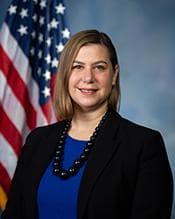
- Elissa Slotkin
- Cosponsors
- - 1 - 2
- Introduced
- In Committee
What this bill would do
The Biomanufacturing and Jobs Act of 2025 seeks to amend the Farm Security and Rural Investment Act of 2002 to improve the biobased markets program. It aims to support domestic manufacturing of biobased products made from agricultural commodities like corn and soybeans. The bill introduces new definitions for terms such as bio-attributed plastic and plant-based products. It also mandates annual updates to procurement requirements to increase the volume of biobased products purchased by the Federal government. Additionally, the legislation establishes a Biobased Task Force to coordinate USDA programs and research.
Yes· 3 of 8
Would farmers be better off under this?+6
The bill increases demand for agricultural commodities like corn and soybeans used in biobased products.
Would business owners be better off under this?+5
The bill creates new markets and procurement requirements for the biobased products industry.
Would people in rural areas be better off under this?+5
The legislation specifically aims to drive rural economic development and growth.
The opposite
No question was scored the opposite.
Who it would affect, and how
Potential Positive Impacts for People
-
Economic Growth and Job Support: The bill aims to strengthen domestic manufacturing and support the rural and agricultural economies by increasing the markets for agricultural commodities (Section 2(a) and 2(b)).
-
Increased Federal Procurement: The act requires agencies to update procurement requirements annually to increase the number of biobased-only contracts or the volume purchased (Section 4(1)(A)(i)(II)(bb)).
-
Enhanced Guidance for Procurement: The Secretary will provide guidance to agencies to consider product lifespan, savings, and efficacy when making purchasing decisions (Section 4(1)(A)(i)(iii)(G)).
-
Public Education and Outreach: The Secretary is authorized to conduct outreach to educate the public, assist small businesses seeking labels, and establish public-private partnerships (Section 4(1)(5)).
-
Coordinated USDA Efforts: The establishment of a Biobased Task Force is intended to coordinate research, development, and promotion of biobased products to maximize resources (Section 5(a)).
Potential Negative Impacts for People
-
Price Premium Requirements: The bill notes that certain biobased products are available only at a price that exceeds established price premiums (Section 4(1)(A)(i)(ii)).
-
Legal Restrictions on Labeling: It will be unlawful to sell or label a product using specific covered terms if they do not meet the required definitions, which could impact how products are marketed (Section 6(c)).
Groups and Interests Ranking
Every group the model scored this bill for, from -10 to +10. Hover a score for the reason it gave.
- Demographic And Interest Groups
- Good For Farmers+6Good For Business Owners+5Good For Rural Residents+5
- Economy And Finance
- Increases Job Creation+5Improves Small Business Support+4
- Environment Energy And Infrastructure
- Reduces Carbon Emissions+3
- Governance And Ideology
- Improves Government Transparency+2
- Social Issues And Justice
- Improves Poverty Reduction+1
- 8/1/2025
- Read twice and referred to the Committee on Agriculture, Nutrition, and Forestry.
- 3 Cosponsors added.
- Introduced in Senate
One bill Congress.gov lists as related to this one — companions in the other chamber, earlier versions, and bills this one absorbed or was folded into.
 Joni Ernst
Republican · Iowa
 Amy Klobuchar
Democrat · Minnesota
 Pete Ricketts
Republican · Nebraska