Bill · H.R. 4717· House(119-HR-4717)
First-Time Homebuyer Tax Credit Act of 2025
- Introduced
- 7/23/2025
- Last activity
- 7/23/2025 — Referred to the House Committee on Ways and Means.
- Sponsored by
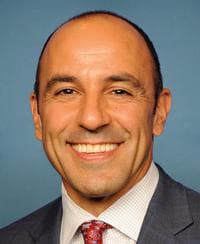
- Jimmy Panetta
- Cosponsors
- - 38 - 0
- Introduced
- In Committee
What this bill would do
This bill, titled the "First-Time Homebuyer Tax Credit Act of 2025," seeks to amend the Internal Revenue Code of 1986. It introduces a refundable tax credit for individuals purchasing a principal residence in the United States for the first time. The credit is set at 10 percent of the purchase price, subject to a $15,000 cap. Various limitations are included, such as income phaseouts and purchase price limits. The act also establishes rules for credit recapture if the home is sold early.
Yes· 3 of 8
Would people in their twenties and thirties be better off under this?+5
The credit assists individuals in purchasing their first home, which is a common life stage for young adults.
Would households on low incomes be better off under this?+5
The refundable credit and income-based phaseouts provide targeted relief for lower-income earners.
Would middle-income households be better off under this?+5
The credit offers significant tax relief for middle-income earners purchasing a home.
The opposite
Does this reduce what the federal government owes?-2
The tax credit represents a reduction in federal revenue.
Who it would affect, and how
Potential Positive Impacts for People
-
Direct Financial Assistance for Homebuyers: Individuals who are first-time homebuyers can receive a credit equal to 10 percent of their home's purchase price, up to a limit of $15,000. This is intended to assist those purchasing a principal residence (Section 2(a)).
-
Flexibility in Receiving the Credit: Taxpayers have the option to elect to have the credit transferred directly to their mortgage lender rather than receiving it themselves, which can be used as a down payment or partial payment (Section 2(h)).
-
Inflation Protection: The dollar limits for the credit are subject to annual inflation adjustments based on cost-of-living, helping the benefit keep up with economic changes in years following 2025 (Section 2(b)(1)(4)).
-
Protection for Specific Professionals: Members of the armed forces, the Foreign Service, or the intelligence community are exempt from certain recapture rules when disposing of a residence due to qualified official extended duty service (Section 2(f)(4)(D)).
Potential Negative Impacts for People
-
Income-Based Reductions: The amount of the credit can be reduced based on the taxpayer's modified adjusted gross income if it exceeds 150 percent of the applicable Area Median Income (Section 2(b)(2)).
-
Purchase Price Limitations: The credit can be reduced if the purchase price of the residence exceeds 110 percent of the area median purchase price (Section 2(b)(3)).
-
Risk of Tax Recapture: If a taxpayer sells their principal residence or stops using it as their primary residence within a four-year "recapture period," they may have to pay back a portion of the credit (Section 2(f)(1)).
-
Strict Eligibility Requirements: To qualify as a "first-time homebuyer," an individual must have had no present ownership interest in a residence during the 3-year period ending on the date of purchase (Section 2(c)(1)).
-
Documentation Burdens: To avoid having a credit disallowed, taxpayers must attach a properly executed copy of the settlement statement used to complete the purchase to their tax return (Section 2(d)(3)).
Groups and Interests Ranking
Every group the model scored this bill for, from -10 to +10. Hover a score for the reason it gave.
- Demographic And Interest Groups
- Good For Low Income Households+5Good For Middle Class Households+5Good For Young Adults+5Good For Veterans+3
- Economy And Finance
- Reduces Middle Class Taxes+5Improves Economic Growth+3Reduces National Debt-2
- Social Issues And Justice
- Improves Affordable Housing+4
- Governance And Ideology
- Improves Government Transparency+1
- 10/5/2026
- 1 Cosponsor added.
- 8/27/2026
- 1 Cosponsor added.
- 6/9/2026
- 1 Cosponsor added.
- 12/3/2025
- 1 Cosponsor added.
- 11/7/2025
- 1 Cosponsor added.
- 11/4/2025
- 1 Cosponsor added.
- 9/15/2025
- 1 Cosponsor added.
- 9/11/2025
- 1 Cosponsor added.
- 9/4/2025
- 1 Cosponsor added.
- 9/2/2025
- 1 Cosponsor added.
- 8/12/2025
- 1 Cosponsor added.
- 7/25/2025
- 3 Cosponsors added.
- 7/23/2025
- Referred to the House Committee on Ways and Means.
- 24 Cosponsors added.
- Introduced in House
3 bills Congress.gov lists as related to this one — companions in the other chamber, earlier versions, and bills this one absorbed or was folded into.
 Julia Brownley
Democrat · California
 Janelle Bynum
Democrat · Oregon
 Steve Cohen
Democrat · Tennessee
 Angie Craig
Democrat · Minnesota
 Gilbert Cisneros
Democrat · California
 Troy Carter
Democrat · Louisiana
 Danny Davis
Democrat · Illinois
 Donald Davis
Democrat · North Carolina
 Sharice Davids
Democrat · Kansas
 Cleo Fields
Democrat · Louisiana
 Shomari Figures
Democrat · Alabama
 Jonathan Jackson
Democrat · Illinois
 Julie Johnson
Democrat · Texas
 William Keating
Democrat · Massachusetts
 Raja Krishnamoorthi
Democrat · Illinois
 Mike Levin
Democrat · California
 Greg Landsman
Democrat · Ohio
 George Latimer
Democrat · New York
 Seth Magaziner
Democrat · Rhode Island
 Robert Menendez
Democrat · New Jersey
 April McClain Delaney
Democrat · Maryland
 Eleanor Norton
Democrat · District of Columbia
 Johnny Olszewski
Democrat · Maryland
 Chris Pappas
Democrat · New Hampshire
 Emily Randall
Democrat · Washington
 Terri Sewell
Democrat · Alabama
 Darren Soto
Democrat · Florida
 Thomas Suozzi
Democrat · New York
 Hillary Scholten
Democrat · Michigan
 Emilia Sykes
Democrat · Ohio
 Eric Sorensen
Democrat · Illinois
 Andrea Salinas
Democrat · Oregon
 Mike Thompson
Democrat · California
 Jill Tokuda
Democrat · Hawaii
 Shri Thanedar
Democrat · Michigan
 Derek Tran
Democrat · California
 Gabe Vasquez
Democrat · New Mexico
 Eugene Vindman
Democrat · Virginia