Bill · H.R. 4660· House(119-HR-4660)
Unlocking Housing Supply Through Streamlined and Modernized Reviews Act
- Introduced
- 7/23/2025
- Last activity
- 7/23/2025 — Referred to the House Committee on Financial Services.
- Sponsored by
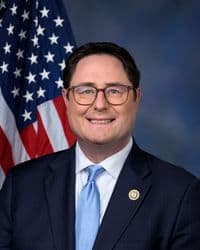
- Mike Flood
- Cosponsors
- - 2 - 3
- Introduced
- In Committee
What this bill would do
This bill, known as the "Unlocking Housing Supply Through Streamlined and Modernized Reviews Act," directs the Secretary of Housing and Urban Development to change how certain housing activities are reviewed under the National Environmental Policy Act of 1969. It seeks to expand and reclassify various housing-related activities into different regulatory categories, such as "exempt activities" or specific "categorical exclusions." These changes cover a wide range of actions including rental assistance, supportive services, and various types of construction or rehabilitation projects. The goal is to streamline administrative processes for these activities. Additionally, the Secretary is required to submit an annual report to Congress regarding the impact of these changes on review times and costs.
Yes· 3 of 8
Does this make housing cost less?+6
The bill seeks to increase housing supply and accelerate the delivery of rental assistance by streamlining environmental review processes.
Would households on low incomes be better off under this?+5
The bill facilitates faster access to rental assistance, supportive services, and emergency utility assistance.
Would people in cities be better off under this?+4
The bill promotes infill projects and the conversion of office buildings to residential units, which are common urban development strategies.
The opposite
Does this better protect air, water and wildlife?-4
The bill reduces the intensity of environmental reviews by expanding categorical exclusions and exemptions for various housing activities.
Who it would affect, and how
Potential Positive Impacts for People
-
Streamlined Housing Assistance: Certain activities, such as tenant-based rental assistance, supportive services (like health care and day care), and emergency assistance for utilities, would be subject to regulations equivalent to "exempt activities" (Section 3(a)(1)). This could allow for faster delivery of essential services and financial help to those in need.
-
Faster Residential Improvements and Construction: The bill allows for various residential activities—such as the rehabilitation of 1-to-4 unit buildings, repairs to existing utility lines, and certain scattered-site developments—to be subject to specific categorical exclusions (Section 3(a)(2)). This could expedite the process of improving existing homes and creating small-scale new housing.
-
Support for Housing Conversions and Infill Projects: Activities including the conversion of office buildings into residential developments and "infill projects" can be handled through specific categorical exclusions (Section 3(a)(3)). This may help repurpose underutilized buildings and land for residential use more efficiently.
-
Increased Housing Supply through Diversified Projects: The bill provides pathways for larger-scale developments, such as those involving 5 to 15 units or scattered-site developments of 15 or more units, to be processed under specific regulatory exclusions (Section 3(a)(3)). This could facilitate the creation of more housing units across various settings.
-
Efficient Disaster Recovery: The bill includes provisions for "buyouts" of properties in high-risk areas impacted by predictable environmental threats caused by Federally declared disasters, treating them under specific categorical exclusions (Section s 3(a)(3)(G)). This could streamline the process for residents to relocate from dangerous areas.
Potential Negative Impacts for People
- Changes to Environmental Review Standards: The bill requires the Secretary to reclassify and expand housing-related activities under different administrative regulations or categorical exclusions (Section 3(a)). This shift in how environmental reviews are conducted could impact how environmental conditions are assessed for various projects.
Groups and Interests Ranking
Every group the model scored this bill for, from -10 to +10. Hover a score for the reason it gave.
- Demographic And Interest Groups
- Good For Low Income Households+5Good For Urban Residents+4Good For Middle Class Households+3
- Social Issues And Justice
- Improves Affordable Housing+6Improves Poverty Reduction+3
- Economy And Finance
- Improves Small Business Support+3
- Environment Energy And Infrastructure
- Improves Roads And Bridges+2Improves Environmental Protections-4
- Healthcare
- Improves Healthcare Access+2
- 12/19/2025
- 1 Cosponsor added.
- 12/16/2025
- 2 Cosponsors added.
- 10/14/2025
- 1 Cosponsor added.
- 7/23/2025
- Referred to the House Committee on Financial Services.
- 1 Cosponsor added.
- Introduced in House
2 bills Congress.gov lists as related to this one — companions in the other chamber, earlier versions, and bills this one absorbed or was folded into.
 Warren Davidson
Republican · Ohio
 Josh Harder
Democrat · California
 Sam Liccardo
Democrat · California
 Tim Moore
Republican · North Carolina
 Eugene Vindman
Democrat · Virginia