Bill · H.R. 4234· House(119-HR-4234)
Safeguarding Americans From Extremist Risk (SAFER) at the Border Act
- Introduced
- 6/27/2025
- Last activity
- 6/27/2025 — Referred to the House Committee on the Judiciary.
- Sponsored by
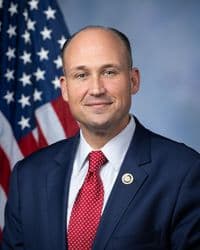
- Nicholas Langworthy
- Cosponsors
- - 19 - 0
- Introduced
- In Committee
What this bill would do
The ``Safeguarding Americans From Extremist Risk (SAFER) at the Border Act'' aims to restrict the authority of the Secretary of Homeland Security regarding parole. It introduces specific definitions for terms like "known terrorist," "special interest alien," and "suspected terrorist." The bill modifies the Immigration and Nationality Act to limit the circumstances under which the Secretary can temporarily parole arriving aliens into the United States. Under this act, parole is restricted to urgent humanitarian reasons or significant public benefit. Additionally, it explicitly prohibits the parole of refugees and certain individuals deemed a national security risk. Finally, it denies parole to those flagged for various criminal or terrorist-related activities.
Yes
Does this tighten control of the border?+5
The bill enhances national security by restricting the parole of individuals identified as potential terrorists or security risks.
Does this give the federal government more power?+3
The bill expands federal authority by restricting the Secretary of Homeland Security's parole discretion.
The opposite
Would immigrants be better off under this?-7
The bill negatively impacts immigrants by prohibiting the parole of refugees and those identified as security risks.
Does this make it easier for immigrants already here to become citizens?-5
The bill restricts immigration avenues by specifically prohibiting the parole of refugees.
Does this protect the right to fair treatment by the courts?-3
The bill limits parole opportunities for specific groups through statutory mandates rather than individual case review.
Who it would affect, and how
Potential Positive Impacts for People
-
National Security Protection: By prohibiting the parole of individuals identified as potential national security risks due to a nexus to terrorism, the bill seeks to protect the United States and its interests (Section 3, Subparagraph (C)(v)).
-
Prevention of Criminal Entry: The bill prevents individuals associated with transnational criminal organizations or terrorist activities from being paroled into the country (Section 3, Subparagraph (C)(ii)).
-
Restriction of Dangerous Individuals: The act prohibits the parole of those arrested, charged, or convicted of terrorism-related crimes by the U.S. or foreign governments (Section 3, Subparagraph (C)(iv)).
-
Watchlist Enforcement: The bill ensures that individuals listed on the FBI Threat Screening Center's Terrorism Watchlist cannot be paroled into the country (Section 3, Subparagraph (C)(iii)).
Potential Negative Impacts for People
-
Restriction on Refugee Movement: The bill explicitly states that the Secretary of Homeland Security may not parole into the United States an alien who is a refugee (Section 3, Subparagraph (B)).
-
Limitation of Parole Options: The Secretary's ability to parole arriving aliens is limited to specific instances of urgent humanitarian reasons or significant public benefit (Section 3, Subparagraph (A)).
Groups and Interests Ranking
Every group the model scored this bill for, from -10 to +10. Hover a score for the reason it gave.
- Demographic And Interest Groups
- Good For Immigrants-7
- Governance And Ideology
- Increases Federal Power+3Improves Due Process-3
- Social Issues And Justice
- Improves Border Security+5Improves Pathway To Citizenship-5
- 4/27/2026
- 1 Cosponsor added.
- 7/22/2025
- 1 Cosponsor added.
- 7/10/2025
- 2 Cosponsors added.
- 6/27/2025
- Referred to the House Committee on the Judiciary.
- 15 Cosponsors added.
- Introduced in House
 Sheri Biggs
Republican · South Carolina
 Michael Cloud
Republican · Texas
 Scott DesJarlais
Republican · Tennessee
 Chuck Edwards
Republican · North Carolina
 Gabe Evans
Republican · Colorado
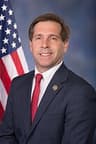 Charles Fleischmann
Republican · Tennessee
 Mike Flood
Republican · Nebraska
 Brad Finstad
Republican · Minnesota
 Russell Fry
Republican · South Carolina
 Michael Guest
Republican · Mississippi
 Nicole Malliotakis
Republican · New York
 Barry Moore
Republican · Alabama
 Andrew Ogles
Republican · Tennessee
 Michael Rulli
Republican · Ohio
 Michael Simpson
Republican · Idaho
 Elise Stefanik
Republican · New York
 Pete Stauber
Republican · Minnesota
 Derek Schmidt
Republican · Kansas
 Claudia Tenney
Republican · New York