Bill · H.R. 3617· House(119-HR-3617)
Securing America’s Critical Minerals Supply Act
- Introduced
- 5/29/2025
- Last activity
- 2/12/2026 — Received in the Senate and Read twice and referred to the Committee on Energy and Natural Resources.
- Sponsored by
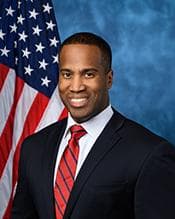
- John James
- Cosponsors
- - 4 - 0
- Introduced
- Passed House
- In Senate committee
What this bill would do
This bill, known as the "Securing America's Critical Minerals Supply Act," seeks to amend the Department of Energy Organization Act. It aims to secure the supply of critical energy resources, such as minerals and other materials, that are essential to the United States energy sector. The legislation tasks the Secretary of Energy with conducting ongoing assessments regarding the vulnerability, diversity, and production constraints of these supply chains. Additionally, the Secretary is directed to facilitate strategies to strengthen these chains by diversifying sources and increasing domestic production. The bill also focuses on developing substitutes and improving recycling technologies for these resources. Finally, it requires a report to Congress on the status of these assessments within two years.
Yes· 3 of 11
Is this likely to create jobs?+3
The emphasis on increasing domestic production and processing of critical minerals may lead to job growth in those sectors.
Is this likely to grow the economy?+3
Strengthening domestic energy resource supplies supports industrial stability and potential economic growth.
Does this put more money into scientific research?+3
The bill directs efforts toward developing substitutes and improving recycling technologies for critical resources.
The opposite
No question was scored the opposite.
What Congress actually voted on
2 recorded votes have been taken on this bill. One of them decided something; the rest moved it along.
- The House: the vote on whether to pass the billPassed 223–206
This is the real decision in this chamber. Passing here sends the bill to the other chamber, which must pass it too before it can go to the President.
02/11/2026 · Roll call 64 · recorded as “On Passage”
Who it would affect, and how
Potential Positive Impacts for People
-
Increased Energy Security: The bill amends the Department of Energy Organization Act to include the goal of ensuring an adequate and reliable supply of critical energy resources essential to the energy security of the United States (Section 2).
-
Strengthened Resource Supply Chains: The Secretary of Energy is directed to facilitate strategies to strengthen supply chains by diversifying sources and increasing domestic production, separation, and processing (Section 3(a)(2)).
-
Reduced Vulnerability to Market Manipulation: The act requires assessments of the diversity of domestic supply chains to prevent monopolistic behavior, single points of failure, or market manipulation (Section 3(a)(1)(D)).
-
Protection Against Adversarial Exploitation: The bill directs assessments on how adversarial nations may use anti-competitive practices, price manipulation, or human rights abuses in the production and exportation of resources (Section 3(a)(1)(H)).
-
Technological Innovation: The legislation promotes the development of substitutes and alternatives to critical energy resources, as well as improved technology for reusing and recycling these resources (Section 3(a)(3)-(4)).
Potential Negative Impacts for People
- No negative impacts or burdens are explicitly mentioned in the provided text.
Groups and Interests Ranking
Every group the model scored this bill for, from -10 to +10. Hover a score for the reason it gave.
- Economy And Finance
- Improves Economic Growth+3Increases Job Creation+3Reduces Inflation+2
- Demographic And Interest Groups
- Good For Business Owners+2Good For Rural Residents+2Good For Union Workers+2
- Education And Technology
- Increases Scientific Research Funding+3
- Environment Energy And Infrastructure
- Increases Renewable Energy Investment+3
- Governance And Ideology
- Increases Federal Power+2Improves Government Transparency+1
- National Security And Foreign Policy
- Improves International Trade+2
| Updated | Bill | Title | Policy Area |
|---|---|---|---|
| 8 months ago | On agreeing to the Rules amendment (A001) Agreed to without objection. |
- 2/12/2026
- Received in the Senate and Read twice and referred to the Committee on Energy and Natural Resources.
- 2/11/2026
- Motion to reconsider laid on the table Agreed to without objection.
- Passed/agreed to in House: On passage Passed by the Yeas and Nays: 223 - 206 (Roll no. 64).
- On passage Passed by the Yeas and Nays: 223 - 206 (Roll no. 64). (text of amendment in the nature of a substitute: CR H2150)
- On motion to recommit Failed by the Yeas and Nays: 214 - 215 (Roll no. 63).
- Considered as unfinished business. (consideration: CR H2167-2169)
- POSTPONED PROCEEDINGS - At the conclusion of debate on H.R. 3617, the Chair put the question on the motion to recommit and by voice vote, announced the noes had prevailed. Mr. Landsman demanded the yeas and nays and the Chair postponed further proceedings until a time to be announced.
- The previous question on the motion to recommit was ordered pursuant to clause 2(b) of rule XIX.
- Mr. Landsman moved to recommit to the Committee on Energy and Commerce. (text: CR H2154)
- The previous question was ordered pursuant to the rule.
- DEBATE - The House proceeded with one hour of debate on H.R. 3617.
- Rule provides for consideration of S. 1383, H.R. 2189, H.R. 261 and H.R. 3617. The resolution provides for consideration of S. 1383, H.R. 2189, H.R. 261, and H.R. 3617 under a closed rule and provides for one motion to recommit H.R. 2189, H.R. 261, and H.R. 3617, and one motion to commit S. 1383.
- Considered under the provisions of rule H. Res. 1057. (consideration: CR H2150-2154)
- Rule H. Res. 1057 passed House.
- Rules Committee Resolution H. Res. 1057 Reported to House. Rule provides for consideration of S. 1383, H.R. 2189, H.R. 261 and H.R. 3617. The resolution provides for consideration of S. 1383, H.R. 2189, H.R. 261, and H.R. 3617 under a closed rule and provides for one motion to recommit H.R. 2189, H.R. 261, and H.R. 3617, and one motion to commit S. 1383.
- 2/10/2026
- Rule H. Res. 1042 failed passage of House.
- 2/9/2026
- Rules Committee Resolution H. Res. 1042 Reported to House. Rule provides for consideration of H.R. 2189, H.R. 261 and H.R. 3617. The resolution provides for consideration of H.R. 2189, H.R. 261, and H.R. 3617 under a closed rule and provides for one hour of debate and one motion to recommit on each bill.
- 9/11/2025
- Reported (Amended) by the Committee on Energy and Commerce. H. Rept. 119-268.
- Placed on the Union Calendar, Calendar No. 224.
- 6/26/2025
- 1 Cosponsor added.
- 6/25/2025
- Committee Consideration and Mark-up Session Held
- Ordered to be Reported (Amended) by the Yeas and Nays: 23 - 21.
- 6/23/2025
- 1 Cosponsor added.
- 6/5/2025
- Subcommittee Consideration and Mark-up Session Held
- Forwarded by Subcommittee to Full Committee by Voice Vote.
- 6/3/2025
- Referred to the Subcommittee on Energy.
- 5/29/2025
- Referred to the House Committee on Energy and Commerce.
- 2 Cosponsors added.
- Introduced in House
2 bills Congress.gov lists as related to this one — companions in the other chamber, earlier versions, and bills this one absorbed or was folded into.
- 119-HRES-1042: Providing for consideration of the bill (H.R. 2189) to modernize Federal firearms laws to account for advancements in technology and less-than-lethal weapons, and for other purposes; providing for consideration of the bill (H.R. 261) to amend the National Marine Sanctuaries Act to prohibit requiring an authorization for the installation, continued presence, operation, maintenance, repair, or recovery of undersea fiber optic cables in a national marine sanctuary if such activities have previously been authorized by a Federal or State agency; providing for consideration of the bill (H.R. 3617) to amend the Department of Energy Organization Act to secure the supply of critical energy resources, including critical minerals and other materials, and for other purposes; and for other purposes.
- 119-HRES-1057: Providing for consideration of the bill (S. 1383) to establish the Veterans Advisory Committee on Equal Access, and for other purposes; providing for consideration of the bill (H.R. 2189) to modernize Federal firearms laws to account for advancements in technology and less-than-lethal weapons, and for other purposes; providing for consideration of the bill (H.R. 261) to amend the National Marine Sanctuaries Act to prohibit requiring an authorization for the installation, continued presence, operation, maintenance, repair, or recovery of undersea fiber optic cables in a national marine sanctuary if such activities have previously been authorized by a Federal or State agency; providing for consideration of the bill (H.R. 3617) to amend the Department of Energy Organization Act to secure the supply of critical energy resources, including critical minerals and other materials, and for other purposes; and waiving a requirement of clause 6(a) of rule XIII with respect to consideration of certain resolutions reported from the Committee on Rules.
 Neal Dunn
Republican · Florida
 Erin Houchin
Republican · Indiana
 Mariannette Miller-Meeks
Republican · Iowa
 Jay Obernolte
Republican · California