Bill · H.R. 3321· House(119-HR-3321)
Ending Medicaid Discrimination Against the Most Vulnerable Act
- Introduced
- 5/9/2025
- Last activity
- 5/9/2025 — Referred to the House Committee on Energy and Commerce.
- Sponsored by
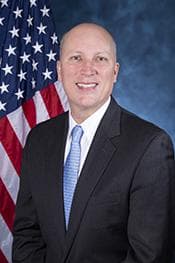
- Chip Roy
- Cosponsors
- - 19 - 0
- Introduced
- In Committee
What this bill would do
This bill, known as the "Ending Medicaid Discrimination Against the Most Vulnerable Act," seeks to amend the Social Security Act regarding Medicaid. It proposes to phase out the enhanced Federal match currently provided for medical assistance for low-income adults. The plan establishes a method to reduce the matching percentage through the year 2034. By the year 2035, the match would revert to the standard Federal medical assistance percentage determined under subsection (b). The bill also creates specific rules and definitions for "expansion States" and "non-expansion States."
Yes
No question was scored yes.
The opposite· 3 of 6
Would households on low incomes be better off under this?-7
The bill reduces the Federal match for medical assistance provided to low-income adults, which could limit their healthcare access.
Does this put more money into Medicaid, the health coverage for people on low incomes?-7
The bill reduces Medicaid funding by gradually lowering the enhanced Federal match percentage through 2035.
Does this reduce what the federal government spends?-6
The bill reduces federal spending by phasing out the enhanced Federal medical assistance match for low-income adults.
Who it would affect, and how
Potential Positive Impacts for People
- Option for specific spending in expansion States: Under Section 2(a)(4)(A)(iii), an expansion State may elect to only expend amounts for newly eligible individuals whose income does not exceed 100 percent of the Federal poverty line to continue receiving the specified Federal medical assistance percentage.
Potential Negative Impacts for People
-
Phase-out of enhanced federal matching: Section 2(a)(1)(C) and Section 2(a)(1)(F) establish a schedule that reduces the enhanced Federal match through 2034, eventually reverting to the standard percentage in 2035 per Section 2(a)(1)(G). This represents a reduction in the enhanced support for medical assistance provided to low-income adults.
-
Impact on non-expansion States: Section 2(a)(4)(A)(i) specifies that for calendar years after 2024, the enhanced paragraph shall not apply to a non-expansion State.
-
Reduction of temporary FMAP increase: Section 2(b) aims to eliminate the temporary Federal Medical Assistance Percentage (FMAP) increase for States that begin to provide medical assistance for low-income adults.
Groups and Interests Ranking
Every group the model scored this bill for, from -10 to +10. Hover a score for the reason it gave.
- Demographic And Interest Groups
- Good For Low Income Households-7Good For Urban Residents-3Good For Children-2
- Healthcare
- Increases Medicaid Funding-7
- Economy And Finance
- Reduces Government Spending-6
- Social Issues And Justice
- Improves Poverty Reduction-4
- 6/17/2025
- 1 Cosponsor added.
- 5/19/2025
- 1 Cosponsor added.
- 5/13/2025
- 2 Cosponsors added.
- 5/9/2025
- Referred to the House Committee on Energy and Commerce.
- 15 Cosponsors added.
- Introduced in House
 Lauren Boebert
Republican · Colorado
 Andy Biggs
Republican · Arizona
 Eric Burlison
Republican · Missouri
 Josh Brecheen
Republican · Oklahoma
 Michael Cloud
Republican · Texas
 Andrew Clyde
Republican · Georgia
 Byron Donalds
Republican · Florida
 Scott Fitzgerald
Republican · Wisconsin
 Paul Gosar
Republican · Arizona
 Brandon Gill
Republican · Texas
 Andy Harris
Republican · Maryland
 Clay Higgins
Republican · Louisiana
 Mary Miller
Republican · Illinois
 Ralph Norman
Republican · South Carolina
 Andrew Ogles
Republican · Tennessee
 Scott Perry
Republican · Pennsylvania
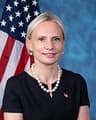 Victoria Spartz
Republican · Indiana
 Keith Self
Republican · Texas
 Thomas Tiffany
Republican · Wisconsin