Bill · H.R. 3291· House(119-HR-3291)
Certainty for Our Energy Future Act
- Introduced
- 5/8/2025
- Last activity
- 5/8/2025 — Referred to the House Committee on Ways and Means.
- Sponsored by
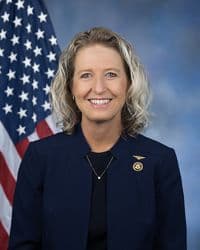
- Jennifer Kiggans
- Cosponsors
- - 10 - 0
- Introduced
- In Committee
What this bill would do
The "Certainty for Our Energy Future Act" aims to amend the Internal Revenue Code of 1986. It seeks to terminate the clean electricity production credit and the clean electricity investment credit for certain technologies. Specifically, wind and solar energy facilities will no longer be considered qualified if construction begins after December 31, 2030. Additionally, the bill proposes to deny various clean energy tax benefits to "disqualified companies." These companies are defined as entities created by or controlled by governments of specific countries of concern.
Yes
Does this raise the taxes companies pay?+5
The bill denies various clean energy tax benefits to companies controlled by specific foreign governments.
Does this reduce what the federal government spends?+4
The bill reduces future government expenditures by terminating renewable energy tax credits for wind and solar after 2030.
The opposite· 3 of 5
Does this cut the pollution that drives climate change?-6
The termination of wind and solar tax credits may slow the transition to renewable energy and increase carbon emissions.
Does this put more money into wind, solar and other renewable power?-5
The bill reduces the incentive for renewable energy investment by ending production and investment credits after 2030.
Would business owners be better off under this?-4
Renewable energy businesses may face higher costs due to the expiration of available tax credits.
Who it would affect, and how
Potential Positive Impacts for People
-
Termination of credits for specific technologies: Under Section 2 and Section 3, the bill establishes that wind and solar energy facilities will not qualify for specific production or investment credits if their construction begins after December 31, 2030.
-
Denial of tax benefits to certain entities: Section 4 seeks to deny a wide range of clean energy tax benefits to "disqualified companies," which are entities created or controlled by governments of the People's Republic of China, the Russian Federation, the Islamic Republic of Iran, or the Democratic People's Republic of Korea.
Potential Negative Impacts for People
-
Ending of wind and solar energy credits: Section 2 and Section 3 would result in wind and solar energy facilities where construction begins after December 31, 2030, no longer qualifying for the clean electricity production credit or the clean electricity investment credit.
-
Loss of tax benefits for connected companies: Section 4 would result in "disqualified companies"—those created or controlled by governments of the People's Republic of China, the Russian Federation, the Islamic Republic of Iran, or the Democratic People's Republic of Korea—losing access to several tax sections including 30C, 45, 45X, 48, and 48E, among others.
Groups and Interests Ranking
Every group the model scored this bill for, from -10 to +10. Hover a score for the reason it gave.
- Environment Energy And Infrastructure
- Reduces Carbon Emissions-6Increases Renewable Energy Investment-5
- Economy And Finance
- Increases Corporate Taxes+5Reduces Government Spending+4Increases Job Creation-3
- Demographic And Interest Groups
- Good For Business Owners-4
- National Security And Foreign Policy
- Improves International Trade-2
- 6/5/2025
- 1 Cosponsor added.
- 6/3/2025
- 1 Cosponsor added.
- 5/14/2025
- 1 Cosponsor added.
- 5/13/2025
- 2 Cosponsors added.
- 5/9/2025
- 1 Cosponsor added.
- 5/8/2025
- Referred to the House Committee on Ways and Means.
- 4 Cosponsors added.
- Introduced in House
 Mark Amodei
Republican · Nevada
 Earl Carter
Republican · Georgia
 Juan Ciscomani
Republican · Arizona
 Brian Fitzpatrick
Republican · Pennsylvania
 Andrew Garbarino
Republican · New York
 Young Kim
Republican · California
 Nick LaLota
Republican · New York
 Michael Lawler
Republican · New York
 Dan Newhouse
Republican · Washington
 David Valadao
Republican · California