Bill · H.R. 3228· House(119-HR-3228)
Constitutional Hearing Protection Act
- Introduced
- 5/7/2025
- Last activity
- 5/7/2025 — Referred to the Committee on Ways and Means, and in addition to the Committee on the Judiciary, for a period to be subsequently determined by the Speaker, in each case for consideration of such provisions as fall within the jurisdiction of the committee concerned.
- Sponsored by
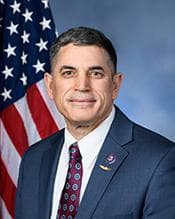
- Andrew Clyde
- Cosponsors
- - 48 - 0
- Introduced
- In Committee
What this bill would do
The Constitutional Hearing Protection Act aims to amend the Internal Revenue Code of 1986 to remove silencers from the definition of firearms. It updates the definition of a firearm silencer or muffler and requires importers and manufacturers to use serial numbers on a "keystone part" of the device. The bill also directs the Attorney General to destroy existing silencer registration records within 365 days. Additionally, it establishes a federal preemption against certain state laws regarding silencer taxes or registration.
Yes· 3 of 4
Would gun owners be better off under this?+9
The bill significantly benefits gun owners by removing silencers from the federal firearm definition and mandating the destruction of existing registration records.
Does this protect the right to own guns?+8
The bill expands second amendment protections by removing silencers from the restrictive definition of firearms and pre-empting state-level registration and taxing laws.
Does this cut taxes for small businesses?+5
The bill prevents state and local governments from imposing specific taxes on the making, transferring, or possessing of silencers.
The opposite
Does this put more limits on buying or owning guns?-7
The bill reduces gun control by removing silencers from the federal definition of firearms and requiring the destruction of existing registration records.
Does this leave more decisions to the states?-6
The bill reduces state rights by establishing federal preemption against state laws regarding silencer taxes, marking, and registration.
Who it would affect, and how
Potential Positive Impacts for People
-
Removal of Silencers from Firearm Definition: The bill amends the Internal Revenue Code of s1986 to remove silencers from the definition of firearms (Section 2).
-
Destruction of Existing Records: The Attorney General would be required to destroy any current silencer registration, transfer applications, or maker applications maintained in the National Firearms Registration and Transfer Record within 365 days (Section 5).
-
State Law Preemption: The bill prevents state or political subdivision laws from imposing specific taxes on the making, transferring, or possessing of silencers, or requiring specific marking, recordkeeping, or registration (Section 4).
Potential Negative Impacts for People
-
New Marking Requirements: Licensed importers and manufacturers must now identify silencers or mufflers with a serial number engraved or cast on a single "keystone part," which may require a request for a marking variance if a clear part is not identifiable (Section 6).
-
Compliance with Registration and Licensing: A person acquiring or possessing a firearm silencer in accordance with chapter 44 of title 18, United States Code, shall still be treated as meeting all registration and licensing requirements of the National Firearms Act (Section 3).
Groups and Interests Ranking
Every group the model scored this bill for, from -10 to +10. Hover a score for the reason it gave.
- Demographic And Interest Groups
- Good For Gun Owners+9
- Economy And Finance
- Reduces Small Business Taxes+5Improves Small Business Support+4
- Governance And Ideology
- Increase States Rights-6
- Social Issues And Justice
- Improves Second Amendment Protections+8Improves Gun Control Measures-7
- 5/19/2026
- 1 Cosponsor added.
- 9/8/2025
- 1 Cosponsor added.
- 7/2/2025
- 3 Cosponsors added.
- 6/23/2025
- 1 Cosponsor added.
- 6/5/2025
- 2 Cosponsors added.
- 5/15/2025
- 1 Cosponsor added.
- 5/13/2025
- 1 Cosponsor added.
- 5/9/2025
- 1 Cosponsor added.
- 5/7/2025
- Referred to the Committee on Ways and Means, and in addition to the Committee on the Judiciary, for a period to be subsequently determined by the Speaker, in each case for consideration of such provisions as fall within the jurisdiction of the committee concerned.
- 37 Cosponsors added.
- Introduced in House
 Andy Barr
Republican · Kentucky
 Eric Burlison
Republican · Missouri
 Josh Brecheen
Republican · Oklahoma
 Michael Baumgartner
Republican · Washington
 Nicholas Begich
Republican · Alaska
 Elijah Crane
Republican · Arizona
 Warren Davidson
Republican · Ohio
 Troy Downing
Republican · Montana
 Ron Estes
Republican · Kansas
 Pat Fallon
Republican · Texas
 Randy Feenstra
Republican · Iowa
 Russ Fulcher
Republican · Idaho
 Brad Finstad
Republican · Minnesota
 Paul Gosar
Republican · Arizona
 Brandon Gill
Republican · Texas
 Andy Harris
Republican · Maryland
 Clay Higgins
Republican · Louisiana
 Kevin Hern
Republican · Oklahoma
 Diana Harshbarger
Republican · Tennessee
 Jeff Hurd
Republican · Colorado
 Mark Harris
Republican · North Carolina
 Mike Kelly
Republican · Pennsylvania
 David Kustoff
Republican · Tennessee
 Tom McClintock
Republican · California
 Thomas Massie
Republican · Kentucky
 Gregory Murphy
Republican · North Carolina
 Mary Miller
Republican · Illinois
 Barry Moore
Republican · Alabama
 Max Miller
Republican · Ohio
 John McGuire
Republican · Virginia
 Ralph Norman
Republican · South Carolina
 Andrew Ogles
Republican · Tennessee
 Scott Perry
Republican · Pennsylvania
 Gary Palmer
Republican · Alabama
 Jimmy Patronis
Republican · Florida
 Guy Reschenthaler
Republican · Pennsylvania
 Chip Roy
Republican · Texas
 Michael Rulli
Republican · Ohio
 Marlin Stutzman
Republican · Indiana
 Lloyd Smucker
Republican · Pennsylvania
 W. Steube
Republican · Florida
 Keith Self
Republican · Texas
 Thomas Tiffany
Republican · Wisconsin
 Claudia Tenney
Republican · New York
 David Taylor
Republican · Ohio
 Tony Wied
Republican · Wisconsin
 Rudy Yakym
Republican · Indiana
 Ryan Zinke
Republican · Montana