Bill · H.R. 26· House(119-HR-26)
Protecting American Energy Production Act
- Introduced
- 1/3/2025
- Last activity
- 2/10/2025 — Received in the Senate and Read twice and referred to the Committee on Energy and Natural Resources.
- Sponsored by
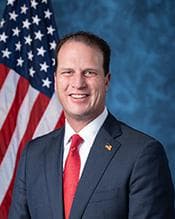
- August Pfluger
- Cosponsors
- - 18 - 0
- Introduced
- Passed House
- In Senate committee
What this bill would do
This Act is titled the ``Protecting American Energy Production Act''. It seeks to prohibit a moratorium on the use of hydraulic fracturing. Under this bill, the President is not allowed to declare a moratorium on hydraulic fracturing unless Congress authorizes it through an Act. Additionally, it expresses the sense of Congress that States should keep the primary role in regulating hydraulic fracturing for oil and natural gas production on State and private lands.
Yes· 3 of 6
Does this leave more decisions to the states?+5
The bill expresses the sense of Congress that states should maintain primacy in regulating hydraulic fracturing on state and private lands.
Would business owners be better off under this?+4
Energy company owners benefit from the increased regulatory certainty and protection against sudden moratoria.
Would people in rural areas be better off under this?+3
The bill supports the energy industry which is a significant employer in many rural areas.
The opposite
Does this reduce how much oil, gas and coal is produced?-3
The bill makes it harder to halt fossil fuel production by restricting the President's ability to declare a moratorium on hydraulic fracturing.
What Congress actually voted on
2 recorded votes have been taken on this bill. One of them decided something; the rest moved it along.
- The House: the vote on whether to pass the billPassed 226–188
This is the real decision in this chamber. Passing here sends the bill to the other chamber, which must pass it too before it can go to the President.
02/07/2025 · Roll call 35 · recorded as “On Passage”
Who it would affect, and how
Potential Positive Impacts for People
-
Prevention of unilateral moratoria: By requiring an Act of Congress to authorize a moratorium, the bill prevents the President from stopping hydraulic fracturing on their own, which is addressed in Section 2(b).
-
State regulatory control: The bill expresses that States should maintain primacy for regulating hydraulic fracturing on State and private lands, as noted in Section 2(a).
Potential Negative Impacts for People
- No negative impacts are explicitly listed in the provided text.
Groups and Interests Ranking
Every group the model scored this bill for, from -10 to +10. Hover a score for the reason it gave.
- Demographic And Interest Groups
- Good For Business Owners+4Good For Rural Residents+3
- Economy And Finance
- Increases Job Creation+3Improves Small Business Support+2
- Governance And Ideology
- Increase States Rights+5
- Environment Energy And Infrastructure
- Reduces Gas Prices+2Reduces Fossil Fuel Production-3
- 2/10/2025
- Received in the Senate and Read twice and referred to the Committee on Energy and Natural Resources.
- 2/7/2025
- Motion to reconsider laid on the table Agreed to without objection.
- Passed/agreed to in House: On passage Passed by the Yeas and Nays: 226 - 188 (Roll no. 35).
- On passage Passed by the Yeas and Nays: 226 - 188 (Roll no. 35). (text: CR H561)
- On motion to recommit Failed by the Yeas and Nays: 205 - 207 (Roll no. 34).
- The previous question on the motion to recommit was ordered pursuant to clause 2(b) of rule XIX.
- Mr. Casten moved to recommit to the Committee on Natural Resources. (text: CR H568)
- The previous question was ordered pursuant to the rule.
- DEBATE - The House proceeded with one hour of debate on H.R. 26.
- Considered under the provisions of rule H. Res. 5. (consideration: CR H561-569)
- 1 Cosponsor added.
- 2/5/2025
- 3 Cosponsors added.
- 2/4/2025
- 6 Cosponsors added.
- 1/22/2025
- 2 Cosponsors added.
- 1/13/2025
- 2 Cosponsors added.
- 1/9/2025
- 3 Cosponsors added.
- 1/7/2025
- 1 Cosponsor added.
- 1/3/2025
- Referred to the Committee on Natural Resources, and in addition to the Committee on Energy and Commerce, for a period to be subsequently determined by the Speaker, in each case for consideration of such provisions as fall within the jurisdiction of the committee concerned.
- Introduced in House
5 bills Congress.gov lists as related to this one — companions in the other chamber, earlier versions, and bills this one absorbed or was folded into.
 Stephanie Bice
Republican · Oklahoma
 Andy Barr
Republican · Kentucky
 Brian Babin
Republican · Texas
 James Baird
Republican · Indiana
 Nicholas Begich
Republican · Alaska
 Ben Cline
Republican · Virginia
 Julie Fedorchak
Republican · North Dakota
 Tony Gonzales
Republican · Texas
 Craig Goldman
Republican · Texas
 Brandon Gill
Republican · Texas
 Erin Houchin
Republican · Indiana
 Mike Haridopolos
Republican · Florida
 Michael Lawler
Republican · New York
 Nicholas Langworthy
Republican · New York
 Daniel Meuser
Republican · Pennsylvania
 John McGuire
Republican · Virginia
 Michael Rulli
Republican · Ohio
 Randy Weber
Republican · Texas