
Mary Miller (R-IL)
Keep Our Girls Safe Act of 2025
A Republican bill with 13 Republican cosponsors · See all 13 cosponsors
Last activity — Referred to the House Committee on Education and Workforce.
In committee
Introduced and handed to a committee in the chamber it started in.
The committee holds it, and most bills are never heard from again. A hearing or a committee vote would be news; silence is the usual outcome, and it kills the bill without anyone voting against it.
Its path through Congress
- Introduced
- In Committee
What this bill would do
This bill, titled the "Keep Our Girls Safe Act of 2025," seeks to change how sex is determined for Title IX compliance. It focuses on locker room facilities used during education programs or activities. Under this act, sex would be determined solely by an individual's reproductive biology and genetics at birth. The bill makes it unlawful for people of different sexes to use the same locker room when it is in active use by others. This legislation is intended to take effect 30 days after it is enacted.
Yes
- Scored +5
Would women be better off under this?
The bill is framed as a safety measure intended to protect female-sexed individuals in sex-segregated spaces.
The opposite
- Scored -8
Would LGBTQ people be better off under this?
The bill specifically targets and restricts the rights of transgender and non-binary individuals regarding facility access.
- Scored -7
Does this expand the rights of LGBTQ people?
The bill restricts access to facilities for transgender individuals by basing sex solely on biological sex at birth.
- Scored -3
Would students be better off under this?
While aimed at safety, the bill restricts access to facilities for a portion of the student population.
Who it would affect, and how
Potential Positive Impacts for People
- Defined sex standards: The bill establishes a specific method for determining sex based on reproductive biology and genetics at birth (Section 2). This provides a set standard for what constitutes a specific sex under Title IX for locker room use.
Potential Negative Impacts for People
- Restrictions on locker room access: The bill would make it unlawful for individuals to use a locker room if they are a different sex than those currently using it, based strictly on their biology and genetics at birth (Section 2). This creates a legal prohibition on certain individuals using these facilities when they are in active use by a different sex.
Groups and Interests Ranking
Every group the model scored this bill for, from -10 to +10. Tap or hover a score for the reason it gave.
- Social Issues And Justice
- Does this expand the rights of LGBTQ people? — The bill restricts access to facilities for transgender individuals by basing sex solely on biological sex at birth.
- Demographic And Interest Groups
- Would women be better off under this? — The bill is framed as a safety measure intended to protect female-sexed individuals in sex-segregated spaces. Would LGBTQ people be better off under this? — The bill specifically targets and restricts the rights of transgender and non-binary individuals regarding facility access. Would students be better off under this? — While aimed at safety, the bill restricts access to facilities for a portion of the student population.
- 4/7/2025
- 1 Cosponsor added.
- 4/3/2025
- 1 Cosponsor added.
- 4/1/2025
- 1 Cosponsor added.
- 3/27/2025
- Referred to the House Committee on Education and Workforce.
- 10 Cosponsors added.
- Introduced in House
 Lauren Boebert
Republican · Colorado
 Tim Burchett
Republican · Tennessee
 Sheri Biggs
Republican · South Carolina
 Andy Harris
Republican · Maryland
 Harriet Hageman
Republican · Wyoming
 Mark Harris
Republican · North Carolina
 Doug LaMalfa
Republican · California
 Richard McCormick
Republican · Georgia
 Burgess Owens
Republican · Utah
 Robert Onder
Republican · Missouri
 Keith Self
Republican · Texas
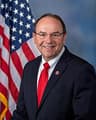 Thomas Tiffany
Republican · Wisconsin
 Claudia Tenney
Republican · New York