Bill · H.R. 2392· House(119-HR-2392)
STABLE Act of 2025

- Introduced
- 3/26/2025
- Last activity
- 5/6/2025 — Placed on the Union Calendar, Calendar No. 68.
- Sponsored by
- Bryan Steil
- Cosponsors
- - 13 - 4
- Introduced
- On Calendar
What this bill would do
The STABLE Act of 2025 establishes a regulatory framework for the issuance and oversight of payment stablecoins in the United States. It restricts the issuance of payment stablecoins to permitted issuers, which include approved subsidiaries of insured depository institutions, federal qualified nonbank entities, or state qualified issuers. The bill mandates strict reserve requirements, including a 1-to-1 backing with specific assets like U.S. currency or Treasury bills. It also imposes rigorous reporting, auditing, and capital standards on these issuers. Additionally, the act provides oversight mechanisms for state-level regulatory regimes and includes a moratorium on endogenously collateralized stablecoins.
Yes· 3 of 4
Does this give people more protection from unfair business practices?+7
The bill establishes rigorous reserve, reporting, and auditing standards to protect stablecoin holders.
Does this make what the government does easier for the public to see?+6
The bill mandates monthly public reports on reserve compositions for transparency.
Does this give the federal government more power?+5
The bill grants significant regulatory oversight to federal agencies like the Comptroller of the Currency.
The opposite
Would business owners be better off under this?-2
The bill imposes strict regulatory burdens and potential criminal liabilities on stablecoin issuers.
Who it would affect, and how
Potential Positive Impacts for People
-
Consumer Asset Protection: Issuers must maintain reserves on at least a 1-to-1 basis using specific assets like U.S. currency or Treasury bills to back outstanding stablecoins (Section 4(a)(1)(A)).
-
Transparency and Accountability: Issuers are required to publish monthly reports on the composition of their reserves and their total outstanding stablecoins on their websites (Section 4(a)(1)(D)).
-
Protection Against Misrepresentation: The bill makes it unlawful to claim that payment stablecoins are backed by the full faith and credit of the U.S. or are subject to federal deposit insurance (Section 4(c)).
-
Asset Segregation: Custodians are required to treat customer property as belonging to the customer and must not commingle it with their own funds (Section 8(b)(1)).
-
Priority in Insolvency: In the event of an issuer's insolvency, claims held by persons for reserves must have priority over other claims, except for administrative expenses (Section s 8(c)(2)).
-
Regulatory Oversight for Nonbanks: Federal qualified nonbank payment stablecoin issuers are subject to regulation and supervision by the Comptroller to monitor financial conditions and risks (Section 6(a)(2)).
Potential Negative Impacts for People
-
Strict Penalties for Officers: Chief Executive Officers and Chief Financial Officers face significant fines and imprisonment for submitting monthly certifications that do not fairly present required information (Section 4(a)(4)(C)).
-
Limitations on Yield: Permitted payment stablecoin issuers are strictly prohibited from paying interest or yield to holders of their stablecoins (Section 4(a)(9)).
-
Criminal Liability for Misconduct: Individuals who submit certifications knowing they are inaccurate face fines of up to $1,000,000 and up to 10 years in prison, while willful submissions can lead to $5,000,000 fines and 20 years in prison (Section 4(a)(4)(C)).
-
Civil Penalties for Unpermitted Issuance: Any person who issues a stablecoin without being a permitted issuer is subject to civil penalties of up to $100,000 for each day the violation continues (Section 6(b)(5)(A)).
-
Moratorium on Certain Assets: For a two-year period starting on the date of enactment, it is unlawful to issue endogenously collateralized stablecoins that were not already in existence (Section 11(a)).
Groups and Interests Ranking
Every group the model scored this bill for, from -10 to +10. Hover a score for the reason it gave.
- Governance And Ideology
- Improves Government Transparency+6Increases Federal Power+5Increase States Rights+3
- Economy And Finance
- Improves Consumer Protection+7
- Demographic And Interest Groups
- Good For Business Owners-2
- 5/6/2025
- Reported (Amended) by the Committee on Financial Services. H. Rept. 119-94.
- Placed on the Union Calendar, Calendar No. 68.
- 4/28/2025
- 1 Cosponsor added.
- 4/2/2025
- Committee Consideration and Mark-up Session Held
- Ordered to be Reported (Amended) by the Yeas and Nays: 32 - 17.
- 4/1/2025
- 2 Cosponsors added.
- 3/31/2025
- 2 Cosponsors added.
- 3/27/2025
- 1 Cosponsor added.
- 3/26/2025
- Referred to the House Committee on Financial Services.
- 11 Cosponsors added.
- Introduced in House
 Troy Downing
Republican · Montana
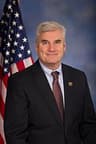 Tom Emmer
Republican · Minnesota
 Josh Gottheimer
Democrat · New Jersey
 Bill Huizenga
Republican · Michigan
 J. Hill
Republican · Arkansas
 Mike Haridopolos
Republican · Florida
 Young Kim
Republican · California
 Michael Lawler
Republican · New York
 Sam Liccardo
Democrat · California
 Daniel Meuser
Republican · Pennsylvania
 Tim Moore
Republican · North Carolina
 Zachary Nunn
Republican · Iowa
 John Rose
Republican · Tennessee
 Marlin Stutzman
Republican · Indiana
 William Timmons
Republican · South Carolina
 Ritchie Torres
Democrat · New York
 Shri Thanedar
Democrat · Michigan