Bill · H.R. 2058· House(119-HR-2058)
To amend the Workforce Innovation and Opportunity Act to define the term evidence-based.
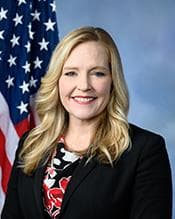
- Introduced
- 3/11/2025
- Last activity
- 3/11/2025 — Referred to the House Committee on Education and Workforce.
- Sponsored by
- Erin Houchin
- Cosponsors
- - 3 - 0
- Introduced
- In Committee
What this bill would do
This bill seeks to amend the Workforce Innovation and Opportunity Act. The primary purpose is to establish a specific definition for the term "evidence-based." This definition applies to activities, services, strategies, interventions, or material content. Additionally, the bill changes how programs are described and requires states to include strategies for prioritizing the funding of these evidence-based programs.
Yes· 3 of 14
Does this make the government pay for what it commits to?+4
Requiring states to prioritize funding for proven, evidence-based programs promotes more efficient use of public funds.
Would households on low incomes be better off under this?+3
Increased efficacy in workforce programs can lead to better employment outcomes for low-income individuals.
Is this likely to create jobs?+3
By prioritizing evidence-based workforce development, the bill seeks to improve the efficiency and effectiveness of job training programs.
The opposite
No question was scored the opposite.
Who it would affect, and how
Potential Positive Impacts for People
-
Establishing Standards for Success: The bill defines "evidence-based" through specific levels of proof, such as experimental, quasi-experimental, or correlational studies, to ensure activities demonstrate a statistically significant effect on participant outcomes (Section 1(a)).
-
Improving Outcome Probabilities: The definition allows for programs that demonstrate a rationale based on high-quality research or positive evaluations as being likely to improve student or other relevant outcomes (Section 1(a)(B)(i)).
-
Ensuring Continuous Improvement: The new definition requires that the chosen activities or interventions include ongoing efforts to examine their actual effects (Section 1(a)(B)(ii)).
-
Prioritizing Effective Funding: The bill requires states to provide a description of strategies they will use to prioritize funding for evidence-based programs within their statewide workforce development activities (Section 1(b)(4)).
Potential Negative Impacts for People
- No negative impacts or burdens are explicitly stated in the provided text.
Groups and Interests Ranking
Every group the model scored this bill for, from -10 to +10. Hover a score for the reason it gave.
- Demographic And Interest Groups
- Good For Low Income Households+3Good For Business Owners+2Good For Young Adults+2Good For Middle Aged+1Good For Middle Class Households+1Good For Students+1Good For Veterans+1
- Economy And Finance
- Improves Fiscal Responsibility+4Increases Job Creation+3Improves Economic Growth+2
- Governance And Ideology
- Improves Government Transparency+3Increases Federal Power+1
- Social Issues And Justice
- Improves Poverty Reduction+3
- Education And Technology
- Increases Scientific Research Funding+2
- 5/19/2025
- 1 Cosponsor added.
- 3/21/2025
- 1 Cosponsor added.
- 3/11/2025
- Referred to the House Committee on Education and Workforce.
- 1 Cosponsor added.
- Introduced in House
One bill Congress.gov lists as related to this one — companions in the other chamber, earlier versions, and bills this one absorbed or was folded into.
 John James
Republican · Michigan
 Michael Lawler
Republican · New York
 Mark Messmer
Republican · Indiana