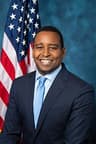
Joe Neguse (D-CO)
Wildland Firefighter Paycheck Protection Act of 2025
A Democratic bill with 8 Republican cosponsors · See all 15 cosponsors
Last activity — Referred to the Subcommittee on Forestry and Horticulture.
In committee
Introduced and handed to a committee in the chamber it started in.
The committee holds it, and most bills are never heard from again. A hearing or a committee vote would be news; silence is the usual outcome, and it kills the bill without anyone voting against it.
Its path through Congress
- Introduced
- In Committee
What this bill would do
The Wildland Firefighter Paycheck Protection Act of 2025 aims to amend title 5 of the United States Code to provide special base rates of pay for wildland firefighters. The bill establishes specific pay increases for employees of the Forest Service and the Department of the Interior based on their grade level. It also creates a system for incident response premium pay for employees deployed to qualifying incidents. Additionally, the legislation introduces a rest and recuperation leave provision for these workers. Finally, it provides authority to transfer funds to ensure these salary increases continue uninterrupted.
Yes· 3 of 5
- Scored +5
Would union members be better off under this?
The bill provides substantial wage increases and new leave provisions for federal wildland firefighters.
- Scored +5
Does this raise the lowest wage an employer may pay?
The bill increases the base pay and premium pay for wildland firefighters serving in the Forest Service and Department of the Interior.
- Scored +3
Does this better protect air, water and wildlife?
By improving pay and rest for wildland firefighters, the bill aims to support the personnel essential for managing wildland fire risks.
The opposite
- Scored -2
Does this reduce what the federal government spends?
The bill authorizes significant salary increases and premium pay for federal employees, which increases government expenditure.
Who it would affect, and how
Potential Positive Impacts for People
-
Increased Base Pay for Wildland Firefighters: Wildland firefighters would receive a special base rate that replaces their current General Schedule base rate. This includes specific percentage increases based on grade, such as a 42 percent increase for GS-1 through 3 percent for GS-14 (Section 2(b)(1) and 2(b)(2)(A)).
-
Premium Pay for Incident Response: Covered employees deployed to qualifying incidents, such as wildfires or prescribed fires, are entitled to incident response premium pay. This pay is calculated at a daily rate of 450 percent of the employee's hourly basic pay (Section 3(a)(2) and 3(a)(3)(2)(A)).
-
Wage Increases for Prevailing Rate Employees: The Secretary of Agriculture or the Secretary of the Interior can increase wage rates for prevailing rate employees who are wildland firefighters (Section 2(c)).
-
Rest and Recuperation Leave: Employees engaged in wildland firefighting may receive paid rest and recuperation leave following a qualifying incident to assist with recovery (Section 4(a)(1)).
Potential Negative Impacts for People
-
Limits on Premium Pay: Incident response premium pay is subject to specific limitations, such as a cap of $9,000 in any calendar year (Section 3(a)(3)(2)(B)(ii)).
-
Premium Pay Caps for Higher Earners: For employees whose annual basic pay is higher than the rate for step 10 of GS-10, the premium pay is capped at the daily rate established for that specific GS-10 rate (Section 3(a)(3)(2)(B)(i)).
-
Restrictions on Leave Use: Rest and recuperation leave must be used immediately after a qualifying incident and cannot be set aside for later use (Section 4(a)(3)(1)(C) and 4(a)(3)(1)(D)).
-
No Payment for Unused Leave: Employees are not entitled to receive any payment for unused rest and recuperation leave (Section 4(a)(3)(2)).
Groups and Interests Ranking
Every group the model scored this bill for, from -10 to +10. Tap or hover a score for the reason it gave.
- Demographic And Interest Groups
- Would union members be better off under this? — The bill provides substantial wage increases and new leave provisions for federal wildland firefighters. Would households on low incomes be better off under this? — The bill increases the income of federal employees in lower GS grades through significant base pay percentage increases.
- Economy And Finance
- Does this raise the lowest wage an employer may pay? — The bill increases the base pay and premium pay for wildland firefighters serving in the Forest Service and Department of the Interior. Does this reduce what the federal government spends? — The bill authorizes significant salary increases and premium pay for federal employees, which increases government expenditure.
- Environment Energy And Infrastructure
- Does this better protect air, water and wildlife? — By improving pay and rest for wildland firefighters, the bill aims to support the personnel essential for managing wildland fire risks.
- Governance And Ideology
- Does this make what the government does easier for the public to see? — The bill requires a joint report from the Secretaries of Agriculture and the Interior regarding compensation assessments.
- 12/18/2025
- 2 Cosponsors added.
- 8/8/2025
- 1 Cosponsor added.
- 5/13/2025
- 1 Cosponsor added.
- 3/28/2025
- Referred to the Subcommittee on Forestry and Horticulture.
- 3/6/2025
- Referred to the Committee on Oversight and Government Reform, and in addition to the Committees on Natural Resources, and Agriculture, for a period to be subsequently determined by the Speaker, in each case for consideration of such provisions as fall within the jurisdiction of the committee concerned.
- 11 Cosponsors added.
- Introduced in House
One bill Congress.gov lists as related to this one — companions in the other chamber, earlier versions, and bills this one absorbed or was folded into.
 Don Bacon
Republican · Nebraska
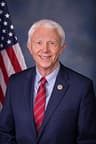 Jack Bergman
Republican · Michigan
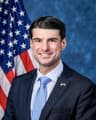 Robert Bresnahan
Republican · Pennsylvania
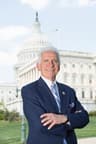 Jim Costa
Democrat · California
 Gerald Connolly
Democrat · Virginia
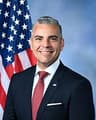 Juan Ciscomani
Republican · Arizona
 Debbie Dingell
Democrat · Michigan
 Brian Fitzpatrick
Republican · Pennsylvania
 Josh Harder
Democrat · California
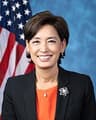 Young Kim
Republican · California
 Susie Lee
Democrat · Nevada
 Michael Lawler
Republican · New York
 David Valadao
Republican · California
 Gabe Vasquez
Democrat · New Mexico
 George Whitesides
Democrat · California