Bill · H.R. 1870· House(119-HR-1870)
SPEED for BEAD Act
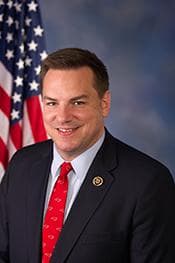
- Introduced
- 3/5/2025
- Last activity
- 3/5/2025 — Referred to the House Committee on Energy and Commerce.
- Sponsored by
- Richard Hudson
- Cosponsors
- - 22 - 0
- Introduced
- In Committee
What this bill would do
This bill, known as the "SPEED for BEAD Act," seeks to amend the Infrastructure Investment and Jobs Act. It aims to improve the Broadband Equity, Access, and Deployment Program by redefining service standards and renaming the program to focus on expansion. The legislation changes how unused funds are handled and introduces new rules for project sizes and subgrants. It also implements several prohibitions on certain conditions for bidding and grants. Finally, it prohibits the regulation or mandating of broadband service rates.
Yes· 3 of 8
Does this get reliable internet to more people?+5
The bill aims to streamline and expand broadband deployment through gigabit-level standards.
Would business owners be better off under this?+4
The bill simplifies deployment rules and provides flexibility for subgrantees.
Would people in rural areas be better off under this?+3
The bill facilitates expanded broadband deployment which often targets rural connectivity.
The opposite· 3 of 11
Would union members be better off under this?-8
The bill specifically prohibits requirements for prevailing wages, project labor agreements, and union workforces.
Does this strengthen the rights of workers to organise?-7
The bill explicitly prohibits requirements related to union workforces, collective bargaining, and labor peace agreements.
Does this narrow racial gaps in how people are treated?-6
The bill prohibits requirements related to diversity, equity, and inclusion in broadband deployment.
Who it would affect, and how
Potential Positive Impacts for People
-
Improved Service Standards: The bill defines "gigabit-level broadband service" as reliable service with download speeds of at least 1,000 megabits per second (Section 2(a)).
-
Increased Flexibility for Subgrantees: It introduces a mechanism allowing prospective subgrantees to remove specific locations from a project area if those locations would unreasonably increase costs (Section 2(d)).
-
Technology Neutrality: The bill ensures that any broadband service meeting specific performance criteria is treated as reliable, regardless of the type of technology used (Section 2(f)).
-
Expanded Use of Funds: The legislation amends the use of funds to include telecommunications workforce development programs (Section 2(c)).
Potential Negative Impacts for People
-
Prohibition of Labor and Social Standards: The bill prevents the use of requirements related to prevailing wages, project labor agreements, union workforces, local hiring, or diversity, equity, and inclusion (Section 2(e)).
-
Prohibition of Climate and Management Regulations: It prohibits requirements related to climate change or the regulation of network management practices, such as data caps (Section 2(e)).
-
No Rate Regulation: The bill prohibits the Assistant Secretary, eligible entities, or any other authority from regulating, setting, or mandating the rates charged for broadband service, including capping or freezing rates (Section 2(g)).
Groups and Interests Ranking
Every group the model scored this bill for, from -10 to +10. Hover a score for the reason it gave.
- Demographic And Interest Groups
- Good For Business Owners+4Good For Rural Residents+3Good For Farmers+2Good For Students+2Good For Union Workers-8Good For African Americans-4Good For Hispanic Americans-4Good For Native Americans-4Good For Low Income Households-3
- Economy And Finance
- Increases Job Creation+2Improves Economic Growth+1Improves Union Protections-7Improves Consumer Protection-5
- Social Issues And Justice
- Improves Racial Equity-6
- Environment Energy And Infrastructure
- Improves Rural Development+3Improves Environmental Protections-5
- Governance And Ideology
- Increases Federal Power-2
- Education And Technology
- Improves Internet Access+5Increases Big Tech Regulation-4
- 1/7/2026
- 1 Cosponsor added.
- 10/3/2025
- 1 Cosponsor added.
- 7/14/2025
- 1 Cosponsor added.
- 5/21/2025
- 1 Cosponsor added.
- 4/7/2025
- 1 Cosponsor added.
- 3/31/2025
- 1 Cosponsor added.
- 3/10/2025
- 2 Cosponsors added.
- 3/5/2025
- Referred to the House Committee on Energy and Commerce.
- 14 Cosponsors added.
- Introduced in House
 Rick Allen
Republican · Georgia
 Gus Bilirakis
Republican · Florida
 Jack Bergman
Republican · Michigan
 Kat Cammack
Republican · Florida
 Earl Carter
Republican · Georgia
 Dan Crenshaw
Republican · Texas
 Neal Dunn
Republican · Florida
 Virginia Foxx
Republican · North Carolina
 Russ Fulcher
Republican · Idaho
 Russell Fry
Republican · South Carolina
 Julie Fedorchak
Republican · North Dakota
 Craig Goldman
Republican · Texas
 Erin Houchin
Republican · Indiana
 Pat Harrigan
Republican · North Carolina
 John Joyce
Republican · Pennsylvania
 Robert Latta
Republican · Ohio
 Mariannette Miller-Meeks
Republican · Iowa
 Jay Obernolte
Republican · California
 August Pfluger
Republican · Texas
 Robert Wittman
Republican · Virginia
 Randy Weber
Republican · Texas
 Roger Williams
Republican · Texas