Bill · H.R. 1772· House(119-HR-1772)
Designation of English as the Official Language of the United States Act of 2025
- Introduced
- 3/3/2025
- Last activity
- 3/3/2025 — Referred to the Committee on Education and Workforce, and in addition to the Committee on the Judiciary, for a period to be subsequently determined by the Speaker, in each case for consideration of such provisions as fall within the jurisdiction of the committee concerned.
- Sponsored by
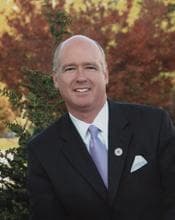
- Robert Aderholt
- Cosponsors
- - 21 - 0
- Introduced
- In Committee
What this bill would do
This bill, titled the "Designation of English as the Official Language of the United States Act of 2025," seeks to declare English as the official language of the United States. It establishes that all official functions of the federal government must be conducted in English. Additionally, the act mandates that all naturalization ceremonies be conducted in English. It sets a standard that citizens should be able to read and understand the English language text of the Declaration of Independence, the Constitution, and federal laws. The Secretary of Homeland Security is tasked with creating uniform English language testing for naturalization candidates.
Yes· 3 of 4
Would Native Americans be better off under this?+5
The bill explicitly states it does not limit the preservation or use of Native American languages.
Does this give the federal government more power?+3
The act expands federal requirements regarding official language use across all government functions.
Would white Americans be better off under this?+2
The bill targets English as a unifying thread, which may disproportionately benefit the majority demographic.
The opposite· 3 of 5
Would immigrants be better off under this?-5
The stricter English requirements for naturalization create harder paths to citizenship for immigrants.
Does this make it easier for immigrants already here to become citizens?-4
The mandate for uniform English testing may create additional barriers for naturalization candidates.
Would Hispanic Americans be better off under this?-3
The emphasis on English-only may negatively impact large populations of Spanish-speaking residents.
Who it would affect, and how
Potential Positive Impacts for People
-
Enhanced Language Opportunities: Federal representatives will have an affirmative obligation to encourage greater opportunities for individuals to learn the English language (Section 162).
-
Protection of Language Rights through Exceptions: The bill provides specific exceptions where English is not required, such as for the teaching of languages, requirements under the Individuals with Disabilities Education Act, and actions related to national security, international relations, trade, tourism, or commerce (Section 163).
-
Preservation of Native Languages: The act ensures that it does not limit the preservation or use of Native Alaskan or Native American languages (Section 165).
-
Protection of Public Safety and Rights: The scope of the English-only requirement does not apply to actions or documents that protect public health and safety, or actions that protect the rights of victims of crimes or criminal defendants (Section 163).
Potential Negative Impacts for People
-
Strict Requirements for Naturalization: Naturalization candidates will face uniform English language testing, with exceptions limited only to extraordinary circumstances like asylum (Section 164 and Section 5).
-
Mandatory English for Government Functions: All official functions of the government—including laws, public proceedings, regulations, publications, and policies—must be conducted in English (Section 163).
-
Legal Ambiguity Resolution: Any ambiguity in the English language text of laws will be resolved in a manner that must align with the last two articles of the Bill of Rights (Section 4).
-
Right to Sue: Individuals may bring a civil action if they are injured by a violation of this chapter (Section 166).
Groups and Interests Ranking
Every group the model scored this bill for, from -10 to +10. Hover a score for the reason it gave.
- Demographic And Interest Groups
- Good For Native Americans+5Good For People With Disabilities+2Good For White Americans+2Good For Immigrants-5Good For Asian Americans-3Good For Hispanic Americans-3Good For Low Income Households-2
- Social Issues And Justice
- Improves Pathway To Citizenship-4
- Governance And Ideology
- Increases Federal Power+3
- 7/30/2026
- 1 Cosponsor added.
- 6/4/2026
- 1 Cosponsor added.
- 6/3/2026
- 1 Cosponsor added.
- 6/2/2026
- 1 Cosponsor added.
- 2/9/2026
- 1 Cosponsor added.
- 9/17/2025
- 1 Cosponsor added.
- 8/26/2025
- 1 Cosponsor added.
- 7/7/2025
- 1 Cosponsor added.
- 6/10/2025
- 1 Cosponsor added.
- 6/9/2025
- 1 Cosponsor added.
- 4/7/2025
- 1 Cosponsor added.
- 3/4/2025
- 1 Cosponsor added.
- 3/3/2025
- Referred to the Committee on Education and Workforce, and in addition to the Committee on the Judiciary, for a period to be subsequently determined by the Speaker, in each case for consideration of such provisions as fall within the jurisdiction of the committee concerned.
- 9 Cosponsors added.
- Introduced in House
One bill Congress.gov lists as related to this one — companions in the other chamber, earlier versions, and bills this one absorbed or was folded into.
 Rick Allen
Republican · Georgia
 Andrew Clyde
Republican · Georgia
 Mike Collins
Republican · Georgia
 Neal Dunn
Republican · Florida
 Clay Fuller
Republican · Georgia
 Sam Graves
Republican · Missouri
 Paul Gosar
Republican · Arizona
 Brandon Gill
Republican · Texas
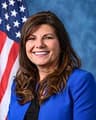 Diana Harshbarger
Republican · Tennessee
 Abraham Hamadeh
Republican · Arizona
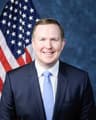 Brian Jack
Republican · Georgia
 Barry Loudermilk
Republican · Georgia
 Mary Miller
Republican · Illinois
 Barry Moore
Republican · Alabama
 Richard McCormick
Republican · Georgia
 Ralph Norman
Republican · South Carolina
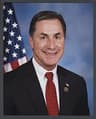 Gary Palmer
Republican · Alabama
 Mike Rogers
Republican · Alabama
 Adrian Smith
Republican · Nebraska
 W. Steube
Republican · Florida
 Dale Strong
Republican · Alabama