Bill · H.R. 1862· House(119-HR-1862)
English Language Unity Act of 2025
- Introduced
- 3/5/2025
- Last activity
- 3/5/2025 — Referred to the Committee on Education and Workforce, and in addition to the Committees on the Judiciary, and Oversight and Government Reform, for a period to be subsequently determined by the Speaker, in each case for consideration of such provisions as fall within the jurisdiction of the committee concerned.
- Sponsored by
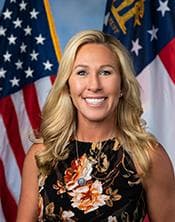
- Marjorie Greene
- Cosponsors
- - 6 - 0
- Introduced
- In Committee
What this bill would do
The English Language Unity Act of 2025 seeks to declare English as the official language of the United States. It establishes that official functions of the government must be conducted in English. The bill also creates a uniform English language rule for those applying for naturalization. Additionally, it provides rules for resolving ambiguities in the English language text of federal laws. Finally, the act mandates a presidential proclamation for a National English Language Day.
Yes
Does this give the federal government more power?+2
The bill establishes a federal mandate for English as the official language for all official government functions.
Would Native Americans be better off under this?+1
The bill explicitly states it does not limit the preservation or use of Native American languages.
The opposite· 3 of 6
Would immigrants be better off under this?-4
The bill imposes mandatory English language standards for naturalization and official government interactions.
Would Hispanic Americans be better off under this?-3
The imposition of English as the official language and a requirement for naturalization may create barriers for Hispanic populations.
Does this make it easier for immigrants already here to become citizens?-3
The bill establishes new, uniform English language testing standards for naturalization applicants.
Who it would affect, and how
Potential Positive Impacts for People
-
Uniformity in Naturalization: The bill establishes a uniform language testing standard where applicants should be able to read and understand the English language text of the Declaration of Independence, the Constitution, and federal laws (Sec. 164(a)).
-
Protection of Specific Rights and Interests: The law includes exceptions that ensure official functions are not conducted in English when it comes to teaching languages, the Individuals with Disabilities Education Act, national security, international relations, trade, tourism, commerce, public health and safety, the Census, or the rights of victims and defendants (Sec. 163(c)).
-
Preservation of Native Languages: The act includes rules of construction that ensure it does not limit the preservation or use of Native Alaskan or Native American languages (Sec. 165(a)(2)).
-
Protection of Rights in Legal Ambiguity: The bill mandates that any ambiguity in the English language text of laws must be resolved in a way that does not deny or disparage rights retained by the people (Sec. 9(b)).
Potential Negative Impacts for People
-
Mandatory English for Government Functions: All official functions of the government, including laws, public proceedings, regulations, publications, orders, and policies, must be conducted in English (Sec. 163(a) and (c)).
-
Requirement for Naturalization Ceremonies: All naturalization ceremonies must be conducted in the English language (Sec. 164(b)).
-
Workplace Policy Presumptions: English language requirements and workplace policies, in both public and private sectors, are to be considered presumptively consistent with the laws of the United States (Sec. 9(a)).
Groups and Interests Ranking
Every group the model scored this bill for, from -10 to +10. Hover a score for the reason it gave.
- Demographic And Interest Groups
- Good For Native Americans+1Good For Immigrants-4Good For Hispanic Americans-3Good For Low Income Households-2
- Social Issues And Justice
- Improves Pathway To Citizenship-3Improves Racial Equity-2Improves Voting Access-1
- Governance And Ideology
- Increases Federal Power+2
- 3/6/2025
- 1 Cosponsor added.
- 3/5/2025
- Referred to the Committee on Education and Workforce, and in addition to the Committees on the Judiciary, and Oversight and Government Reform, for a period to be subsequently determined by the Speaker, in each case for consideration of such provisions as fall within the jurisdiction of the committee concerned.
- 5 Cosponsors added.
- Introduced in House
One bill Congress.gov lists as related to this one — companions in the other chamber, earlier versions, and bills this one absorbed or was folded into.
 Andy Biggs
Republican · Arizona
 Josh Brecheen
Republican · Oklahoma
 Mike Collins
Republican · Georgia
 Paul Gosar
Republican · Arizona
 Brandon Gill
Republican · Texas
 Mary Miller
Republican · Illinois