Bill · H.R. 161· House(119-HR-161)
New Source Review Permitting Improvement Act
- Introduced
- 1/3/2025
- Last activity
- 4/28/2026 — Placed on the Union Calendar, Calendar No. 542.
- Sponsored by
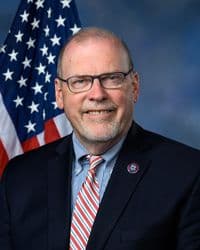
- H. Griffith
- Cosponsors
- - 21 - 0
- Introduced
- On Calendar
What this bill would do
The "New Source Review Permitting Improvement Act" seeks to amend several sections of the Clean Air Act. It aims to clarify the definitions of "modification" and "construction" regarding stationary sources. The bill changes how emission rate increases are calculated by comparing the new maximum hourly rate to the highest rate from the previous 10-year period. It also specifies that certain changes intended to reduce pollution per unit of production or improve safety and reliability are not considered modifications. Additionally, it narrows the scope of what constitutes "construction" for certain permitting requirements.
Yes
Would business owners be better off under this?+3
Business owners of stationary sources benefit from clarified and narrowed permitting thresholds.
Is this likely to create jobs?+2
The simplification of permitting requirements for stationary sources may reduce regulatory hurdles for industrial expansion.
Does this make it easier to run a small business?+1
The bill reduces the scope of what constitutes construction, potentially lowering compliance costs for facilities.
The opposite
Does this better protect air, water and wildlife?-3
By redefining modification and construction, the bill could allow more industrial changes to occur without undergoing full environmental review.
Does this give the federal government more power?-2
The bill limits the scope of federal Clean Air Act permitting requirements for certain stationary source changes.
Would people in cities be better off under this?-2
The changes to emission rate calculations and construction definitions may impact local air quality standards.
Who it would affect, and how
Potential Positive Impacts for People
-
Efficiency and Pollution Reduction: Under Section 2, a change is not considered a "modification" if it is designed to reduce the amount of an air pollutant emitted per unit of production. This could benefit the environment by making it easier to implement efficiency improvements.
-
Operational Reliability and Safety: Section 2 also states that a change is not a "modification" if it is intended to restore, maintain, or improve the reliability or safety of a stationary source. This could provide more stable and safer operations for facilities.
-
Simplified Construction Standards: Sections 3 and 4 clarify that construction requirements for major emitting facilities apply only to the physical construction of discrete parts of an emissions unit. This means other on-site activities—even if they are costly, permanent, or significantly alter the site—would not trigger these specific construction requirements if they are just to accommodate an installation.
Potential Negative Impacts for People
-
Environmental and Health Risks: Section 2 specifies that the exclusions for reliability and safety projects do not apply if the Administrator determines that the increase in the maximum achievable hourly emission rate would cause an adverse effect on human health or the environment. This implies that without such a determination, changes that increase emission rates could proceed.
-
Changes to Emission Rate Calculations: Section 2 changes the definition of an increase in an air pollutant to depend on whether the new maximum hourly emission rate is higher than any hour in the preceding 10-year period. This change could impact how emissions are monitored and regulated.
Groups and Interests Ranking
Every group the model scored this bill for, from -10 to +10. Hover a score for the reason it gave.
- Economy And Finance
- Increases Job Creation+2Improves Small Business Support+1
- Environment Energy And Infrastructure
- Improves Environmental Protections-3
- Governance And Ideology
- Increases Federal Power-2
- Demographic And Interest Groups
- Good For Business Owners+3Good For Urban Residents-2
- 4/28/2026
- Reported (Amended) by the Committee on Energy and Commerce. H. Rept. 119-625.
- Placed on the Union Calendar, Calendar No. 542.
- 4/9/2026
- 1 Cosponsor added.
- 4/6/2026
- 1 Cosponsor added.
- 4/2/2026
- 1 Cosponsor added.
- 3/16/2026
- 1 Cosponsor added.
- 3/9/2026
- 1 Cosponsor added.
- 2/25/2026
- 1 Cosponsor added.
- 2/20/2026
- 4 Cosponsors added.
- 2/13/2026
- 4 Cosponsors added.
- 2/12/2026
- 2 Cosponsors added.
- 2/11/2026
- 2 Cosponsors added.
- 2/10/2026
- 2 Cosponsors added.
- 1/21/2026
- Committee Consideration and Mark-up Session Held
- Ordered to be Reported (Amended) by the Yeas and Nays: 28 - 23.
- 12/10/2025
- Subcommittee Consideration and Mark-up Session Held
- Forwarded by Subcommittee to Full Committee by the Yeas and Nays: 12 - 11.
- 11/20/2025
- 1 Cosponsor added.
- 1/3/2025
- Referred to the Subcommittee on Environment.
- Referred to the House Committee on Energy and Commerce.
- Introduced in House
One bill Congress.gov lists as related to this one — companions in the other chamber, earlier versions, and bills this one absorbed or was folded into.
 Rick Allen
Republican · Georgia
 Lauren Boebert
Republican · Colorado
 Mike Bost
Republican · Illinois
 Eric Crawford
Republican · Arkansas
 Jake Ellzey
Republican · Texas
 Chuck Edwards
Republican · North Carolina
 Julie Fedorchak
Republican · North Dakota
 Glenn Grothman
Republican · Wisconsin
 Diana Harshbarger
Republican · Tennessee
 Erin Houchin
Republican · Indiana
 Daniel Meuser
Republican · Pennsylvania
 Carol Miller
Republican · West Virginia
 Barry Moore
Republican · Alabama
 John McGuire
Republican · Virginia
 August Pfluger
Republican · Texas
 Gary Palmer
Republican · Alabama
 Pete Stauber
Republican · Minnesota
 Tim Walberg
Republican · Michigan
 Robert Wittman
Republican · Virginia
 Randy Weber
Republican · Texas
 Roger Williams
Republican · Texas