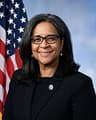
A Democratic bill with 9 Democratic cosponsors · See all 9 cosponsors
Last activity — Referred to the House Committee on Armed Services.
In committee
Introduced and handed to a committee in the chamber it started in.
The committee holds it, and most bills are never heard from again. A hearing or a committee vote would be news; silence is the usual outcome, and it kills the bill without anyone voting against it.
Its path through Congress
- Introduced
- In Committee
What this bill would do
This bill, known as the "Equal and Uniform Treatment in the Military Act" or the "EQUITY Act," aims to amend title 10 of the United States Code. The primary purpose is to prohibit discrimination within the Department of Defense. It seeks to ensure that all members of the Armed Forces are treated without discrimination based on specific personal characteristics. Under this act, service eligibility would be based on an individual's ability to meet occupational standards and specific job requirements. This change would apply to race, color, religion, sex, national origin, gender identity, or sexual orientation.
Yes· 3 of 7
- Scored +9
Would LGBTQ people be better off under this?
The bill provides substantial protections for gender identity and sexual orientation in the military.
- Scored +8
Does this narrow the gap between how men and women are treated?
The bill expands definitions of sex and gender identity to protect against discrimination and stereotypes.
- Scored +7
Would Black Americans be better off under this?
The bill prohibits discrimination based on race, protecting Black members of the military.
The opposite
No question was scored the opposite.
Who it would affect, and how
Potential Positive Impacts for People
-
Prohibition of Discrimination: The bill prohibits discrimination within the Department of Defense based on race, color, religion, sex, national origin, gender identity, or sexual orientation (Section 3, Section 975(a)(1)). This ensures that service members are protected from being treated differently based on these specific traits.
-
Merit-Based Service: The act establishes that eligibility for service should be based on an individual's ability to meet general occupational standards and particular military occupational specialty requirements (Section 3, Section 975(a)(2)). This promotes an environment where members are evaluated on their actual fitness and performance.
-
Expanded Definitions of Sex and Gender: By providing specific definitions for "gender identity" and "sex," the bill includes protections for gender-related characteristics, pregnancy, childbirth, and intersex traits (Section 3, Section 975(b)). This provides clearer standards for what constitutes non-discrimination regarding sex and gender.
Potential Negative Impacts for People
- No negative impacts or burdens are explicitly stated in the provided text.
Groups and Interests Ranking
Every group the model scored this bill for, from -10 to +10. Tap or hover a score for the reason it gave.
- Demographic And Interest Groups
- Would LGBTQ people be better off under this? — The bill provides substantial protections for gender identity and sexual orientation in the military. Would Black Americans be better off under this? — The bill prohibits discrimination based on race, protecting Black members of the military. Would Native Americans be better off under this? — The bill prohibits discrimination based on race, protecting Native American service members. Would women be better off under this? — The bill protects women against sex-based discrimination and includes pregnancy protections.
- Social Issues And Justice
- Does this narrow the gap between how men and women are treated? — The bill expands definitions of sex and gender identity to protect against discrimination and stereotypes. Does this expand the rights of LGBTQ people? — The bill provides explicit protections for gender identity and sexual orientation within the Department of Defense. Does this narrow racial gaps in how people are treated? — The bill prohibits discrimination based on race, color, and national origin in the military.
- 2/24/2025
- Referred to the House Committee on Armed Services.
- 9 Cosponsors added.
- Introduced in House
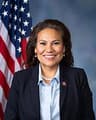 Veronica Escobar
Democrat · Texas
 Steven Horsford
Democrat · Nevada
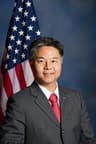 Ted Lieu
Democrat · California
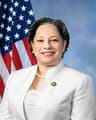 Jennifer McClellan
Democrat · Virginia
 Eleanor Norton
Democrat · District of Columbia
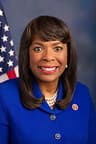 Terri Sewell
Democrat · Alabama
 Mikie Sherrill
Democrat · New Jersey
 Jill Tokuda
Democrat · Hawaii
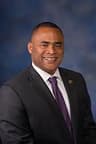 Marc Veasey
Democrat · Texas