Bill · H.R. 1295· House(119-HR-1295)
Reorganizing Government Act of 2025
- Introduced
- 2/13/2025
- Last activity
- 1/27/2026 — Placed on the Union Calendar, Calendar No. 397.
- Sponsored by
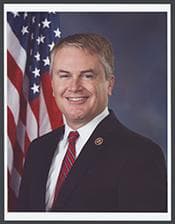
- James Comer
- Cosponsors
- - 19 - 0
- Introduced
- On Calendar
What this bill would do
The Reorganizing Government Act of 2025 aims to amend chapter 9 of title 5 of the United States Code. This bill seeks to reauthorize the executive reorganization authority of the President. The legislation is intended to ensure efficient executive reorganization. It includes provisions to modify how executive departments are defined and handled. Additionally, the bill makes several adjustments to existing statutory language regarding government operations.
Yes· 3 of 6
Does this give the federal government more power?+6
The bill expands the President's authority to reorganize executive departments, eliminate operations, and reduce the Federal workforce.
Does this reduce what the federal government spends?+5
The bill authorizes the elimination of unnecessary operations and the reduction of Federal employee numbers to decrease government expenditures.
Does this make it easier to run a small business?+4
The bill seeks to decrease the cost and difficulty of compliance by amending burdensome rules and regulations.
The opposite
Would union members be better off under this?-5
The bill provides authority to reduce the number of Federal employees and eliminate various government operations.
Does this give people more protection from unfair business practices?-3
The bill removes the statutory prohibition against abolishing enforcement functions or statutory programs.
Does this make what the government does easier for the public to see?-2
The removal of protections for enforcement functions may decrease the transparency of certain government programs.
Who it would affect, and how
Potential Positive Impacts for People
-
Reduction in government costs and complexity: The bill allows for amending rules, regulations, and other requirements to decrease the cost and difficulty of compliance and to eliminate unnecessary and burdensome requirements (Section 2, Section 901(a)(8)).
-
Elimination of unnecessary operations: The bill provides authority to eliminate operations determined to be unnecessary for the execution of constitutional duties (Section 2, Section 901(a)(3)) and to eliminate government operations that do not serve the public interest (Section 2, Section 901(a)(9)).
-
Reduction in Federal workforce size: The bill includes provisions to reduce the number of Federal employees (Section 2, Section 901(a)(7)).
Potential Negative Impacts for People
- Changes to enforcement functions: The bill amends section 903(a) by striking the provision that states no enforcement function or statutory program shall be abolished by the plan (Section 2, Section 903(a)(2)).
Groups and Interests Ranking
Every group the model scored this bill for, from -10 to +10. Hover a score for the reason it gave.
- Economy And Finance
- Reduces Government Spending+5Improves Small Business Support+4Improves Fiscal Responsibility+3Reduces National Debt+2Improves Consumer Protection-3
- Governance And Ideology
- Increases Federal Power+6Improves Government Transparency-2
- Demographic And Interest Groups
- Good For Business Owners+4Good For Union Workers-5
- 1/27/2026
- Reported (Amended) by the Committee on Oversight and Government Reform. H. Rept. 119-464, Part I.
- Committee on Rules discharged.
- Placed on the Union Calendar, Calendar No. 397.
- 4/24/2025
- 4 Cosponsors added.
- 3/25/2025
- Committee Consideration and Mark-up Session Held
- Ordered to be Reported (Amended) by the Yeas and Nays: 23 - 20.
- 2/13/2025
- Referred to the Committee on Oversight and Government Reform, and in addition to the Committee on Rules, for a period to be subsequently determined by the Speaker, in each case for consideration of such provisions as fall within the jurisdiction of the committee concerned.
- 15 Cosponsors added.
- Introduced in House
One bill Congress.gov lists as related to this one — companions in the other chamber, earlier versions, and bills this one absorbed or was folded into.
 Lauren Boebert
Republican · Colorado
 Andy Biggs
Republican · Arizona
 Eric Burlison
Republican · Missouri
 Elijah Crane
Republican · Arizona
 Byron Donalds
Republican · Florida
 Pat Fallon
Republican · Texas
 Paul Gosar
Republican · Arizona
 Glenn Grothman
Republican · Wisconsin
 Marjorie Greene
Republican · Georgia
 Brandon Gill
Republican · Texas
 Clay Higgins
Republican · Louisiana
 Brian Jack
Republican · Georgia
 Anna Paulina Luna
Republican · Florida
 Nicholas Langworthy
Republican · New York
 Nancy Mace
Republican · South Carolina
 John McGuire
Republican · Virginia
 August Pfluger
Republican · Texas
 Pete Sessions
Republican · Texas
 William Timmons
Republican · South Carolina