
Suhas Subramanyam (D-VA)
Korean American Divided Families National Registry Act
A Democratic bill with 8 Republican cosponsors · See all 16 cosponsors
Last activity — Referred to the House Committee on Foreign Affairs.
In committee
Introduced and handed to a committee in the chamber it started in.
The committee holds it, and most bills are never heard from again. A hearing or a committee vote would be news; silence is the usual outcome, and it kills the bill without anyone voting against it.
Its path through Congress
- Introduced
- In Committee
What this bill would do
This bill, known as the ``Korean American Divided Families National Registry Act'', directs the Secretary of State to create a national registry. This registry will collect information on Korean American families separated after the 1953 Korean War Armistice Agreement. The goal is to prepare for future in-person or video reunions between these families and their relatives in North Korea. The Secretary of State is also tasked with ensuring that direct dialogue with North Korea includes progress toward these reunions. Additionally, the Secretary must consult with the Government of the Republic of Korea and provide annual reports to Congress regarding the registry and reunion efforts.
Yes· 3 of 5
- Scored +7
Would Asian Americans be better off under this?
The bill specifically targets the needs of Korean American families separated by the Korean War.
- Scored +6
Does this favour talking over confrontation abroad?
The bill directs the Secretary of State to include family reunion progress in direct dialogue with North Korea.
- Scored +5
Would people over 65 be better off under this?
The registry assists in reuniting families who may have been separated for many decades.
The opposite
No question was scored the opposite.
Who it would affect, and how
Potential Positive Impacts for People
-
Preparation for Family Reunions: The bill requires the Secretary of State to collate information on families who wish to be reunited with members in North Korea, which facilitates future in-person and video reunions (Section 2(1)).
-
Creation of a Family Repository: The establishment of a private internal national registry allows for the collection of names and information about Korean American families and their relatives in North Korea, including those who may be deceased (Section 2(2)).
-
Diplomatic Focus on Reunions: The Secretary of State is directed to ensure that direct dialogue with North Korea includes progress toward holding future family reunions (Section 3(a)).
Potential Negative Impacts for People
- No negative impacts or burdens are explicitly mentioned in the provided text.
Groups and Interests Ranking
Every group the model scored this bill for, from -10 to +10. Tap or hover a score for the reason it gave.
- Demographic And Interest Groups
- Would Asian Americans be better off under this? — The bill specifically targets the needs of Korean American families separated by the Korean War. Would people over 65 be better off under this? — The registry assists in reuniting families who may have been separated for many decades.
- National Security And Foreign Policy
- Does this favour talking over confrontation abroad? — The bill directs the Secretary of State to include family reunion progress in direct dialogue with North Korea.
- Social Issues And Justice
- Does this strengthen Social Security? — The bill facilitates the gathering of information to help reunite divided families.
- Governance And Ideology
- Does this make what the government does easier for the public to see? — The bill requires annual reports to Congress regarding the registry and reunion status.
- 10/31/2025
- 1 Cosponsor added.
- 9/30/2025
- 1 Cosponsor added.
- 9/10/2025
- 1 Cosponsor added.
- 9/2/2025
- 1 Cosponsor added.
- 8/12/2025
- 1 Cosponsor added.
- 7/25/2025
- 2 Cosponsors added.
- 6/27/2025
- 1 Cosponsor added.
- 6/24/2025
- 1 Cosponsor added.
- 6/12/2025
- 2 Cosponsors added.
- 2/21/2025
- 2 Cosponsors added.
- 2/12/2025
- Referred to the House Committee on Foreign Affairs.
- 3 Cosponsors added.
- Introduced in House
One bill Congress.gov lists as related to this one — companions in the other chamber, earlier versions, and bills this one absorbed or was folded into.
 Ami Bera
Democrat · California
 Gerald Connolly
Democrat · Virginia
 Brian Fitzpatrick
Republican · Pennsylvania
 Jonathan Jackson
Democrat · Illinois
 Young Kim
Republican · California
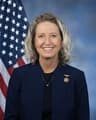 Jennifer Kiggans
Republican · Virginia
 Kimberlyn King-Hinds
Republican · Northern Mariana Islands
 Michael Lawler
Republican · New York
 Nicole Malliotakis
Republican · New York
 Grace Meng
Democrat · New York
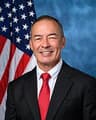 James Moylan
Republican · Guam
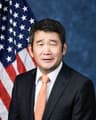 Dave Min
Democrat · California
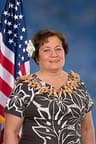 Aumua Amata Radewagen
Republican · American Samoa
 Brad Sherman
Democrat · California
 Thomas Suozzi
Democrat · New York
 James Walkinshaw
Democrat · Virginia