Bill · H.R. 10031· House(119-HR-10031)
READ Act
- Introduced
- 8/3/2026
- Last activity
- 8/3/2026 — Referred to the House Committee on Education and Workforce.
- Sponsored by
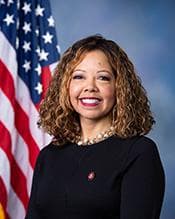
- Lucy McBath
- Cosponsors
- - 3 - 3
- Introduced
- In Committee
What this bill would do
The READ Act aims to improve literacy outcomes by aligning instruction with the science of reading. It amends the comprehensive literacy State development grant program to prioritize evidence-based practices and teacher preparation. The bill introduces new definitions for terms like high-impact tutoring, the science of reading, and universal early literacy screening. It establishes priorities for grant awards, giving absolute priority to eligible low-performing States. Additionally, the act mandates specific uses of grant funds and requires states to conduct reviews of teacher preparation programs. Finally, it expands research and development efforts through the Institute of Education Sciences.
Yes· 3 of 12
Would children be better off under this?+7
The bill provides targeted literacy support, screenings, and tutoring for children.
Would students be better off under this?+7
The bill provides various supports including high-impact tutoring and early screenings to improve student outcomes.
Would households on low incomes be better off under this?+5
The bill prioritizes entities serving greater numbers of children from low-income families.
The opposite
Does this give the federal government more power?-2
The bill includes provisions that restrict the Secretary's authority to mandate specific instructional content.
Who it would affect, and how
Potential Positive Impacts for People
-
Improved Literacy Instruction: The bill mandates that instruction be aligned with the "science of reading," which includes explicit and systematic use of phonemic awareness, decoding, and fluency (Section 2.a.3).
-
Targeted Support for At-Risk Students: States are required to implement universal early literacy screenings to identify students at risk of reading difficulties and provide timely interventions (Section s.3.d.2.A.i).
-
Increased Access to Tutoring: The bill promotes "high-impact tutoring," which involves small group or 1-on-1 instruction with trained personnel to complement classroom learning (Section 2.a.4).
-
Better Teacher Preparation: Grant funds are used to ensure pre-service and in-service training are aligned with the science of reading and help educators understand how students learn to read (Section 3.f.1.A.i).
-
Support for Specific Student Groups: The bill includes provisions for effective language instruction for English learners and children with disabilities (Section 2.b.2.N), as well as support for students at risk of dyslexia (Section 3.f.1.A.iv).
-
Parental Communication: The bill requires local educational agencies to provide parents with timely notification regarding their child's reading progress, including strategies to support learning at home (Section 3.d.2.F).
Potential Negative Impacts for People
-
Exclusion of Certain Instructional Methods: The bill explicitly excludes "three-cueing models" or approaches that rely on context, pictures, or syntax for word recognition from the definition of comprehensive literacy instruction (Section 2.b.2.M).
-
Restrictions on Federal Authority: The Secretary is prohibited from issuing regulations that control a State or local educational agency's specific instructional content, academic standards, or curricula (Section 4.b).
Groups and Interests Ranking
Every group the model scored this bill for, from -10 to +10. Hover a score for the reason it gave.
- Demographic And Interest Groups
- Good For Children+7Good For Students+7Good For Low Income Households+5Good For People With Disabilities+5Good For Immigrants+4Good For Native Americans+3
- Education And Technology
- Increases Public School Funding+5Increases Scientific Research Funding+4
- Governance And Ideology
- Improves Government Transparency+3Improves Privacy Rights+2Increase States Rights+2Increases Federal Power-2
- Social Issues And Justice
- Improves Disability Rights+1
- 10/5/2026
- 2 Cosponsors added.
- 8/3/2026
- Referred to the House Committee on Education and Workforce.
- 5 Cosponsors added.
- Introduced in House
2 bills Congress.gov lists as related to this one — companions in the other chamber, earlier versions, and bills this one absorbed or was folded into.
 Suzanne Bonamici
Democrat · Oregon
 Josh Harder
Democrat · California
 Erin Houchin
Republican · Indiana
 Young Kim
Republican · California
 Kevin Kiley
Independent · California
 Eleanor Norton
Democrat · District of Columbia
 Burgess Owens
Republican · Utah