Bill · S.Res. 39· Senate(119-SRES-39)
A resolution supporting the observation of National Trafficking and Modern Slavery Prevention Month during the period beginning on January 1, 2025, and ending on February 1, 2025, to raise awareness of, and opposition to, human trafficking and modern slavery.
- Introduced
- 1/27/2025
- Last activity
- 1/27/2025 — Submitted in the Senate, considered, and agreed to without amendment and with a preamble by Unanimous Consent. (consideration: CR S387-388; text: CR S397-398)
- Sponsored by
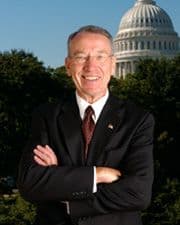
- Chuck Grassley
- Cosponsors
- - 3 - 5
- Introduced
- Officially Recorded
- Adopted by the Senate
A Senate resolution is the Senate speaking for itself: stating a position, honouring someone, or setting its own rules. Adopting it is the whole process. Once the Senate agrees to it, it is officially the Senate's word; it is not a law, so the House and the President have no part in it.
What this bill would do
This resolution supports the observation of National Trafficking and Modern Slavery Prevention Month from January 1, 2025, to February 1, 2025. The purpose is to raise awareness and opposition to human trafficking and modern slavery. It encourages marking this month with appropriate programs and activities. The observation culminates on February 1, 2025, with National Freedom Day. Finally, it urges continued partnerships between various government agencies, survivors, and nonprofit organizations to address these issues.
Yes· 3 of 9
Would children be better off under this?+5
The resolution focuses on raising awareness to protect children and youths who are prime targets for trafficking and sex trafficking.
Would Native Americans be better off under this?+5
The resolution highlights and seeks to address the specific risks and data gaps regarding the trafficking of American Indian and Alaska Native populations.
Does this narrow racial gaps in how people are treated?+5
The resolution specifically addresses the heightened risk and lack of research regarding the trafficking of Native American, Alaska Native, and Pacific Islander women and girls.
The opposite
No question was scored the opposite.
Who it would affect, and how
Potential Positive Impacts for People
-
Raising Awareness and Opposition: The resolution supports observing a specific month to raise awareness of and opposition to human trafficking and modern slavery (Resolution Section 1). This can help the public recognize the realities of these crimes.
-
Collaborative Approaches to Victims: The resolution urges partnerships between Federal, State, Tribal, and local agencies, as well as survivors and social service providers (Resolution Section 3). This promotes a collaborative, victim-centered approach to addressing human trafficking.
-
Recognition of Vital Public Role: The observation recognizes the vital role that the people of the United States have in ending human trafficking and modern slavery (Resolution Section 1).
Potential Negative Impacts for People
- No negative impacts are explicitly stated in the text provided.
Groups and Interests Ranking
Every group the model scored this bill for, from -10 to +10. Hover a score for the reason it gave.
- Demographic And Interest Groups
- Good For Children+5Good For Native Americans+5Good For L G B T Q Community+4Good For Women+4Good For Low Income Households+3
- Social Issues And Justice
- Improves Racial Equity+5Improves Policing Reform+3Improves Poverty Reduction+2Reduces Homelessness+2
- 1/27/2025
- Passed/agreed to in Senate: Submitted in the Senate, considered, and agreed to without amendment and with a preamble by Unanimous Consent.
- Submitted in the Senate, considered, and agreed to without amendment and with a preamble by Unanimous Consent. (consideration: CR S387-388; text: CR S397-398)
- 8 Cosponsors added.
- Introduced in Senate
One bill Congress.gov lists as related to this one — companions in the other chamber, earlier versions, and bills this one absorbed or was folded into.
 Richard Blumenthal
Democrat · Connecticut
 Susan Collins
Republican · Maine
 Shelley Capito
Republican · West Virginia
 Catherine Cortez Masto
Democrat · Nevada
 Richard Durbin
Democrat · Illinois
 Amy Klobuchar
Democrat · Minnesota
 Lisa Murkowski
Republican · Alaska
 Ron Wyden
Democrat · Oregon