Bill · S. 975· Senate(119-S-975)
Expanding Medical Education Act
- Introduced
- 3/12/2025
- Last activity
- 3/12/2025 — Read twice and referred to the Committee on Health, Education, Labor, and Pensions.
- Sponsored by
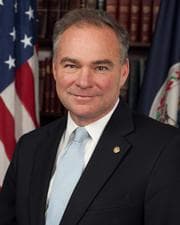
- Timothy Kaine
- Cosponsors
- - 1 - 0
- Introduced
- In Committee
What this bill would do
The Expanding Medical Education Act establishes a grant program to support schools of medicine and osteopathic medicine. These funds are intended for the establishment, improvement, or expansion of these schools or their branch campuses. Priority is given to institutions in areas without such schools or to minority-serving institutions. The grants can be used for student recruitment, curriculum development, and infrastructure needs. The Secretary is tasked with ensuring a potentially equitable distribution of awards across the country. Finally, the Act requires regular reporting on the program's outcomes and impact.
Yes· 3 of 17
Does this narrow racial gaps in how people are treated?+7
The bill prioritizes minority-serving institutions and underrepresented racial/ethnic groups in medical education.
Does this make health care easier to get in general?+7
The bill expands the physician workforce in medically underserved and rural areas.
Would students be better off under this?+6
Provides resources for recruitment, enrollment, and retention of medical students.
The opposite
No question was scored the opposite.
Who it would affect, and how
Potential Positive Impacts for People
-
Support for Underserved Areas: The bill provides grants for establishing or expanding medical schools in medically underserved communities or health professional shortage areas (Section 2(b)(1)).
-
Increased Diversity in Medicine: Funds can be used to recruit and retain students from disadvantaged backgrounds, including those from underrepresented racial and ethnic groups, low-income individuals, and first-generation college students (Section 2(d)(1)(A)).
-
Improved Specialized Care: Grant recipients may develop curricula that focus on care for rural and underserved populations, emphasizing accessible and culturally or linguistically appropriate services (Section 2(d)(1)(B)).
-
Workforce and Infrastructure Growth: Funds may be used to hire diverse faculty and staff, plan and construct new school locations, and modernize existing infrastructure (Section 2(d)(2)).
-
Institutional Support for Minority Groups: Priority may be given to minority-serving institutions when establishing new medical education programs (Section 2(b)(2)).
Potential Negative Impacts for People
- No specific negative impacts or burdens are explicitly stated in the provided text.
Groups and Interests Ranking
Every group the model scored this bill for, from -10 to +10. Hover a score for the reason it gave.
- Demographic And Interest Groups
- Good For Rural Residents+6Good For Students+6Good For African Americans+5Good For Hispanic Americans+5Good For Low Income Households+5Good For Native Americans+5Good For Young Adults+4
- Social Issues And Justice
- Improves Racial Equity+7Improves Poverty Reduction+2
- Healthcare
- Improves Healthcare Access+7
- Education And Technology
- Improves College Affordability+4Increases Scientific Research Funding+2
- Environment Energy And Infrastructure
- Improves Rural Development+5
- Governance And Ideology
- Improves Government Transparency+3Increases Federal Power+2
- Economy And Finance
- Increases Job Creation+3Improves Economic Growth+1
- 3/12/2025
- Read twice and referred to the Committee on Health, Education, Labor, and Pensions.
- 1 Cosponsor added.
- Introduced in Senate
One bill Congress.gov lists as related to this one — companions in the other chamber, earlier versions, and bills this one absorbed or was folded into.
 Alex Padilla
Democrat · California