Bill · S. 795· Senate(119-S-795)
Farmers Freedom Act of 2025
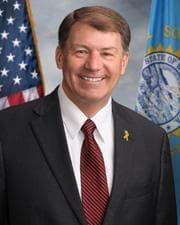
- Introduced
- 2/27/2025
- Last activity
- 2/27/2025 — Read twice and referred to the Committee on Environment and Public Works.
- Sponsored by
- Mike Rounds
- Cosponsors
- - 6 - 0
- Introduced
- In Committee
What this bill would do
The Farmers Freedom Act of 2025 seeks to amend the Federal Water Pollution Control Act. The primary goal is to exclude prior converted cropland from the definition of "navigable waters." This change would specifically apply to land drained or manipulated for agricultural production before December 23, 1985. Additionally, the bill prohibits the EPA Administrator and the Secretary of the Army from carrying out specific change in use policies regarding this cropland.
Yes· 3 of 6
Would farmers be better off under this?+6
The bill provides expanded definitions of agricultural purpose and reduces regulatory restrictions on converted cropland.
Would business owners be better off under this?+5
Agricultural business owners gain relief from certain water pollution regulations on converted cropland.
Does this make it easier to run a small business?+4
The bill reduces regulatory oversight for land used for agricultural purposes like grazing and haying.
The opposite
Does this better protect air, water and wildlife?-6
The bill reduces federal protections for certain lands by excluding prior converted cropland from the definition of navigable waters.
Does this make housing cost less?-1
The bill does not directly impact housing availability or costs.
Who it would affect, and how
Potential Positive Impacts for People
-
Agricultural Flexibility: By excluding prior converted cropland from the definition of "navigable waters" (Section 2(a)), land that was used for agricultural production before December 23, 1985, may no longer be subject to the same water regulations.
-
Protection of Land Use: The bill defines "agricultural purpose" broadly to include activities like grazing, haying, habitat management, and soil recovery (Section 2(a)(iii)(ii)). This could provide clarity for those using land for these specific purposes.
-
Policy Limitation: The bill prevents the EPA Administrator and the Secretary of the Army from carrying out the change in use policy described in the "Revised Definition of 'Waters of the United States'" rule (Section 2(b)).
Potential Negative Impacts for People
-
Loss of Wetland Protection: The definition of "prior converted cropland" explicitly excludes areas that are "abandoned and has reverted to wetlands" (Section 2(a)(iii)(I)). This means if land is no longer used for agriculture for at least 5 years, it may lose its status and be treated differently (Section 2(a)(iii)(i)).
-
Regulatory Changes for Wetlands: While "wetlands" are defined as areas supporting specific vegetation (Section 2(a)(iii)(iv)), the exclusion of prior converted cropland from "navigable waters" changes how these areas are treated under the Federal Water Pollution Control Act (Section 2(a)).
Groups and Interests Ranking
Every group the model scored this bill for, from -10 to +10. Hover a score for the reason it gave.
- Demographic And Interest Groups
- Good For Farmers+6Good For Business Owners+5Good For Rural Residents+3
- Economy And Finance
- Improves Small Business Support+4
- Environment Energy And Infrastructure
- Improves Rural Development+3Improves Environmental Protections-6
- Governance And Ideology
- Increase States Rights+2
- Social Issues And Justice
- Improves Affordable Housing-1
- 4/11/2025
- 2 Cosponsors added.
- 2/27/2025
- Read twice and referred to the Committee on Environment and Public Works.
- 4 Cosponsors added.
- Introduced in Senate
 John Barrasso
Republican · Wyoming
 Joni Ernst
Republican · Iowa
 John Hoeven
Republican · North Dakota
 John Kennedy
Republican · Louisiana
 Roger Marshall
Republican · Kansas
 John Thune
Republican · South Dakota