
A Republican bill with 11 Republican cosponsors · See all 11 cosponsors
Last activity — Read twice and referred to the Committee on the Judiciary.
In committee
Introduced and handed to a committee in the chamber it started in.
The committee holds it, and most bills are never heard from again. A hearing or a committee vote would be news; silence is the usual outcome, and it kills the bill without anyone voting against it.
Its path through Congress
- Introduced
- In Committee
What this bill would do
This bill, known as the "PRINTS Act," aims to reduce child trafficking at the border. It requires the Secretary of Homeland Security to fingerprint noncitizen minors under 14 who are suspected by CBP officers of being victims of human trafficking. The bill also mandates that the Secretary of Homeland Security provide annual reports to Congress on the number of these minors fingerprinted. Additionally, it requires the monthly online publication of child trafficker apprehensions by CBP. Finally, the act imposes criminal penalties, including fines and potential prison time, on adults who use unrelated minors to gain entry into the country.
Yes· 3 of 6
- Scored +7
Would children be better off under this?
The bill includes measures specifically designed to identify and reduce the trafficking of children under 14.
- Scored +6
Does this tighten control of the border?
The bill enhances border security by mandating fingerprinting for suspected trafficked minors and penalizing adults who use them for entry.
- Scored +5
Does this make what the government does easier for the public to see?
The bill requires the monthly online publication of child trafficker apprehensions and annual reports to Congress.
The opposite
- Scored -1
Does this make it easier for immigrants already here to become citizens?
The bill imposes new criminal penalties on noncitizen adults attempting entry with minors, which may complicate status processes.
Who it would affect, and how
Potential Positive Impacts for People
-
Reduction in Child Trafficking: The bill mandates fingerprinting for children under 14 suspected of being victims of human trafficking to reduce the number of children trafficked into the United States (Section 2).
-
Increased Transparency: The Secretary of Homeland Security must submit an annual report to Congress identifying the number of fingerprinted minors (Section 5(a)) and must post monthly online data regarding the number of child traffickers apprehended by CBP (Section 5(b)).
-
Information Sharing for Care: The Secretary of Homeland Security shall share collected fingerprints with the Secretary of Health and Human Services upon request for unaccompanied alien children transferred to their custody (Section 4).
-
Deterrence of Exploitation: The bill imposes criminal penalties, including fines and up to 10 years in prison, on adults 18 or older who knowingly use a minor to gain entry if that minor is not a relative or guardian (Section 3(a)).
Potential Negative Impacts for People
- Criminal Penalties for Adults: Individuals 18 years of age or older face fines and imprisonment of up to 10 years if they are found to be using a minor for entry who is not a relative or guardian (Section 3(a)).
Groups and Interests Ranking
Every group the model scored this bill for, from -10 to +10. Tap or hover a score for the reason it gave.
- Demographic And Interest Groups
- Would children be better off under this? — The bill includes measures specifically designed to identify and reduce the trafficking of children under 14. Would immigrants be better off under this? — The bill provides protections for children by establishing identity via fingerprinting to prevent trafficking. Would Hispanic Americans be better off under this? — The bill aims to protect vulnerable children often included in migration trends through the southern border.
- Social Issues And Justice
- Does this tighten control of the border? — The bill enhances border security by mandating fingerprinting for suspected trafficked minors and penalizing adults who use them for entry. Is this likely to lift people out of poverty? — By targeting human trafficking, the bill aims to reduce the exploitation of vulnerable children. Does this make it easier for immigrants already here to become citizens? — The bill imposes new criminal penalties on noncitizen adults attempting entry with minors, which may complicate status processes.
- Governance And Ideology
- Does this make what the government does easier for the public to see? — The bill requires the monthly online publication of child trafficker apprehensions and annual reports to Congress.
- 2/4/2025
- 1 Cosponsor added.
- 1/22/2025
- 1 Cosponsor added.
- 1/13/2025
- 1 Cosponsor added.
- 1/9/2025
- Read twice and referred to the Committee on the Judiciary.
- 8 Cosponsors added.
- Introduced in Senate
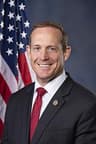 Ted Budd
Republican · North Carolina
 Katie Britt
Republican · Alabama
 Bill Cassidy
Republican · Louisiana
 Steve Daines
Republican · Montana
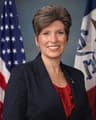 Joni Ernst
Republican · Iowa
 Chuck Grassley
Republican · Iowa
 John Hoeven
Republican · North Dakota
 Cindy Hyde-Smith
Republican · Mississippi
 Mike Rounds
Republican · South Dakota
 Rick Scott
Republican · Florida
 Tim Sheehy
Republican · Montana