Bill · S. 510· Senate(119-S-510)
Financing Our Energy Future Act
- Introduced
- 2/11/2025
- Last activity
- 2/11/2025 — Read twice and referred to the Committee on Finance.
- Sponsored by
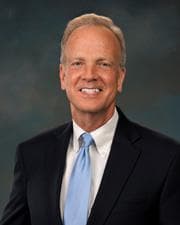
- Jerry Moran
- Cosponsors
- - 8 - 2
- Introduced
- In Committee
What this bill would do
This bill, known as the "Financing Our Energy Future Act," aims to amend the Internal Revenue Code of 1986. It seeks to extend the publicly traded partnership ownership structure to various energy sectors. These sectors include energy power generation projects and transportation fuels. The bill also covers energy storage, the processing of biomass, and the production of renewable chemicals. These changes are intended to apply to taxable years starting after December 31, 2025.
Yes· 3 of 10
Does this put more money into wind, solar and other renewable power?+7
The bill expands tax-advantaged partnership structures for renewable fuels, biomass, and energy storage.
Does this cut the pollution that drives climate change?+6
The bill incentivizes carbon capture, renewable fuels, and energy storage technology aimed at reducing emissions.
Does this cut the tax on profits from selling investments?+5
The bill extends the publicly traded partnership structure to various energy sectors, which can provide tax-efficient investment opportunities.
The opposite
No question was scored the opposite.
Who it would affect, and how
Potential Positive Impacts for People
-
Expansion of Energy Infrastructure: The bill expands the partnership structure to include the generation of electric power or thermal energy using qualified energy resources, the operation of energy property, and the storage of electric power or thermal energy using energy storage technology (Section 2(a)(1)-(iii), (iv), (v)).
-
Support for Alternative Fuels: The bill includes provisions for the transportation or storage of specific fuels, including liquified or compressed hydrogen, as well as the conversion and storage of renewable biomass into renewable fuel (Section 2(a)(vii), (viii)).
-
Carbon Reduction Efforts: The bill covers the production, storage, or transportation of fuels that use captured carbon oxides as a primary feedstock, provided they achieve a specific reduction in lifecycle greenhouse gas emissions (Section 2(a)(ix)(I)-(III)).
-
Nuclear and Gasification Energy: The bill extends coverage to the generation of electric power from qualifying gasification projects and advanced nuclear facilities (Section 2(a)(x), (xii)).
-
Renewable Chemical Production: The bill includes the production, storage, or transportation of certain renewable chemicals produced in the United States that have a high biobased content and are not used for food, feed, fuel, or pharmaceuticals (Section 2(a)(xiii)).
Potential Negative Impacts for People
- No negative impacts or burdens are explicitly stated in the provided text.
Groups and Interests Ranking
Every group the model scored this bill for, from -10 to +10. Hover a score for the reason it gave.
- Economy And Finance
- Reduces Capital Gains Tax+5Improves Economic Growth+4Increases Job Creation+4Improves Small Business Support+3
- Environment Energy And Infrastructure
- Increases Renewable Energy Investment+7Reduces Carbon Emissions+6Improves Rural Development+3
- Demographic And Interest Groups
- Good For Business Owners+5Good For Farmers+4
- Education And Technology
- Increases Scientific Research Funding+2
- 8/4/2026
- 1 Cosponsor added.
- 2/11/2025
- Read twice and referred to the Committee on Finance.
- 10 Cosponsors added.
- Introduced in Senate
One bill Congress.gov lists as related to this one — companions in the other chamber, earlier versions, and bills this one absorbed or was folded into.
 John Barrasso
Republican · Wyoming
 Susan Collins
Republican · Maine
 John Cornyn
Republican · Texas
 Christopher Coons
Democrat · Delaware
 Kevin Cramer
Republican · North Dakota
 John Curtis
Republican · Utah
 Angus King
Independent · Maine
 Roger Marshall
Republican · Kansas
 David McCormick
Republican · Pennsylvania
 Pete Ricketts
Republican · Nebraska
 Mark Warner
Democrat · Virginia