Bill · S. 4889· Senate(119-S-4889)
Supporting Our Direct Care Workforce and Family Caregivers Act
- Introduced
- 6/24/2026
- Last activity
- 6/24/2026 — Read twice and referred to the Committee on Health, Education, Labor, and Pensions.
- Sponsored by
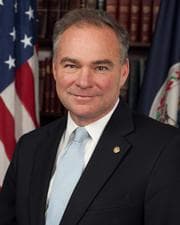
- Timothy Kaine
- Cosponsors
- - 8 - 0
- Introduced
- In Committee
What this bill would do
The Supporting Our Direct Care Workforce and Family Caregivers Act aims to provide grants to improve the direct care workforce and support family caregivers. It authorizes the creation of a national technical assistance center to help with training, recruitment, and career advancement. The bill provides various grant categories for direct care professionals, managers, self-directed care professionals, and family caregivers. Eligible entities, such as states and community colleges, can apply for these funds to develop specialized projects. The legislation also includes requirements for project plans, data collection, and annual reporting. These efforts are intended to support older individuals and people with disabilities.
Yes· 3 of 13
Would people over 65 be better off under this?+7
The bill provides resources to improve the care and independence of older individuals through a better-trained workforce.
Would people with disabilities be better off under this?+7
The bill funds training and workforce development specifically aimed at improving the independence and community inclusion of people with disabilities.
Does this expand the rights of people with disabilities?+7
The bill specifically targets the training and support of professionals providing services to people with disabilities to promote their independence.
The opposite
No question was scored the opposite.
Who it would affect, and how
Potential Positive Impacts for People
-
Workforce Advancement: The bill requires that at least 30 percent of projects provide career pathways that offer opportunities for professional development and advancement for direct care professionals (Section 4(a)(3)).
-
Support for Family Caregivers: Grants are available to provide educational, training, or other resources to support both paid and unpaid family caregivers (Section 4(a)(2)(D)).
-
Financial Assistance for Workers: Grant recipients (excluding those focused solely on family caregivers) must use at least 5 percent of funds to provide direct financial benefits or supportive services to help workers with their financial needs (Section 6(a)(3)).
-
Training Quality and Safety: Project plans must include training regarding the rights of recipients—such as the right to be free from abuse, neglect, or exploitation—and must ensure a safe work environment (Section 5(b)(6)).
-
Creation of a National Resource: The establishment of a national technical assistance center is intended to support the creation, recruitment, training, and retention of the direct care workforce (Section s 3(a)(1)).
Potential Negative Impacts for People
-
Funding Limitations on Administration: Eligible entities are restricted from using more than 5 percent of grant funds for administrative costs (Section 6(a)(2)).
-
Requirement to Supplement Existing Funds: The bill dictates that grant funds must be used to supplement, not supplant, money that would otherwise be available to address workforce needs (Section 6(b)).
Groups and Interests Ranking
Every group the model scored this bill for, from -10 to +10. Hover a score for the reason it gave.
- Demographic And Interest Groups
- Good For People With Disabilities+7Good For Seniors+7Good For Low Income Households+4Good For Union Workers+3
- Economy And Finance
- Increases Job Creation+6Improves Economic Growth+3Improves Union Protections+1
- Social Issues And Justice
- Improves Disability Rights+7Improves Poverty Reduction+3
- Healthcare
- Improves Healthcare Access+5Increases Medicaid Funding+4
- Education And Technology
- Improves College Affordability+2
- Governance And Ideology
- Improves Government Transparency+2
- 8/4/2026
- 1 Cosponsor added.
- 6/24/2026
- Read twice and referred to the Committee on Health, Education, Labor, and Pensions.
- 7 Cosponsors added.
- Introduced in Senate
3 bills Congress.gov lists as related to this one — companions in the other chamber, earlier versions, and bills this one absorbed or was folded into.
 Tammy Duckworth
Democrat · Illinois
 Kirsten Gillibrand
Democrat · New York
 Maggie Hassan
Democrat · New Hampshire
 Ben Luján
Democrat · New Mexico
 John Reed
Democrat · Rhode Island
 Tina Smith
Democrat · Minnesota
 Ron Wyden
Democrat · Oregon
 Peter Welch
Democrat · Vermont