Bill · S. 4567· Senate(119-S-4567)
Loan Forgiveness for Educators Act of 2026
- Introduced
- 5/19/2026
- Last activity
- 5/19/2026 — Read twice and referred to the Committee on Health, Education, Labor, and Pensions.
- Sponsored by
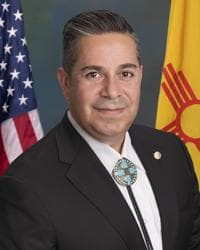
- Ben Luján
- Cosponsors
- - 14 - 0
- Introduced
- In Committee
What this bill would do
The Loan Forgiveness for Educators Act of 2026 aims to amend the Higher Education Act of 1965 to provide debt relief to educators. It establishes programs to assume or cancel student loan obligations for those serving in high need schools or early childhood education programs. Qualifying educators can receive 100 percent forgiveness of their covered loans after completing five years of qualifying service. The bill also provides for monthly loan relief during the period of qualifying service. This relief applies to various educators, including teachers, school leaders, and early childhood providers.
Yes· 3 of 9
Does this make college cost less?+7
The bill provides 100 percent loan forgiveness and monthly relief for qualifying educators after five years of service.
Would people in their twenties and thirties be better off under this?+6
The debt relief benefits those in the early stages of their careers, such as teachers and school leaders.
Would middle-income households be better off under this?+5
The debt relief provides financial relief to educator households managing student loans.
The opposite
Does this reduce what the federal government spends?-3
The bill authorizes the Secretary to assume or cancel significant amounts of student loan debt.
Who it would affect, and how
Potential Positive Impacts for People
-
Debt Elimination for Educators: Qualifying educators who complete five years of service can have 100 percent of their covered loan obligations, including interest and fees, assumed or canceled by the Secretary (Section 2(a)(c)(1) and Section 2(b)(c)(1)).
-
Monthly Financial Relief: While performing qualifying service, educators can enter into an agreement where the Secretary assumes or cancels the minimum monthly loan obligation, providing relief during school years and scheduled breaks (Section 2(a)(c)(2) and Section 2(b)(c)(2)).
-
Support for Families: The bill allows Parent PLUS loans to qualify for benefits if they were issued on behalf of a student who is a qualifying educator, or if the parent themselves is a qualifying educator (Section 2(a)(c)(4) and Section 2(b)(c)(4)).
-
Protection for Career Advancement: Educators who are promoted to other positions within their qualifying school or program can continue to count that employment toward their service requirements (Section 2(a)(g)(3) and Section 2(b)(g)(3)).
-
Inclusive Eligibility for Language Educators: Educators providing instruction or curricular development in specific Native languages, such as Alaska Native, American Indian, or Native Hawaiian, can be considered qualifying educators even without full State or Tribal certification (Section 2(i)).
Potential Negative Impacts for People
-
Service Continuity Risks: If an educator is unable to complete a full school year, they must meet specific exceptions—such as returning to postsecondary education, experiencing specific medical/family conditions, or being called to active duty—to have that time count toward their service (Section 2(h)(9)(B)).
-
Benefit Limitations: Qualifying educators are prohibited from receiving these benefits if they are already receiving benefits under section 428K or certain provisions of the National and Community Service Act of 1990 (Section 2(g)(2)).
-
No Retroactive Refunds: The act specifically states that nothing in the new provisions authorizes the refunding of any loan repayments already made (Section 2(a)(e) and Section 2(b)(e)).
Groups and Interests Ranking
Every group the model scored this bill for, from -10 to +10. Hover a score for the reason it gave.
- Demographic And Interest Groups
- Good For Young Adults+6Good For Middle Class Households+5Good For Native Americans+5Good For Low Income Households+4Good For Retirees+2Good For Union Workers+2
- Education And Technology
- Improves College Affordability+7
- Social Issues And Justice
- Improves Childcare Affordability+3
- Economy And Finance
- Increases Job Creation+2Reduces Government Spending-3
- 6/1/2026
- 1 Cosponsor added.
- 5/19/2026
- Read twice and referred to the Committee on Health, Education, Labor, and Pensions.
- 13 Cosponsors added.
- Introduced in Senate
5 bills Congress.gov lists as related to this one — companions in the other chamber, earlier versions, and bills this one absorbed or was folded into.
 Tammy Baldwin
Democrat · Wisconsin
 Richard Blumenthal
Democrat · Connecticut
 Cory Booker
Democrat · New Jersey
 Ruben Gallego
Democrat · Arizona
 Martin Heinrich
Democrat · New Mexico
 Mark Kelly
Democrat · Arizona
 Timothy Kaine
Democrat · Virginia
 Edward Markey
Democrat · Massachusetts
 Jeff Merkley
Democrat · Oregon
 Alex Padilla
Democrat · California
 John Reed
Democrat · Rhode Island
 Tina Smith
Democrat · Minnesota
 Chris Van Hollen
Democrat · Maryland
 Ron Wyden
Democrat · Oregon