Bill · S. 4489· Senate(119-S-4489)
Dry-Redwater Regional Water Authorization Act
- Introduced
- 5/12/2026
- Last activity
- 9/16/2026 — Committee on Energy and Natural Resources. Hearings held.
- Sponsored by
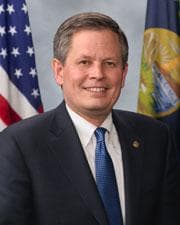
- Steve Daines
- Cosponsors
- - 1 - 0
- Introduced
- In Committee
What this bill would do
This bill, known as the "Dry-Redwater Regional Water Authorization Act," seeks to authorize a water system in Montana and North Dakota. The goal is to provide a safe and adequate water supply for municipal, rural, and industrial use. It specifically targets Dawson, Garfield, McCone, Prairie, and Richland Counties in Montana, as well as McKenzie County in North Dakota. The Secretary of the Interior is authorized to carry out the project and enter into a cooperative agreement with the Dry-Redwater Regional Water Authority. The act includes provisions for federal cost-sharing, the use of power from the Pick-Sloan Program, and specific funding authorizations.
Yes· 3 of 8
Would people in rural areas be better off under this?+8
The bill is specifically designed to provide water security to rural counties in Montana and North Dakota.
Does this invest in rural communities?+7
The bill authorizes essential water infrastructure critical for rural community development.
Would farmers be better off under this?+6
Water security is vital for livestock and agricultural operations in these counties.
The opposite
No question was scored the opposite.
Who it would affect, and how
Potential Positive Impacts for People
-
Water Security: The bill aims to ensure a safe and adequate municipal, rural, and industrial water supply for citizens in several Montana counties and McKenzie County, North Dakota (Section 2).
-
Livestock Support: Unlike some previous standards, this authorization ensures that livestock watering is not limited to incidental noncommercial use (Section 4(a)).
-
Federal Financial Assistance: The Secretary is directed to provide federal assistance for the planning, design, and construction of the Water System through a cooperative agreement (Section 4(b)).
-
Power Availability: The Administrator is tasked with making available the quantity of power required to meet the operational requirements of the Water System (Section 5(a)).
-
Mitigation of Past Impacts: The bill notes that McCone and Garfield Counties were designated as impact counties during the construction of the Fort Peck Dam and are intended to receive impact mitigation benefits (Section 5(a)).
Potential Negative Impacts for People
-
Financial Responsibility for Power: While power is made available, the Authority is responsible for the payment of power charges and non-Federal delivery costs (Section 5(4)).
-
Transmission Upgrade Costs: The Water System is responsible for funding any necessary upgrades to the Integrated System or non-Federal transmission and distribution systems to deliver power (Section 5(5)(B)).
-
Limited Use of Federal Funds: Federal funds cannot be used for the operation, maintenance, or replacement of the Water System (Section 4(c)(2)(C)).
Groups and Interests Ranking
Every group the model scored this bill for, from -10 to +10. Hover a score for the reason it gave.
- Demographic And Interest Groups
- Good For Rural Residents+8Good For Farmers+6Good For Business Owners+4Good For Low Income Households+3Good For Middle Class Households+3
- Environment Energy And Infrastructure
- Improves Rural Development+7
- Governance And Ideology
- Increases Federal Power+3
- Economy And Finance
- Improves Economic Growth+2
- 9/16/2026
- Committee on Energy and Natural Resources. Hearings held.
- 5/12/2026
- Read twice and referred to the Committee on Energy and Natural Resources.
- 1 Cosponsor added.
- Introduced in Senate
One bill Congress.gov lists as related to this one — companions in the other chamber, earlier versions, and bills this one absorbed or was folded into.
 Tim Sheehy
Republican · Montana