Bill · H.R. 8745· House(119-HR-8745)
Dry-Redwater Regional Water Authorization Act
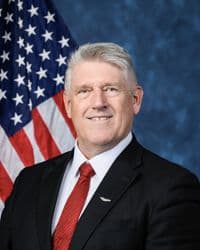
- Introduced
- 5/12/2026
- Last activity
- 5/12/2026 — Referred to the House Committee on Natural Resources.
- Sponsored by
- Troy Downing
- Cosponsors
- None
- Introduced
- In Committee
What this bill would do
The Dry-Redwater Regional Water Authorization Act authorizes the Dry-Redwater Regional Water Authority System in Montana. The goal is to provide a safe and adequate water supply for municipal, rural, and industrial use in specific counties in Montana and McKenzie County, North Dakota. The Secretary of the Interior is authorized to carry out the project, including entering into cooperative agreements with the Authority. Federal funds are intended to cover the planning, design, and construction of the water system. The bill also addresses the availability of power for the system's operations. Finally, it provides for specific funding amounts and adjustments for construction costs.
Yes· 3 of 5
Would people in rural areas be better off under this?+8
The bill specifically authorizes water infrastructure designed to serve residents in rural Montana and North Dakota counties.
Does this invest in rural communities?+7
The act provides essential water infrastructure funding for several rural counties in Montana and North Dakota.
Would farmers be better off under this?+5
The bill explicitly ensures that livestock watering shall not be limited to incidental noncommercial use.
The opposite
Does this reduce what the federal government spends?-1
The bill authorizes $602 million in federal funding for water system construction.
Who it would affect, and how
Potential Positive Impacts for People
-
Water Supply Security: The bill aims to ensure a safe and adequate water supply for municipal, rural, and industrial needs for citizens in Dawson, Garfield, McCone, Prairie, and Richland Counties in Montana, as well as McKenzie County, North Dakota (Section 2).
-
Livestock Support: The authorization includes a condition that livestock watering shall not be limited to incidental noncommercial livestock watering (Section 4(a)).
-
Infrastructure Development: Federal funds can be used for various critical facilities including water pumping, water treatment, water storage, transmission pipelines, pumping stations, and even interconnection facilities to public water systems (Section 4(c)(2)(A)).
-
Power Availability: The Administrator is directed to make available the quantity of power required to meet the operational needs of the Water System, covering everything from water intake to the point of delivery to distribution entities (Section 5(a)).
Potential Negative Impacts for People
-
Financial Responsibility for Power: The Authority is responsible for the payment of power charges and non-Federal delivery costs (Section 5(a)(4)).
-
Transmission Costs: The Water System is responsible for all non-Federal transmission and distribution system delivery and service arrangements, as well as funding any necessary upgrades to the Integrated System or non-Federal systems (Section 5(a)(5)).
-
Maintenance Limitations: Federal funds cannot be used for the actual operation, maintenance, or replacement of the Water System (Section 4(c)(2)(A)).
Groups and Interests Ranking
Every group the model scored this bill for, from -10 to +10. Hover a score for the reason it gave.
- Demographic And Interest Groups
- Good For Rural Residents+8Good For Farmers+5Good For Low Income Households+3
- Environment Energy And Infrastructure
- Improves Rural Development+7
- Social Issues And Justice
- Improves Poverty Reduction+2
- Economy And Finance
- Reduces Government Spending-1
- 5/12/2026
- Referred to the House Committee on Natural Resources.
- Introduced in House
One bill Congress.gov lists as related to this one — companions in the other chamber, earlier versions, and bills this one absorbed or was folded into.