Bill · S. 4388· Senate(119-S-4388)
Housing Survivors of Major Disasters Act of 2026
- Introduced
- 4/27/2026
- Last activity
- 4/27/2026 — Read twice and referred to the Committee on Homeland Security and Governmental Affairs.
- Sponsored by
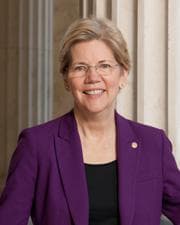
- Elizabeth Warren
- Cosponsors
- - 11 - 0
- Introduced
- In Committee
What this bill would do
The ``Housing Survivors of Major Disasters Act of 2026'' aims to provide disaster assistance to families affected by major disasters. It expands eligibility to include people residing on properties without documented ownership or those occupying various types of housing during a disaster. The bill allows for the use of funds to obtain property titles, including costs for land surveys and taxes. It also directs the FEMA Administrator to create a self-certification process for applicants. Additionally, the Act amends existing law to shift focus toward long-term recovery and habitable residences. Finally, it mandates consultations between FEMA and HUD to provide temporary rental assistance.
Yes· 3 of 10
Does this improve help for people hit by a disaster?+8
The bill expands the scope of disaster assistance to include non-traditional housing and allows for assistance in obtaining property titles.
Would households on low incomes be better off under this?+7
The expansion of eligibility to include those in boardinghouses and mobile homes directly benefits low-income displaced persons.
Does this make housing cost less?+7
The bill expands disaster assistance to include people without documented ownership and provides funds for obtaining property titles.
The opposite
No question was scored the opposite.
Who it would affect, and how
Potential Positive Impacts for People
-
Expanded Eligibility for Assistance: Individuals or households residing on property without documented ownership, or those in various housing accommodations like boardinghouses or mobile homes, may now be eligible for assistance following a major disaster declared by the President. (Section 3(a) and 3(c))
-
Support for Property Ownership: Assistance may be used to cover costs related to obtaining a property title, including land surveys and associated taxes or fees. (Section 3(b))
-
Simplified Application Process: The Administrator is required to create a declarative statement form that allows applicants to self-certify their eligibility, which does not require notarization. (Section 4(a))
-
Increased Accessibility of Information: The self-certification form must be available in English, Spanish, and other locally predominant languages on the FEMA website and social media. (Section 4(d))
-
Long-Term Recovery Focus: Amendments to the Robert T. Stafford Disaster Relief and Emergency Assistance Act change the focus of assistance to ensure residences are habitable during longer-term recovery. (Section 5)
-
Temporary Rental Assistance: FEMA and HUD are required to consult on implementing programs to provide temporary rental assistance to displaced individuals and households. (Section 6)
Potential Negative Impacts for People
- Potential Burden of Proof: While the Administrator must consider a wide range of evidence for constructive ownership, applicants without documented rights must still provide evidence such as utility bills, pay stubs, or medical records to link themselves to the property. (Section 3(d))
Groups and Interests Ranking
Every group the model scored this bill for, from -10 to +10. Hover a score for the reason it gave.
- Demographic And Interest Groups
- Good For Low Income Households+7Good For Hispanic Americans+5Good For Urban Residents+3Good For Middle Class Households+2Good For People With Disabilities+2
- Social Issues And Justice
- Improves Affordable Housing+7Reduces Homelessness+6Improves Poverty Reduction+4
- Environment Energy And Infrastructure
- Improves Disaster Relief And F E M A+8
- Governance And Ideology
- Improves Government Transparency+3
- 4/27/2026
- Read twice and referred to the Committee on Homeland Security and Governmental Affairs.
- 12 Cosponsors added.
- Introduced in Senate
 Michael Bennet
Democrat · Colorado
 Richard Blumenthal
Democrat · Connecticut
 Cory Booker
Democrat · New Jersey
 Richard Durbin
Democrat · Illinois
 Kirsten Gillibrand
Democrat · New York
 Amy Klobuchar
Democrat · Minnesota
 Timothy Kaine
Democrat · Virginia
 Edward Markey
Democrat · Massachusetts
 Jeff Merkley
Democrat · Oregon
 Alex Padilla
Democrat · California
 Bernie Sanders
Independent · Vermont
 Chris Van Hollen
Democrat · Maryland