Bill · S. 3725· Senate(119-S-3725)
Lewis and Clark Regional Water System Expansion Feasibility Study Act
- Introduced
- 1/29/2026
- Last activity
- 9/17/2026 — Placed on Senate Legislative Calendar under General Orders. Calendar No. 649.
- Sponsored by
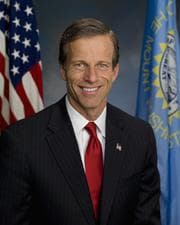
- John Thune
- Cosponsors
- - 3 - 2
- Introduced
- On Calendar
What this bill would do
This bill requires the Secretary of the Interior to study the feasibility of the Lewis and Clark Regional Water Supply Project. The project aims to supply municipal, rural, and industrial water to expand the capacity and reach of the water system in Iowa, Minnesota, and South Dakota. The Secretary must develop a report with recommendations on the project's feasibility and construction authorization, and submit it to specific congressional committees while making it publicly available. The Federal share of the total costs for carrying out the feasibility study shall not exceed 50 percent, with Federal expenditures limited to $10,000,000. The non-Federal project entity and the Secretary will enter into a cost-sharing agreement to conduct the study. The authority provided by this section expires on the date that is 5 years after the date of enactment of the Act.
Yes· 3 of 23
Would people in rural areas be better off under this?+8
The legislation directly targets the expansion of rural water systems to improve water availability for rural communities.
Does this invest in rural communities?+8
The bill directly supports rural development by studying the expansion of municipal, rural, and industrial water systems in Iowa, Minnesota, and South Dakota.
Would farmers be better off under this?+7
The bill includes provisions for supplying rural and agricultural water needs in Iowa, Minnesota, and South Dakota.
The opposite
Does this reduce what the federal government owes?-1
The bill authorizes $10,000,000 in federal appropriations, which slightly increases government spending.
Does this reduce what the federal government spends?-1
The legislation authorizes new federal spending of up to $10 million for a feasibility study.
Who it would affect, and how
Potential Positive Impacts for People
-
Public Transparency: Under Section 2(b)(2)(C), the Secretary is required to make the feasibility report and associated study documents publicly available. This allows the people to see how the study is progressing and what the findings are regarding the water supply project.
-
Collaborative Government: Section 2(b)(3) requires the Secretary to consult and cooperate with appropriate Federal, State, Tribal, regional, and local authorities during the conduct of the feasibility study and report development. This ensures multiple levels of government and local groups are involved in the process.
Potential Negative Impacts for People
- Use of Federal Funds: Section 2(e) allows for up to $10,000,000 of Federal funds to be expended to carry out the feasibility study. This places a financial burden on taxpayers to fund the research phase of the water project.
Groups and Interests Ranking
Every group the model scored this bill for, from -10 to +10. Hover a score for the reason it gave.
- Demographic And Interest Groups
- Good For Rural Residents+8Good For Farmers+7Good For Business Owners+5Good For Native Americans+4Good For Children+3Good For Low Income Households+3Good For Middle Aged+3Good For Middle Class Households+3Good For Retirees+3Good For Seniors+3Good For Urban Residents+3Good For Young Adults+3Good For High Income Households+2Good For Union Workers+2Good For High Net Worth Individuals+1
- Governance And Ideology
- Improves Government Transparency+6Improves Interstate Commerce+5Increase States Rights+3Increases Federal Power+1
- Environment Energy And Infrastructure
- Improves Rural Development+8
- Economy And Finance
- Improves Fiscal Responsibility+2Increases Job Creation+2Improves Economic Growth+1Reduces Government Spending-1Reduces National Debt-1
- 9/17/2026
- Committee on Energy and Natural Resources. Reported by Senator Lee with an amendment in the nature of a substitute. Without written report.
- Placed on Senate Legislative Calendar under General Orders. Calendar No. 649.
- 7/16/2026
- Committee on Energy and Natural Resources. Ordered to be reported with an amendment in the nature of a substitute favorably.
- 3/17/2026
- Committee on Energy and Natural Resources Subcommittee on Water and Power. Hearings held.
- 2/24/2026
- 2 Cosponsors added.
- 2/10/2026
- 1 Cosponsor added.
- 1/29/2026
- Read twice and referred to the Committee on Energy and Natural Resources. (text: CR S379-380)
- 2 Cosponsors added.
- Introduced in Senate
One bill Congress.gov lists as related to this one — companions in the other chamber, earlier versions, and bills this one absorbed or was folded into.
 Joni Ernst
Republican · Iowa
 Chuck Grassley
Republican · Iowa
 Amy Klobuchar
Democrat · Minnesota
 Mike Rounds
Republican · South Dakota
 Tina Smith
Democrat · Minnesota